





Revival Oak Bench
These revival oak bench selections deliver heavy architectural presence and practical storage, drawing directly from centuries-old Gothic and Jacobean design traditions.
Revival Oak Bench
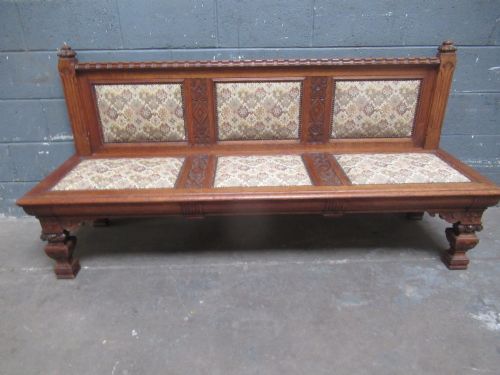
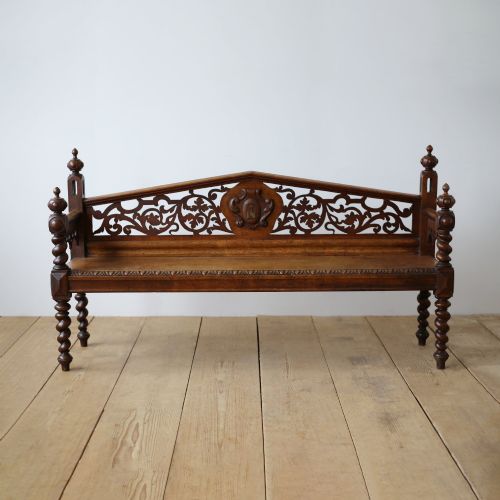
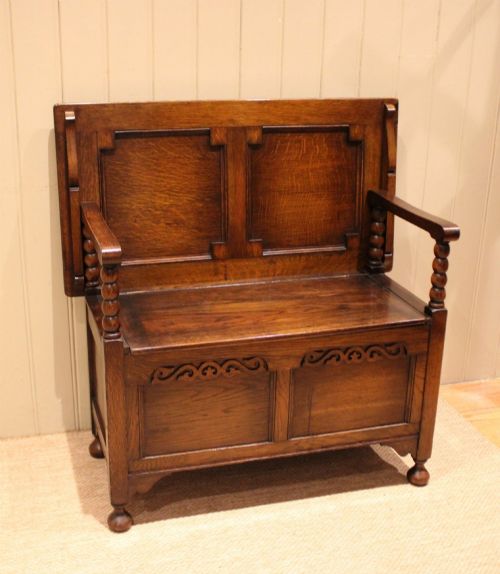
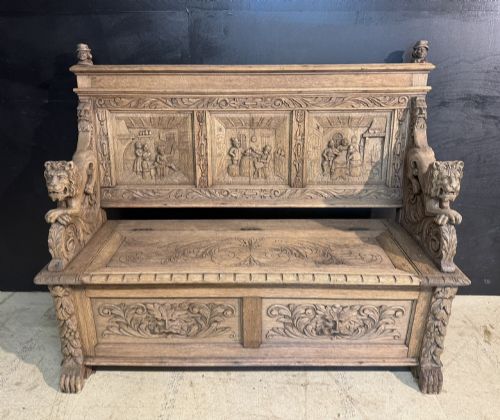
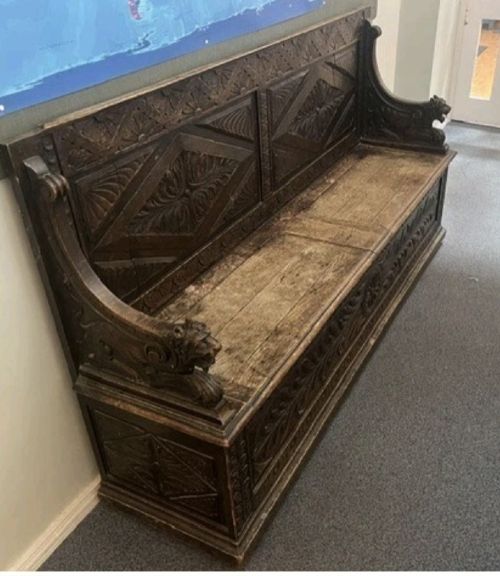
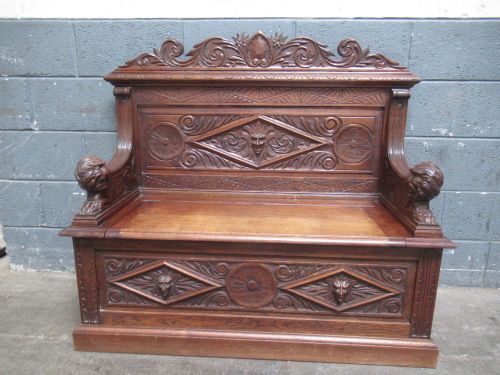
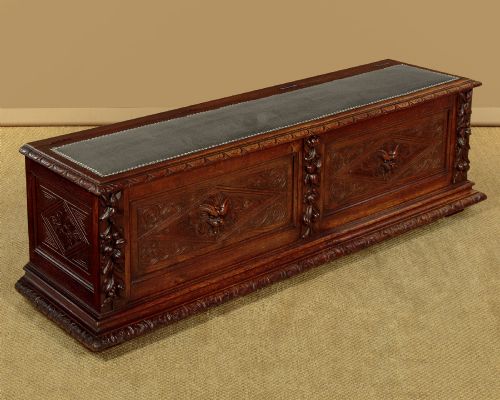
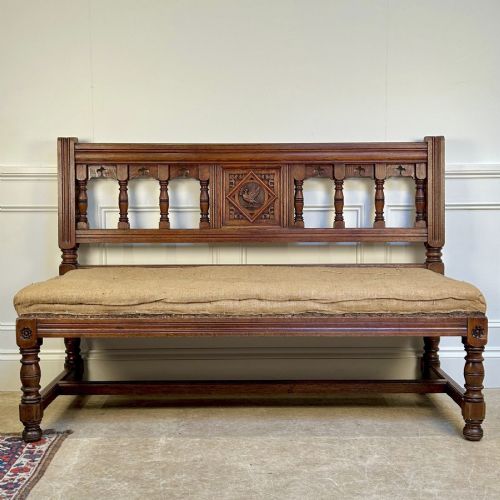
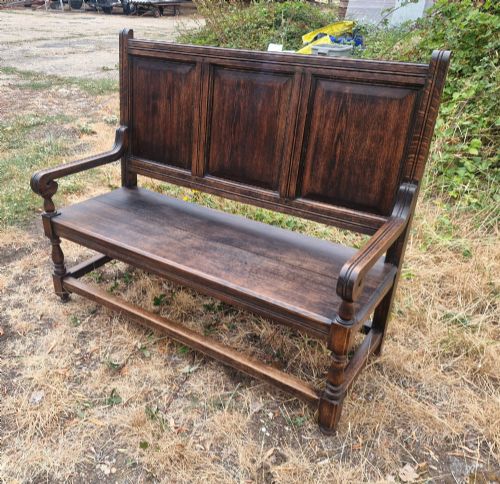
A revival oak bench represents a deliberate return to earlier architectural styles, spanning forms from long hall seats and settles to lift-up storage boxes and monks benches. Most pieces you meet on this page date from the nineteenth and early twentieth centuries, channeling medieval, Gothic, or Jacobean aesthetics into domestic furniture.
Makers of these forms often utilised sturdy timber to construct functional pieces meant for entrance halls, libraries, and reception spaces. You will encounter high-backed settles with canopy tops, curved Gothic window seats, and architectural settles featuring carved panels and hinged seats.
How they were made
The primary material across these pieces is solid oak, frequently augmented by secondary timbers such as elm and burr elm for seats and panels. Workshops employed traditional joinery techniques, combining mortise and tenon framing with hand-carved ornamentation.
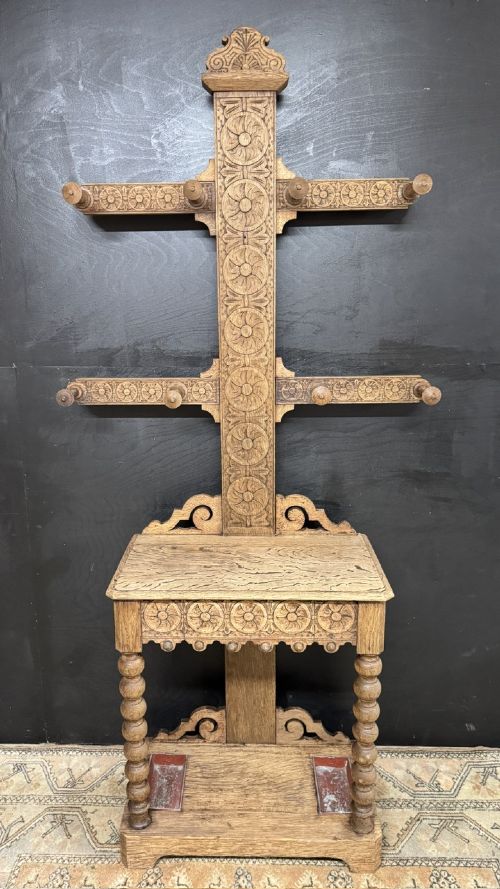
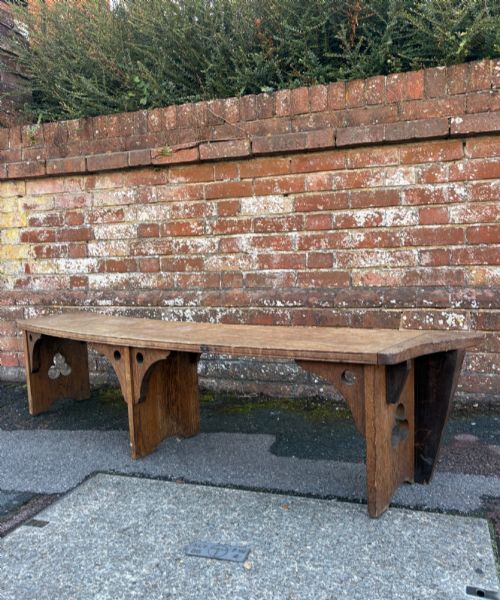
Surface decoration relies heavily on relief carving, including poppy head finials, trefoil motifs, and green man masks. Structural stability was achieved through heavy framing, turned legs, and sturdy panel construction designed to endure heavy daily use.
Revival Oak Bench Retail Price Guide 2026
Typical asking prices for revival oak bench among the pieces listed under this phrase on Sellingantiques today, from the lower quarter to the upper quarter. They describe what is for sale here now, not the wider market.
Keep an eye out for carved green man masks glaring from the woodwork, silently supervising your hallway comings and goings.
What varies in quality
Depth and crispness of the hand carving separate standard commercial production from the finest workshop outputs. Pieces bearing documented maker attribution or distinct architectural ambition display superior proportion and harmonious detailing.
GIllows·James Shoolbred & Co.
The Revival Oak Bench Glossary
- Settle
- A wooden bench with a high back, solid arms, and often a box base beneath the seat for storage. These pieces were historically placed near firesides to block draughts.
- Monks bench
- A convertible piece of furniture featuring a hinged top that flips forward to transform the backrest into a table surface. It combines dual-purpose utility with compact seating.
- Poppy head
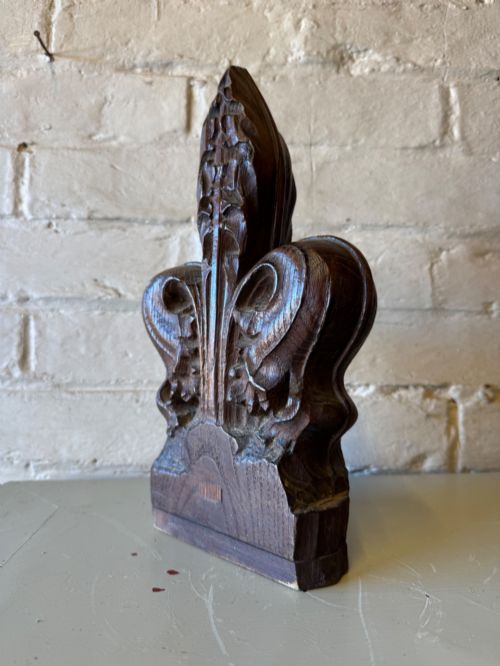
- An upright carved ornament decorating the top of a bench end or finial, typically taking a stylized leaf or bud shape derived from medieval ecclesiastical architecture.
- Prie-dieu
- A devotional kneeling desk or chair equipped with a sloping shelf for books and a padded kneeling platform. They appear frequently in Gothic Revival domestic interiors.
- Trefoil
- A three-lobed decorative ornament resembling a clover leaf, commonly pierced or carved into the tracery and supports of Gothic Revival furniture.
Revival Oak Bench: Frequently Asked Questions
Where did these benches sit historically?
These pieces were built primarily for entrance halls, grand corridors, and reception rooms to provide seating for callers and visitors.
They also served practical household functions in libraries and large domestic spaces as window seats or storage boxes.
How do I distinguish 19th-century revival from older work?
Revival pieces from the nineteenth century display machine-assisted precision alongside hand carving, utilising standardised hardware and Victorian timber preparation methods.
Examination of the interior construction, drawer linings, and hidden secondary woods usually reveals the later nineteenth-century manufacturing techniques.
How do I care for antique oak furniture?
Maintain the timber by keeping the piece away from direct heat sources and sudden temperature fluctuations that cause wood to split.
Apply traditional beeswax periodically to nourish the surface and preserve the natural lustre of the grain.