



Revival Drinks Cabinet
A revival drinks cabinet brings period character to modern entertaining, housing bottles and glassware in a piece styled after earlier centuries.
Revival Drinks Cabinet
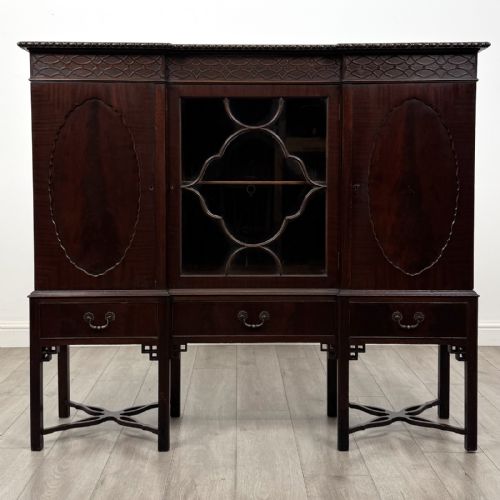
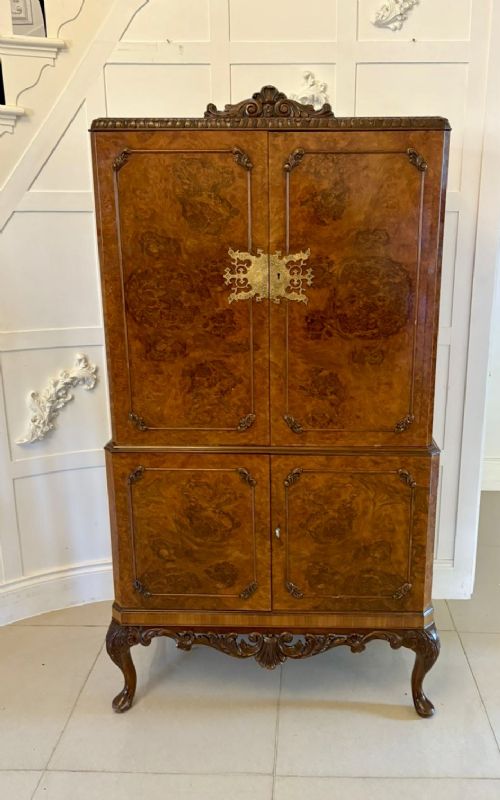
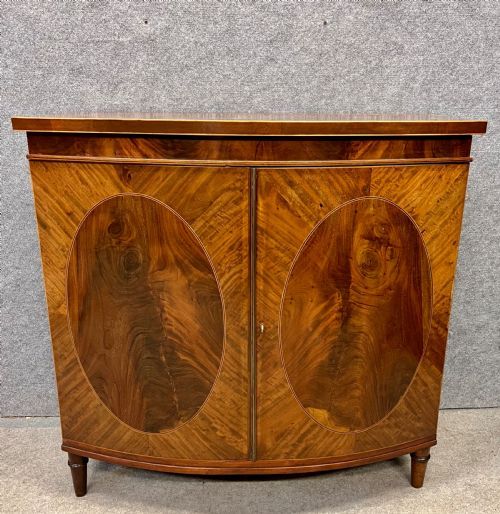
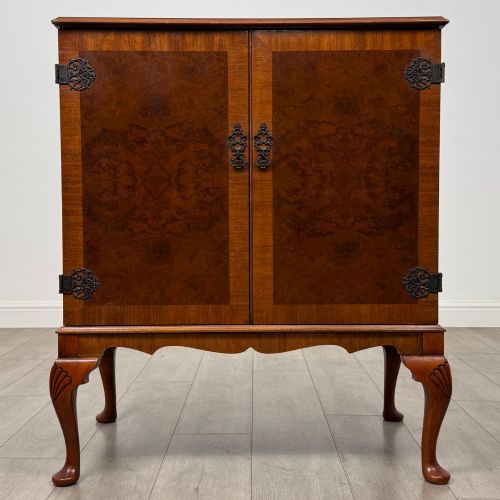
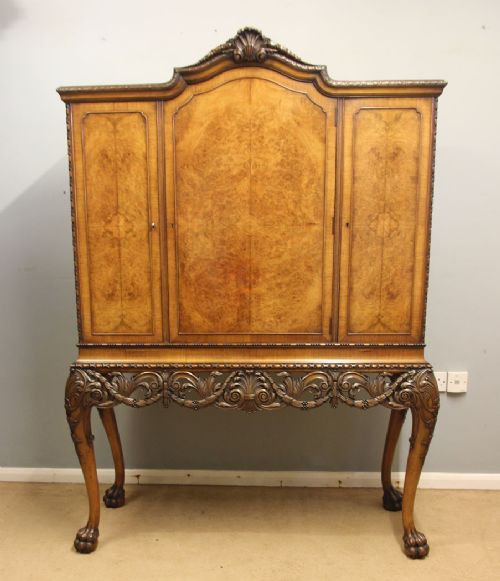
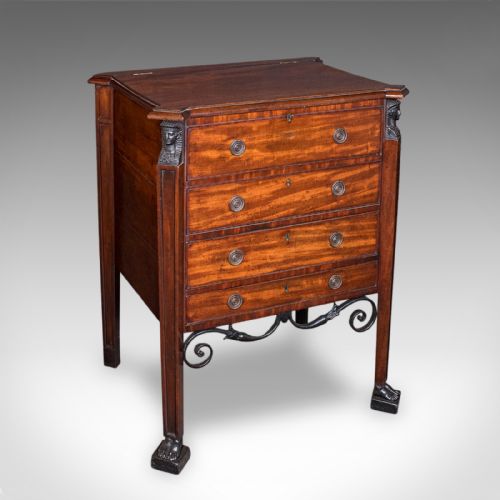
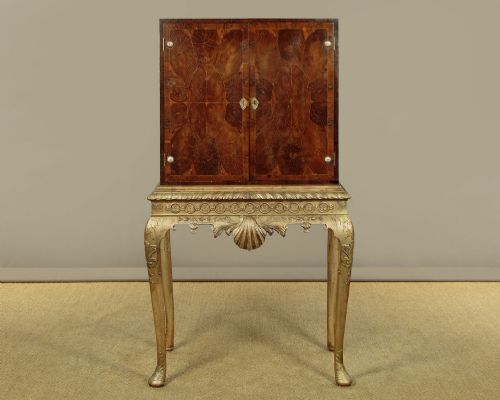
A revival drinks cabinet takes historical design motifs from periods like the Victorian era, the Edwardian years and the 1920s or 1930s, adapting them for the storage of bottles, decanters and glasses. When searching for a revival drinks cabinet, buyers encounter forms ranging from dedicated cocktail cabinets and bar cabinets to side cabinets, cellarettes and cabinets on stands.
The pieces on this page span several revival movements, drawing inspiration from Queen Anne, Jacobean, Egyptian, Georgian, Flemish Renaissance and Louis XVI styles. Materials vary from dark oak and walnut to burr walnut, mahogany, satinwood inlay, glass and brass.
Originating largely from the nineteenth and early twentieth centuries, these cabinets reflect changing domestic habits around hospitality and entertaining. The selection brings together sideboards, display cabinets and specialised drinks furniture created to serve refreshments in style.
What separates the tiers
Quality in these cabinets rests upon the selection of timber veneers, such as burr walnut or figured mahogany, and the precision of the marquetry inlay. Superior examples display careful matching of wood grain across doors and panels.
Construction standards differ in the complexity of internal fittings, such as specialised bottle storage, sliding shelves and glass-fronted display sections. The refinement of carved elements and the quality of brass or gilt mounts distinguish high-end workshop production from standard utility pieces.
Revival Drinks Cabinet Retail Price Guide 2026
Typical asking prices for revival drinks cabinet among the pieces listed under this phrase on Sellingantiques today, from the lower quarter to the upper quarter. They describe what is for sale here now, not the wider market.
Listings feature revival drinks cabinets spanning the Victorian period, the Edwardian era, and the 1920s and 1930s.
Waring & Gillows·Liberty's of London
The Revival Drinks Cabinet Glossary
- Cellarette
- A lockable container or cabinet designed for holding bottles of wine or spirits, often lined for temperature control. They appear in nineteenth-century dining rooms and cellars.
- Cocktail cabinet
- A specialised piece of furniture popularized in the early twentieth century for mixing and serving drinks. These typically feature fitted interiors with glass shelving and mirrored surfaces.
- Marquetry
- Decorative woodwork where small pieces of veneer are arranged to form pictorial or geometric patterns on a surface. Cabinetmakers use contrasting timbers to create these designs.
- Breakfront
- A cabinet design where the central section projects forward from the flanking wings. This architectural arrangement adds depth and shadow to large side cabinets.
Revival Drinks Cabinet: Frequently Asked Questions
What is a revival drinks cabinet?
A revival drinks cabinet is a piece of furniture made in a historic architectural style, such as Georgian or Jacobean, but designed to store and serve beverages. These items date from periods including the Victorian era and the interwar decades.
They combine period aesthetics with functional internal storage for glassware and bottles, serving as focal points in dining rooms or living spaces.
How do I date a revival cabinet?
Dating relies on examining the timber species, construction methods, hardware and stylistic clues present in the piece. Cabinets from the Victorian era often feature heavy carved oak or mahogany, whilst 1920s and 1930s examples frequently showcase burr walnut veneer and specialised cocktail fittings.
Maker labels or stamps, where present, provide direct evidence of the workshop and year of production.
Where were these cabinets used?
These cabinets belonged primarily in the reception rooms, dining rooms and drawing rooms of large homes. They provided secure storage for valued wines, spirits and crystal glassware.
Hosts used them during social gatherings to prepare and serve drinks to guests without needing to visit the cellar or kitchen.
How do I care for wood veneer?
Burr walnut, mahogany and satinwood veneers require protection from direct sunlight and sudden changes in humidity to prevent warping or fading. Dusting with a soft, dry cloth maintains the surface.
Applying appropriate wood waxes periodically helps preserve the finish and nourishes the historic timber.