


Revival Display Cabinet
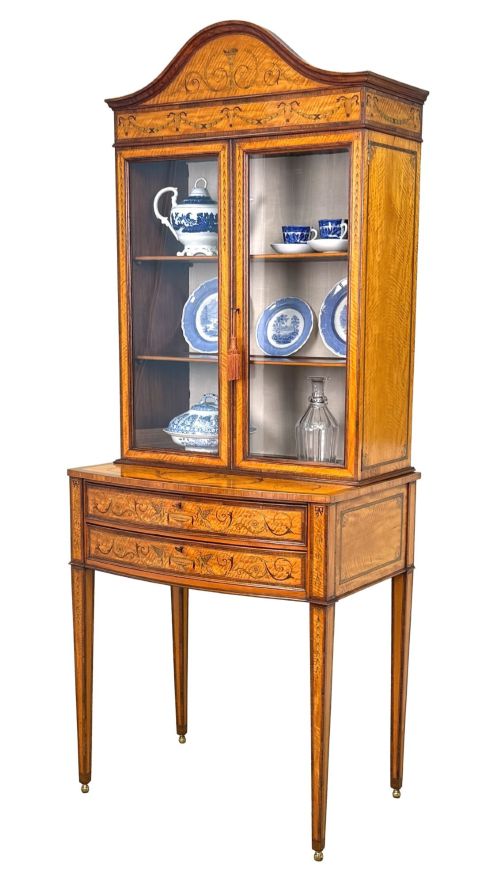
A revival display cabinet brings historical decorative motifs into the home to showcase porcelain and glassware behind glazed doors.
Revival Display Cabinet
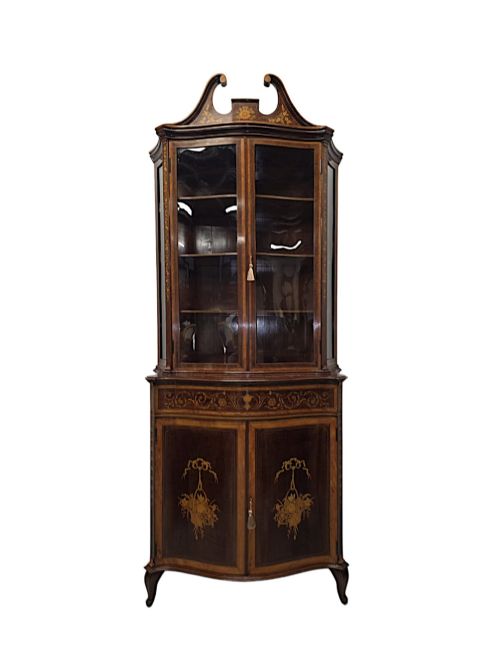
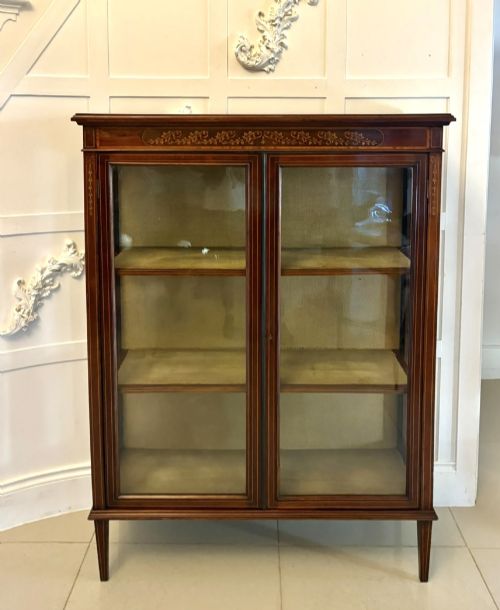
A revival display cabinet is a storage piece designed to exhibit treasured items through glass doors, drawing on earlier historical vocabularies. These cabinets emerge most frequently from the Victorian and Edwardian eras, spanning from the late nineteenth century into the 1930s.
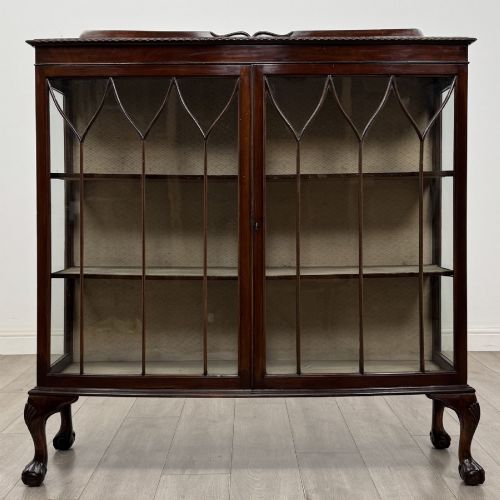
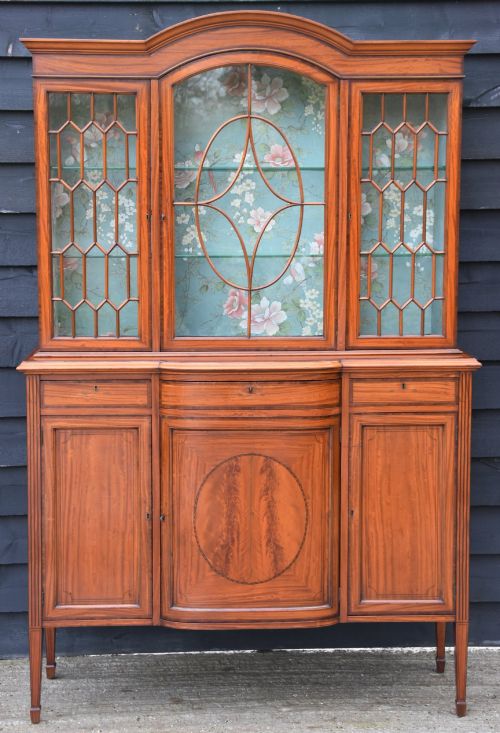
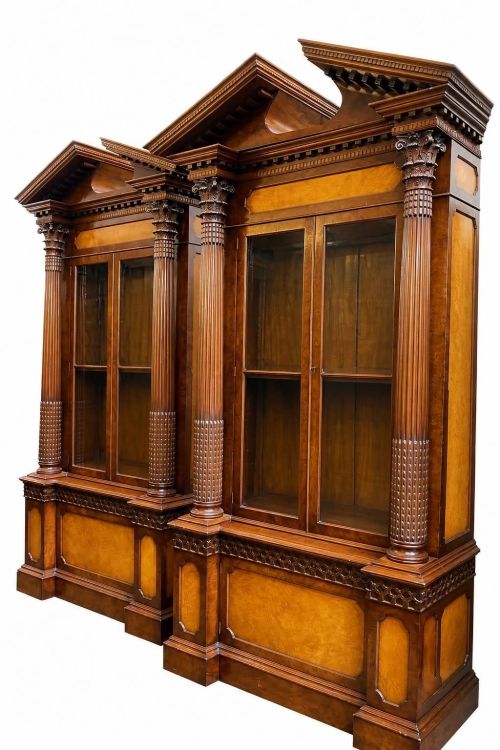
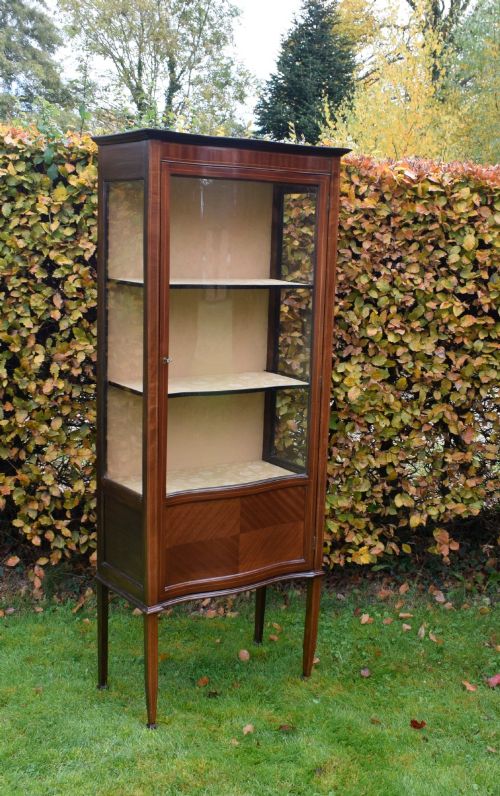
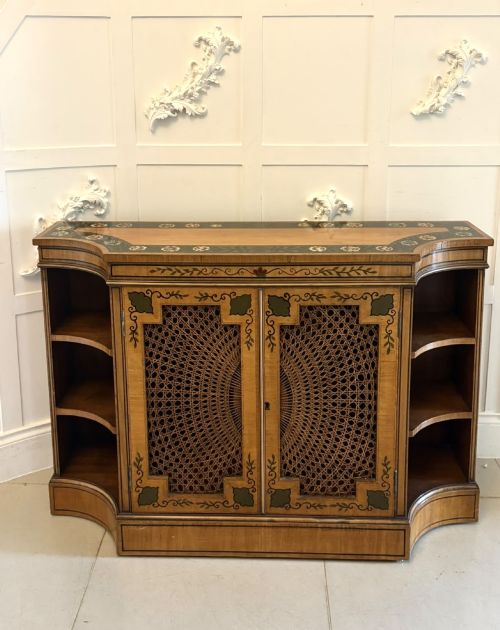
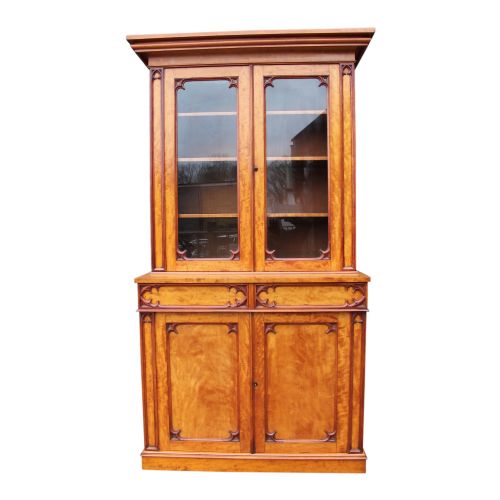
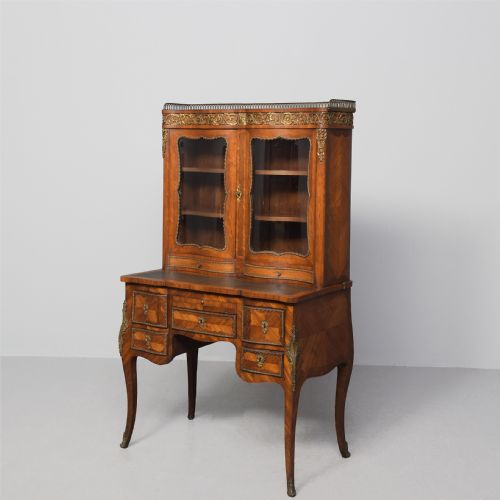
The pieces on this page appear in various formats, including corner cabinets, bureau bookcases, and bowfront structures. Makers of these periods adapt Georgian, Sheraton, Jacobean, and Gothic forms to suit contemporary domestic spaces.
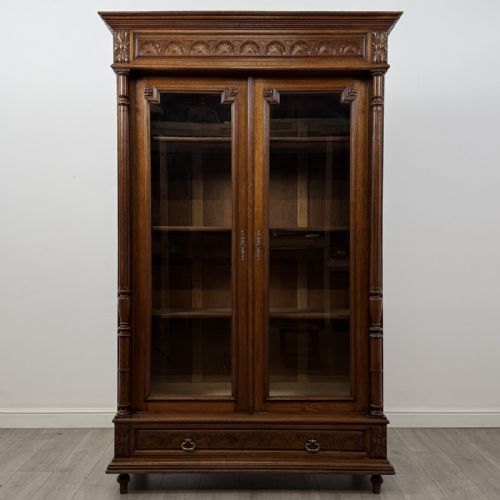
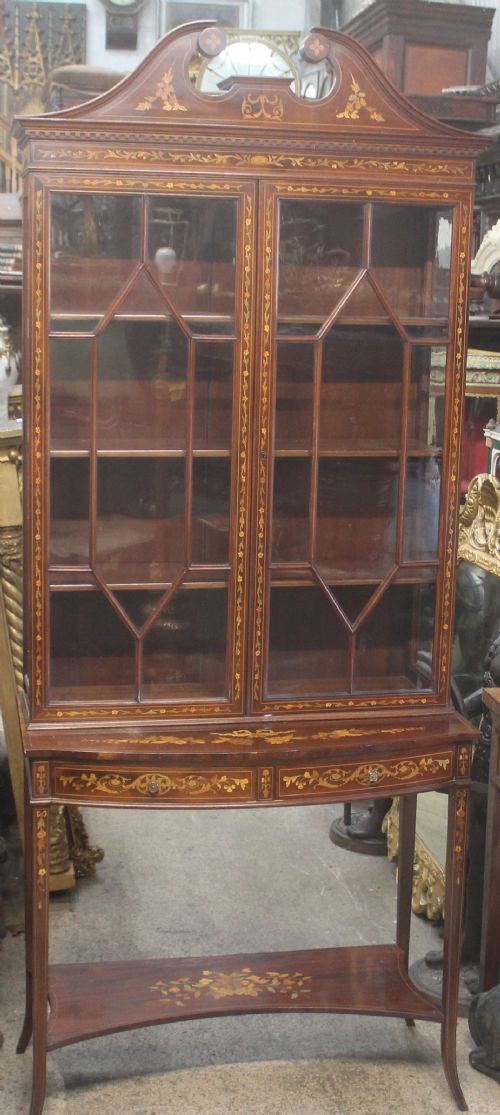
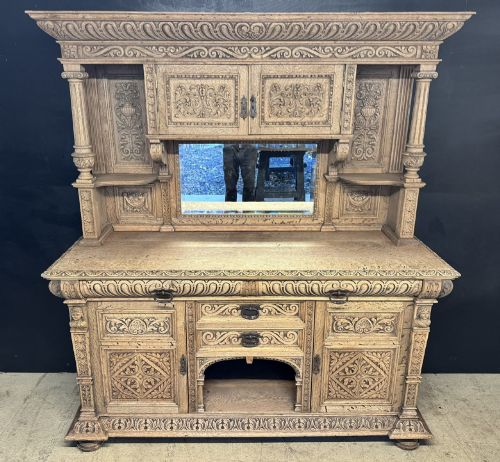
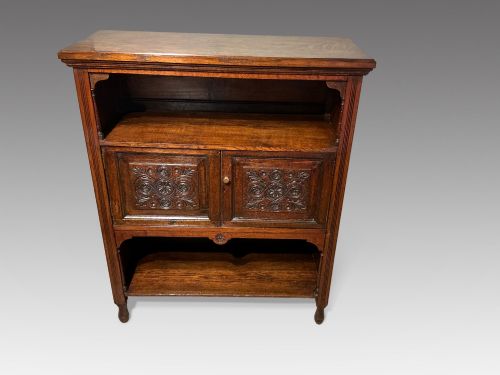
Mahogany and satinwood predominate in these selections, frequently enriched with marquetry inlay or painted decoration. Oak examples also feature prominently, carrying carved panels, linenfold details, or leaded glass.
Materials and Construction
Makers construct these cabinets using timbers such as mahogany, satinwood, and oak, often applying contrasting veneers and intricate marquetry inlays to flat surfaces. Structural glass is fitted into glazed doors, sometimes shaped with astragal bars or leaded cames.
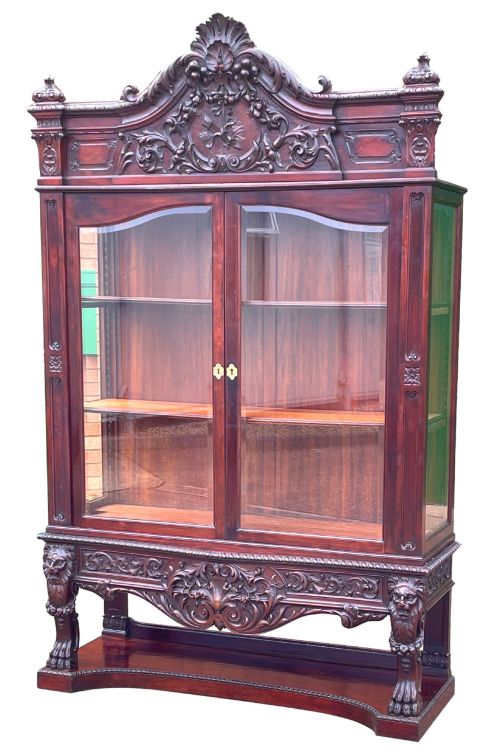
Carved ornament appears across many pieces, utilising techniques like lion mask carving, linenfold texturing, and shallow relief work on oak and walnut. Brass hardware, mirrored backs, and fabric-lined interiors complete the construction of these display pieces.
Revival Display Cabinet Retail Price Guide 2026
Typical asking prices for revival display cabinet among the pieces listed under this phrase on Sellingantiques today, from the lower quarter to the upper quarter. They describe what is for sale here now, not the wider market.
Some Edwardian cabinet makers hid tiny mirrored backing panels inside glazed corners to bounce extra light onto your grandmother's teacups.
Craftsmanship and Design
The standard of a revival display cabinet rests upon the crispness of its carved details, the precision of its inlaid veneers, and the selection of its primary timbers. Superior examples exhibit harmonious proportions and refined decorative painting or marquetry that respects historical precedent.
Attention to interior elements, such as adjustable shelving, bevelled mirror glass, and original fabric linings, separates standard production from exceptional cabinet-making. The integrity of the joinery and the weight of the brass fittings further distinguish the better pieces.
Waring and Gillow·John Moyr Smith·Bowman Brothers·Hampton and Sons·Gillows
The Revival Display Cabinet Glossary
- Sheraton Revival
- A late nineteenth and early twentieth century style drawing on the light, elegant furniture designs of Thomas Sheraton. It frequently incorporates satinwood, painted floral swags, and delicate inlay.
- Astral Glazing
- A method of dividing glass panes within a door using thin wooden bars called astragals. This technique creates a grid pattern typical of eighteenth and nineteenth-century breakfront cabinets.
- Jacobean Revival
- A style popular in the late Victorian and Edwardian periods referencing seventeenth-century English furniture. It is characterised by dark oak, geometric mouldings, and heavy turned supports.
- Marquetry
- The art of applying decorative veneer pieces to a structure to form pictorial or geometric designs. Craftsmen use varied wood types to achieve natural tonal contrasts without paint.
- Vitrine
- A glass-fronted display cabinet or showcase designed specifically for exhibiting porcelain, curiosities, and fine objects. The term often implies a French influence or a more delicate structure.
Revival Display Cabinet: Frequently Asked Questions
What is a revival display cabinet?
A revival display cabinet is a piece of furniture made during the nineteenth or twentieth century that adopts the aesthetic styles of earlier historical eras. These cabinets use glass doors and shelves to exhibit decorative objects while referencing design movements such as Sheraton, Jacobean, or Gothic.
Craftsmen built these pieces to satisfy a growing domestic appetite for historicism, combining traditional woodworking techniques with the functional needs of Edwardian and Victorian homes. They serve as both practical storage and decorative focal points.
How do I date a revival cabinet?
Dating a revival cabinet involves examining the secondary timbers, the style of the hardware, and the specific characteristics of the revival movement it represents. Pieces from the Edwardian period often feature lighter satinwood and refined painted inlay, whereas Victorian iterations tend to use heavier mahogany, ebonised finishes, or walnut.
Construction methods also provide clues, as machine-sawn components gradually supplement hand-cut joinery towards the twentieth century. Maker marks, trade labels, or stamped drawer linings can offer more precise chronological markers.
Where should I place a display cabinet?
These cabinets suit principal reception rooms, dining areas, or studies where their glazed doors protect contents from dust while maintaining visual transparency. Placing them away from direct sunlight prevents the fading of delicate wood veneers and interior fabrics.
Consider the scale of the room and the floor space when positioning corner units or large breakfront bookcases. Adequate clearance is necessary for opening doors and fully appreciating the inlaid or carved details.
How do I care for antique wood?
Maintaining antique mahogany, satinwood, or oak requires stable indoor humidity levels and protection from extreme temperature fluctuations near heat sources. Regular dusting with a soft, dry cloth preserves the finish without requiring heavy polishes.
Periodic application of a specialist wax helps nourish traditional wood surfaces and maintains their natural lustre. Avoid using modern chemical sprays that can degrade historic varnish or lacquer over time.