

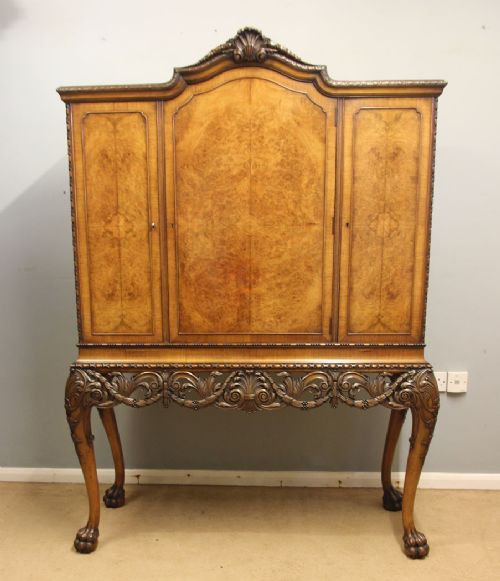


Revival Cocktail Cabinet
A revival cocktail cabinet brings theatrical panistic storage into a room, offering fitted compartments for bottles and glassware dressed in historic revival styles.
Revival Cocktail Cabinet
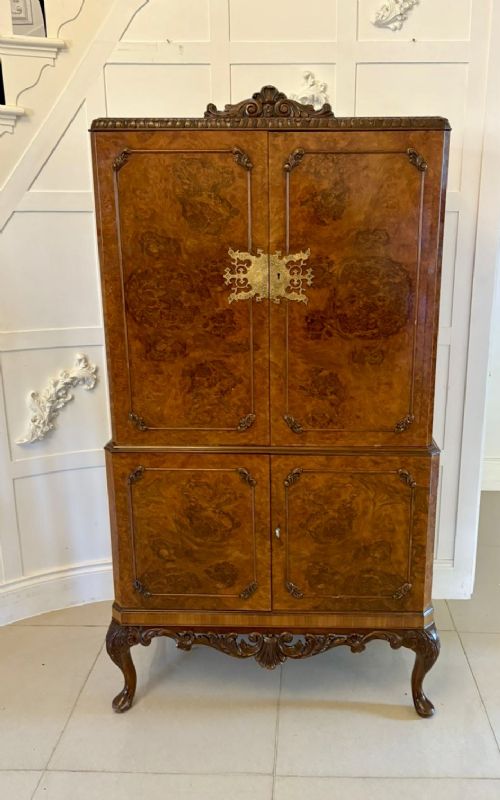
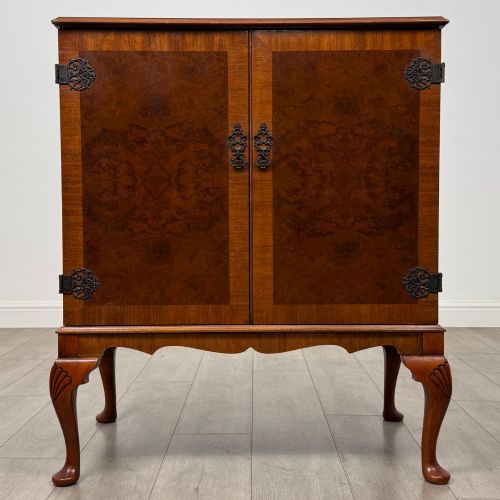
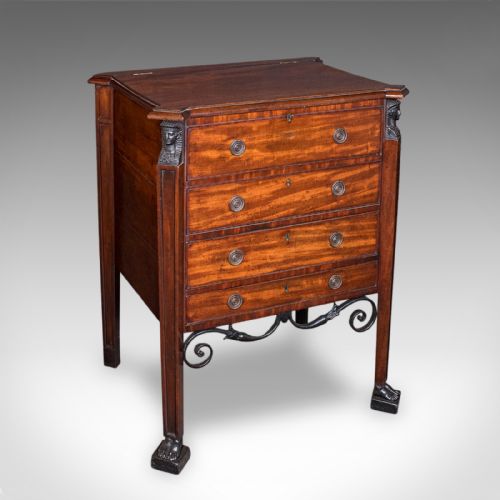
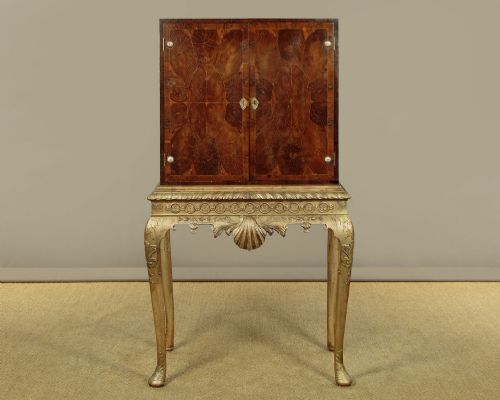
A revival cocktail cabinet combines historical revival design with the practical storage needed for entertaining, typically housing drop-front serving surfaces and specialised bottle racks. The pieces seen here span the Victorian, Edwardian, 1920, and 1930 periods, encompassing drinks cabinets, side cabinets, and cabinets on stands.
The most common iterations on this page draw heavily on Queen Anne, Louis XV, Louis XVI, Egyptian, and Jacobean revival styles. These forms often manifest as burr walnut or mahogany case pieces, sometimes lifted on cabriole legs or ornate gilt stands.
Makers such as Waring & Gillows and Liberty's of London produced notable examples, utilising fine veneers and marquetry inlay to elevate domestic drinks storage into a focal point. Buyers select these cabinets to anchor a dining room or drawing room with period character and functional hospitality.
How they were made
Makers constructed these cabinets using sturdy carcasing timbers like mahogany or oak, then applied decorative veneers such as burr walnut and kingwood to create striking grain patterns across the exterior surfaces. Marquetry inlay frequently adds floral or geometric detail, particularly on serpentine and French-influenced forms.
Metalwork played a structural and decorative role, with brass hinges, locks, and ormolu mounts securing and ornamenting the doors and drop-fronts. Silver leaf and giltwood finishes further accented pieces like cabinets on stands, reflecting the opulence of the specific historical style being revived.
Revival Cocktail Cabinet Retail Price Guide 2026
Typical asking prices for revival cocktail cabinet among the pieces listed under this phrase on Sellingantiques today, from the lower quarter to the upper quarter. They describe what is for sale here now, not the wider market.
Some cabinets hide their drinking functions entirely behind polite Edwardian cupboard doors, waiting to drop open and reveal a glowing mirror-backed bar.
What varies in quality
Quality in a revival cocktail cabinet rests on the selection and matching of the wood veneers, particularly the grain symmetry found in burr walnut and kingwood surfaces. Superior examples display meticulous marquetry and cohesive stylistic execution rather than generic applied ornamentation.
The interior fit-out defines the standard of the piece, distinguishing basic shelving from elaborate fitted interiors equipped with pull-out sliding shelves, mirror backs, and dedicated glass racks. Robust joinery on the legs, whether cabriole or part of a silver gilt stand, ensures the cabinet bears the weight of a stocked bar securely.
Waring & Gillows·Liberty's of London
The Revival Cocktail Cabinet Glossary
- Burr walnut
- A prized timber veneer sourced from the deformed growths on walnut trees, yielding intricate, swirling grain patterns. It forms the primary visual finish on many prominent cocktail cabinets from the 1920 and 1930 periods.
- Cabriole leg
- A furniture leg that curves outward at the knee and inward at the ankle, ending in a pad or claw foot. This form is characteristic of Queen Anne and Louis XV revival pieces.
- Marquetry
- The art of applying small pieces of veneer to a structure to form decorative patterns and pictures. Skilled makers used contrasting timbers to create elaborate floral or geometric designs across cabinet doors.
- Ormolu
- Gilded bronze furniture mounts and decorative details cast in high relief. It appeared frequently on French revival pieces to accent corners, aprons, and key escutcheons.
- Cabinet on stand
- A freestanding storage compartment elevated on a separate supporting frame or stand. This configuration lifts the main body of the cabinet to a height convenient for serving drinks.
Revival Cocktail Cabinet: Frequently Asked Questions
What is a revival cocktail cabinet?
A revival cocktail cabinet is a piece of furniture designed specifically for storing and serving drinks, utilising historical design motifs from periods like the Victorian era or the 1930s. These cabinets often feature drop-fronts that serve as mixing trays and specialised internal storage for bottles and glassware.
They emerged to satisfy changing domestic entertaining habits, packaging modern hospitality inside period revival aesthetics such as Queen Anne, Louis XVI, or Egyptian taste.
How do I identify the style?
Identifying the style involves looking at the specific decorative vocabulary employed on the cabinet facade. Queen Anne revival pieces typically display cabriole legs, while Louis XVI or French revival examples feature refined marquetry, kingwood veneers, and ormolu mounts.
Egyptian revival pieces incorporate distinct classical motifs from antiquity, whereas Jacobean revival versions rely on darker oaks and more geometric, panelled construction.
Where should I place it?
These cabinets suit dining rooms, drawing rooms, or living spaces where entertaining takes place. Their decorative exterior finishes, particularly burr walnut veneers and giltwood stands, allow them to function as statement furniture pieces.
Ensure placement allows enough clearance for drop-front doors to open fully and provide comfortable access to the interior serving surface and bottle storage.
How do I care for the wood?
Caring for these veneered surfaces involves keeping them away from direct sunlight and excessive heat sources that can dry out and crack the burr walnut or kingwood. Regular dusting with a soft, dry cloth maintains the finish without building up unwanted residues.
Applying a quality furniture wax periodically helps nourish the timber and preserve the historic sheen of the wood and its marquetry inlay.