

Revival Carved Cabinet
A revival carved cabinet brings historic ornament and robust storage into a room, spanning styles from Gothic Revival to Jacobean Revival across the Victorian and Edwardian eras.
Revival Carved Cabinet
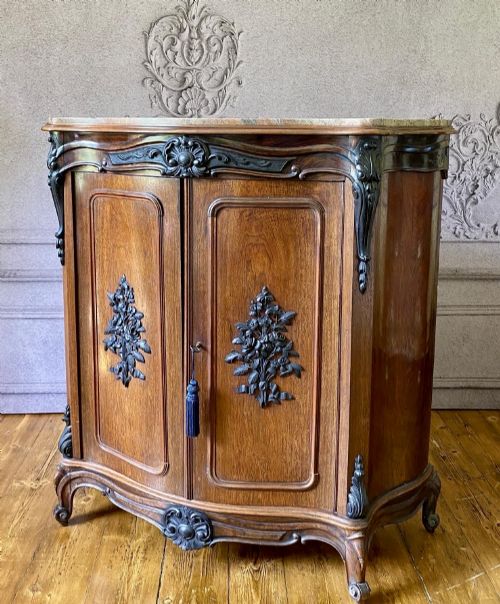
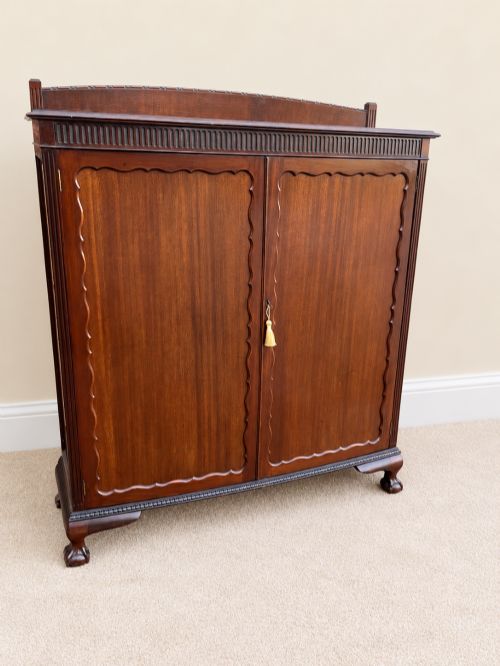
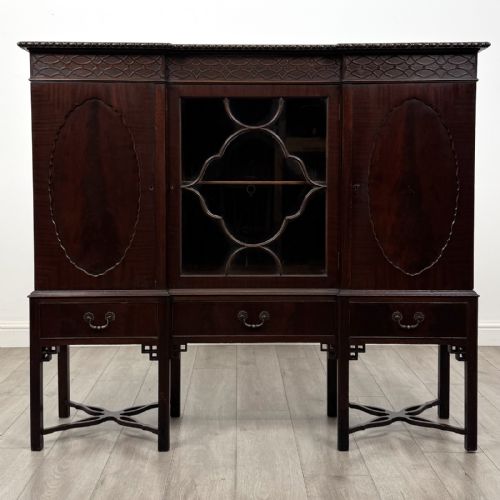
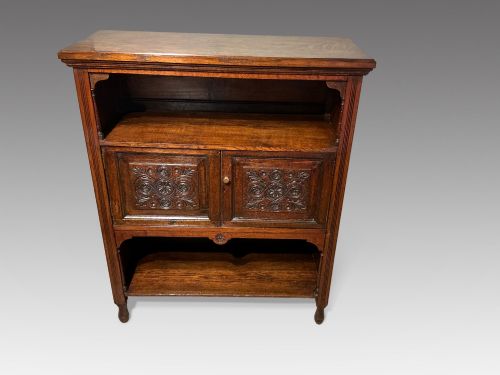
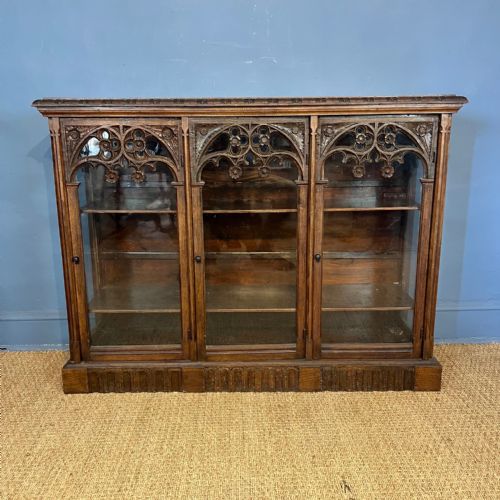
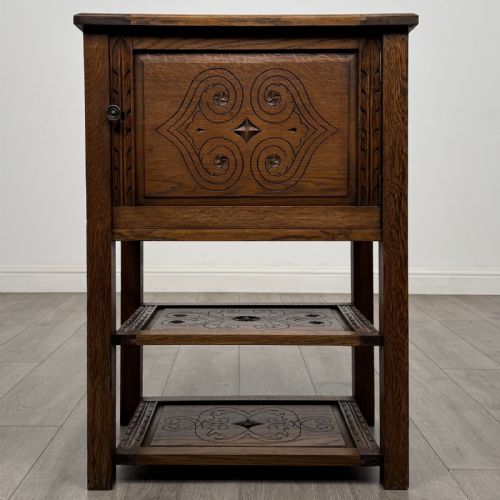
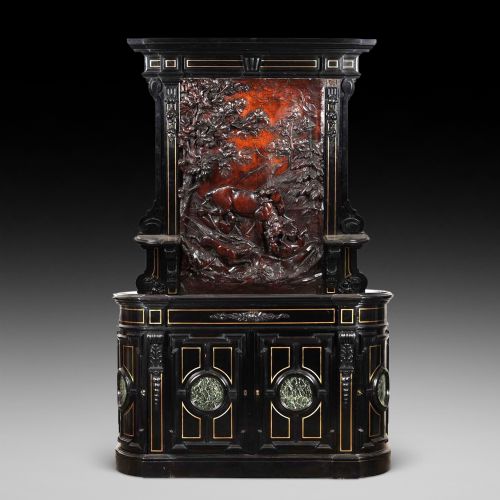
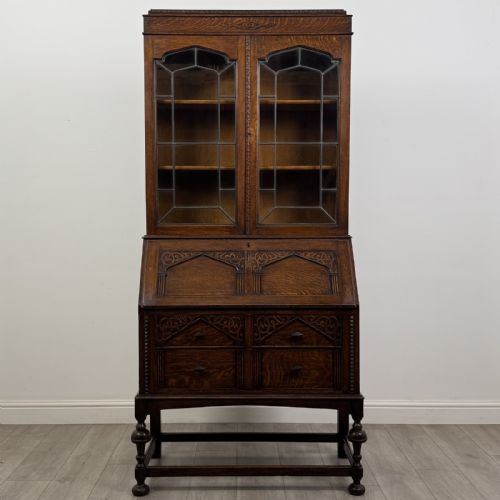
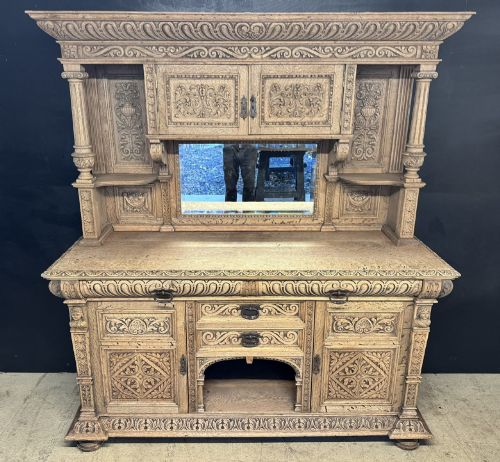
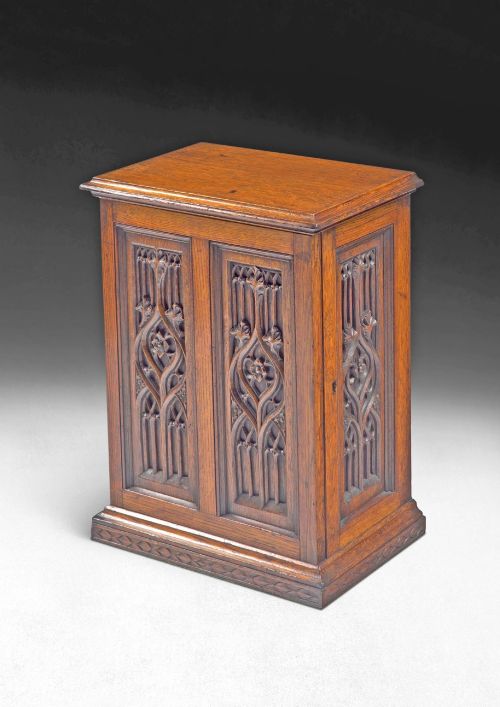
A revival carved cabinet encompasses substantial storage furniture such as sideboards, display cabinets, wardrobes, and bookcases produced during the nineteenth and early twentieth centuries. These pieces borrow heavily from earlier historical epochs, translating Tudor, Jacobean, Gothic, and Renaissance vocabularies into domestic items for Victorian and Edwardian interiors.
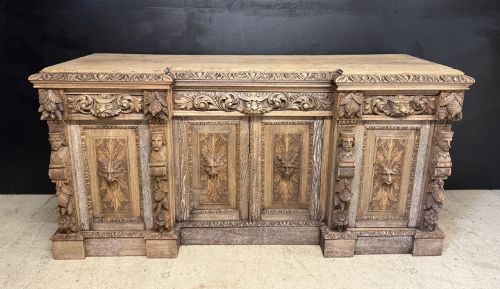
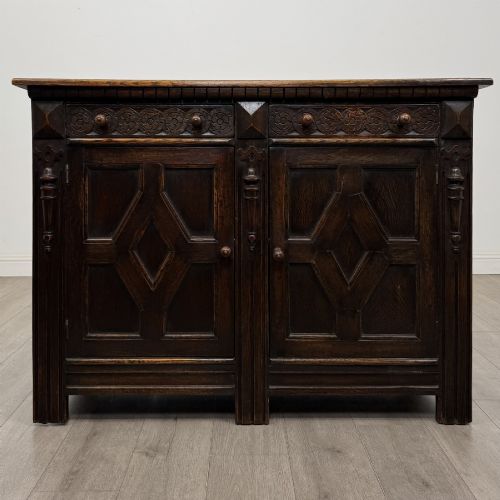
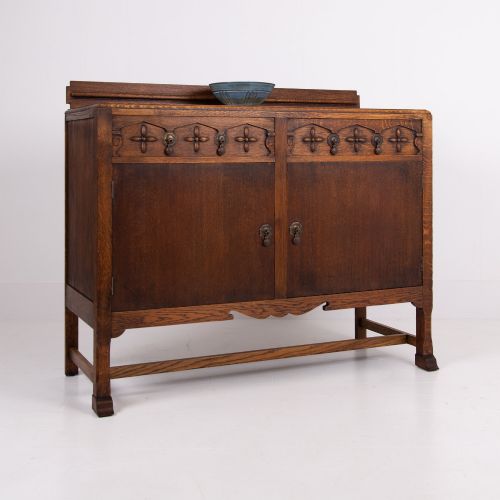
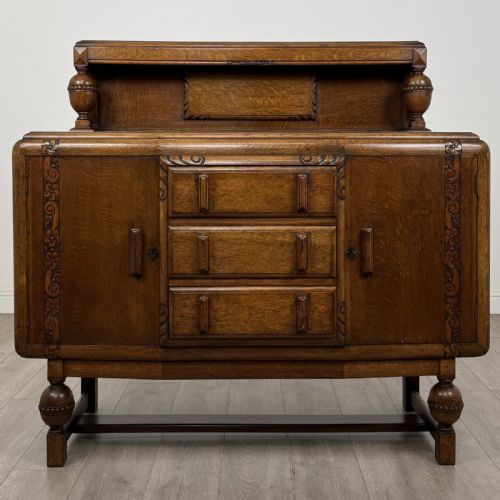
Oak dominates the material record, frequently carved with linenfold panels, Green Man motifs, or lion masks, while walnut and mahogany appear in refined display and cocktail pieces. Sideboards and cupboards form the majority of the current selection, reflecting the demand for functional storage paired with theatrical historicism.
Materials and Construction
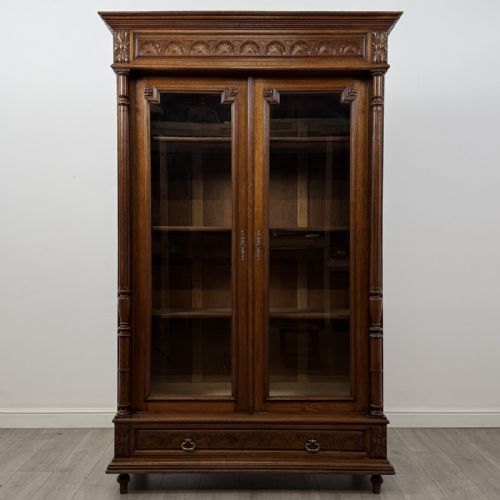
Makers utilised solid oak, walnut, burr walnut, and mahogany, often combining structural timber carcases with decorative veneers or deeply carved solid panels. Glass, brass hardware, and iron fittings appear on glazed display cabinets and cupboards, while marble tops feature on specific sideboards.
Joinery methods rely on traditional framing, mortise and tenon joints, and sturdy stretcher bases to support heavy timber carcases. Carving is executed by hand directly into the wood, ranging from low relief linenfold to high relief figurative elements such as lion masks and Green Man grotesques.
Revival Carved Cabinet Retail Price Guide 2026
Typical asking prices for revival carved cabinet among the pieces listed under this phrase on Sellingantiques today, from the lower quarter to the upper quarter. They describe what is for sale here now, not the wider market.
Several cupboards hide leafy Green Man faces peering out from the woodwork, quietly watching over the dining room.
Determining Quality
The depth, crispness, and continuity of the hand carving separate standard production items from exceptional workshop output. Pieces attributed to notable makers or featuring complex figurative work display superior hand-finishing on secondary timbers and interior fittings.
The choice of primary wood and the integrity of the timber selection dictate the visual weight of the piece, with burr walnut and figured mahogany commanding different aesthetic hierarchy than standard domestic oak.
John Moyr Smith·Gillows·Bowman Brothers
The Revival Carved Cabinet Glossary
- Linenfold
- A style of wood carving representing folded linen, frequently seen on panels of cupboards and bureaux from the Edwardian period onwards. It imitates liturgical textiles.
- Green Man
- A sculptural architectural ornament depicting a human face disgorging foliage, common on nineteenth-century carved oak furniture. It symbolises rebirth.
- Credenza
- A sideboard or buffet cabinet, often featuring mirrored backs and intricate carving, popular in Victorian interiors for display and storage. It sits low to the floor.
- Stretcher base
- An assembly of horizontal wooden bars connecting the lower legs of a table, cabinet, or sideboard to provide rigidity. It reinforces heavy oak frameworks.
- Leaded glass
- Small panes of glass held together by strips of lead, utilised in the doors of Edwardian display cabinets and bookcases. It introduces geometric patterning.
Revival Carved Cabinet: Frequently Asked Questions
What is a revival carved cabinet?
A revival carved cabinet is a storage piece from the nineteenth or early twentieth century that imitates historic architectural styles. These items adapt older motifs like linenfold panels or Gothic tracery for contemporary domestic use.
They range from large oak sideboards to walnut display cases, combining period aesthetics with functional interior compartments.
How do I identify the period?
Dating relies on the combination of secondary woods, hardware, and stylistic revival cues. Victorian pieces often display heavy proportions and dramatic figurative carving like lion masks, whereas Edwardian examples frequently utilise linenfold panels and lighter oak.
Examine the backboards, drawer linings, and structural fixings to confirm the era of manufacture alongside the stylistic label.
Where should I place a large oak sideboard?
Large oak sideboards require substantial wall space and stable flooring due to their considerable weight and depth. They suit dining rooms or grand hallways where their historic character grounds the surrounding interior.
Ensure adequate clearance for opening doors and drawers, as many period pieces feature heavy projecting cornices and solid timber construction.
How do I care for antique carved wood?
Maintenance involves dusting intricate carvings regularly with a soft brush to prevent dirt accumulation in recessed areas. Avoid direct sunlight and extreme humidity fluctuations to protect the timber carcase from splitting.
Applying microcrystalline wax periodically helps nourish the polish without leaving heavy buildup on the carved surfaces.