



Revival Carved Bar
These revival carved bar pieces are practical drink storage and serving furniture built with historic ornament, designed to bring period character to modern hosting.
Revival Carved Bar
A revival carved bar encompasses cocktail cabinets, drinks cabinets, tea trolleys, and home bars built during periods like the Victorian era, Edwardian period, and the 1920s and 1930s. These pieces draw heavily on historical design movements, ranging from Jacobean and Gothic revival to Queen Anne, French, and Egyptian tastes.
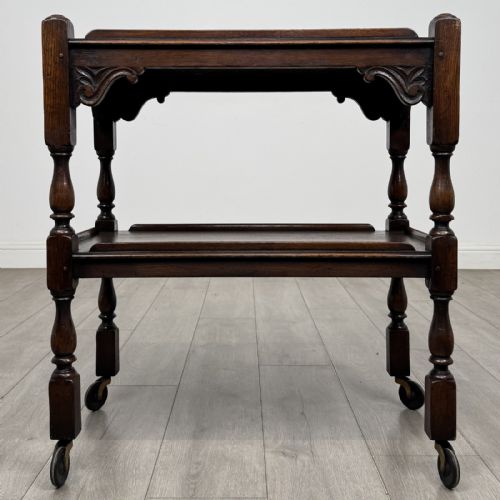
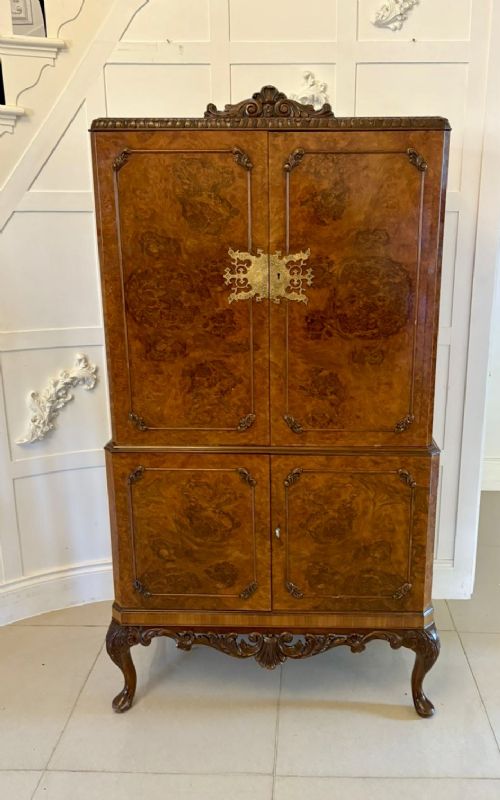
The most common formats met on this page are timber cocktail and drinks cabinets alongside mobile trolleys on castors or wheels. Makers often utilised rich veneers like burr walnut or solid timbers such as oak, pairing functional storage spaces with decorative carving and marquetry inlay.
How they were made
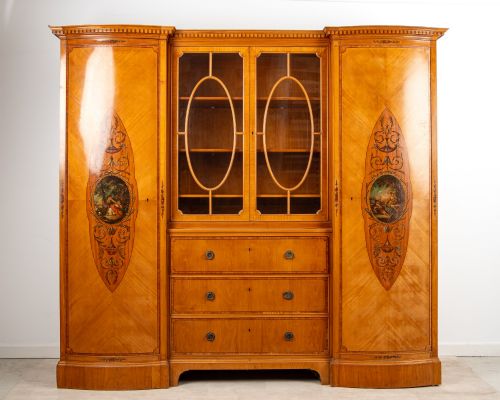
Cabinet makers constructed these pieces using solid timbers like oak and mahogany alongside decorative veneers including burr walnut and satinwood. Surfaces frequently feature detailed carved elements, marquetry inlay, and hand-painted panels executed within established revival styles.
Functional hardware such as brass handles, metal mountings, and iron accents are integrated into the designs. Trolleys and cabinets often incorporate castors or wheels to aid movement, while specialised interior fittings provide sliding shelves and bottle storage.
Revival Carved Bar Retail Price Guide 2026
Typical asking prices for revival carved bar among the pieces listed under this phrase on Sellingantiques today, from the lower quarter to the upper quarter. They describe what is for sale here now, not the wider market.
A country house hostess greeting station stands ready to receive guests with period charm.
What varies in quality
The standard of a piece rests on the choice of timber and the execution of its decorative surface, distinguishing plain construction from finely figured burr walnut or intricate marquetry. The depth and crispness of the carved details also separate standard commercial production from bespoke workshop output.
Attribution to documented firms or makers elevates a piece, as seen in works produced by Waring & Gillows or Liberty's of London. Additionally, the survival of original integrated elements, such as working brass hardware, sliding shelves, and lift-off trays, dictates the overall integrity of the object.
Waring & Gillows·Liberty's of London
The Revival Carved Bar Glossary
- Burr walnut
- A highly figured timber veneer taken from the wart-like growths on walnut trees, prized for its swirling grain patterns. It was frequently used on high-status cabinet doors during the 1920s and 1930s.
- Marquetry inlay
- A decorative technique where thin pieces of various coloured woods are fitted together to form pictorial or geometric patterns on a surface. This method appears on serpentine-shaped cocktail cabinets.
- Jacobean Revival
- A design style drawing on early seventeenth-century English architecture and furniture, characterised by heavy proportions and geometric carved ornamentation. It frequently appears on oak tea trolleys and cabinets from the 1920s.
- Castors
- Small swivel wheels fitted to the base of furniture legs to allow easy movement across floor surfaces. They are commonly found on tea trolleys and mobile bar carts from the early twentieth century.
Revival Carved Bar: Frequently Asked Questions
What is a cocktail cabinet?
A cocktail cabinet is a piece of case furniture specifically designed to store bottles, glassware, and mixing equipment for home entertaining.
These pieces typically date from the 1920s and 1930s, featuring drop-front serving surfaces and specialised interior compartments.
How do you use a tea trolley?
A tea trolley serves as a mobile surface for transporting and serving tea, drinks, or food between rooms.
Mounted on castors or wheels, these pieces often include lift-off trays and lower tiers for practical hosting.
What is an Egyptian revival piece?
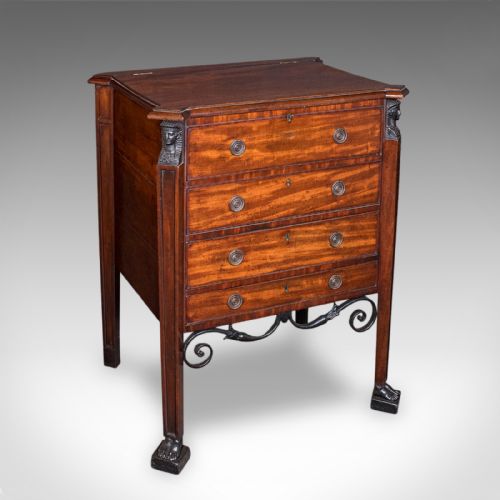
Egyptian revival furniture incorporates decorative motifs inspired by ancient Egyptian art, such as hieroglyphs, sphinxes, and lotus patterns.
This style gained popularity during the Victorian era, particularly around the time of the Great Exhibition.
How do I date an oak trolley?
Dating an oak trolley involves examining the construction methods, handle hardware, and the specific style of carving applied to the timber.
Pieces originating from the 1920s often combine revival styles like Jacobean carving with modern castors for mobility.