


Revival Card Table
A revival card table brings earlier cabinet-making traditions into the nineteenth and twentieth centuries, offering a folding surface designed for games and entertaining.
Revival Card Table
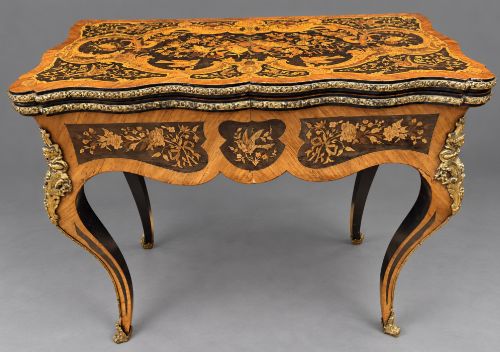
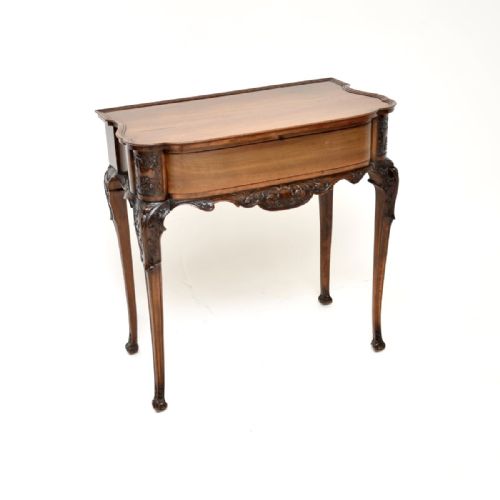
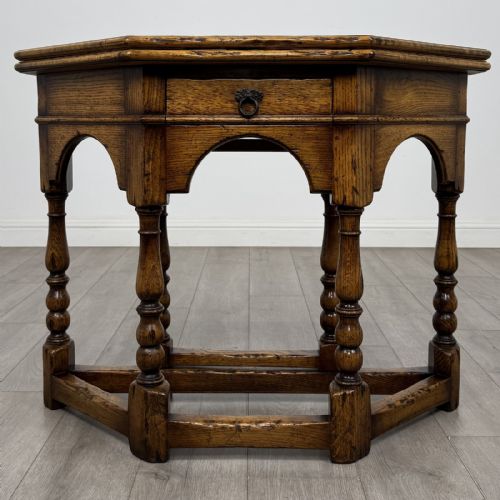
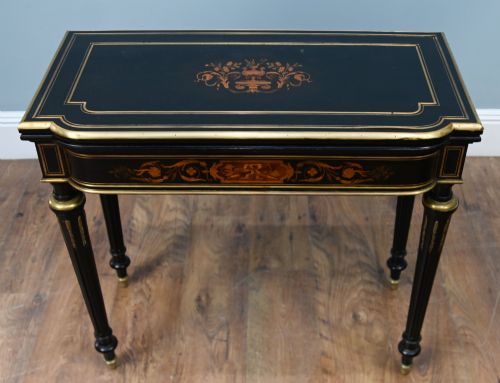
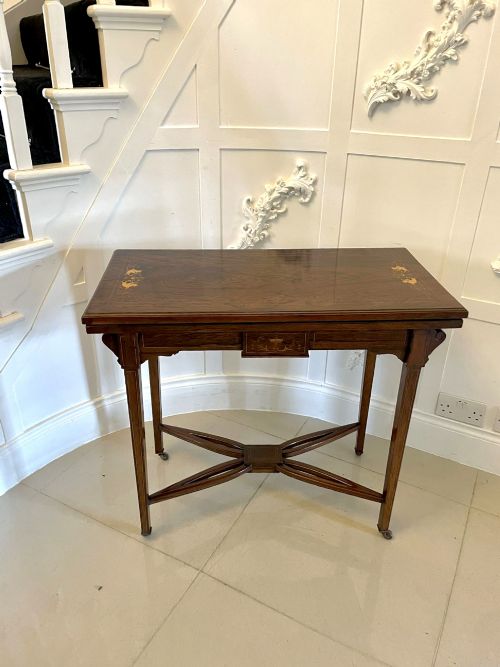
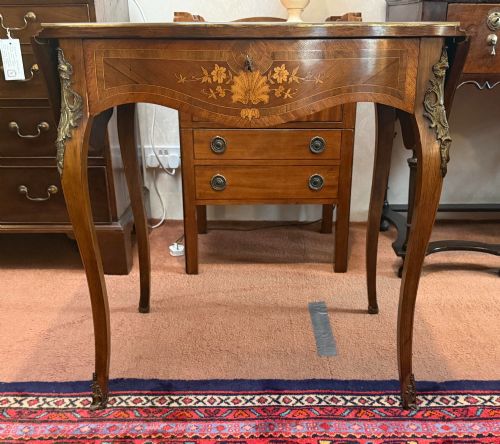
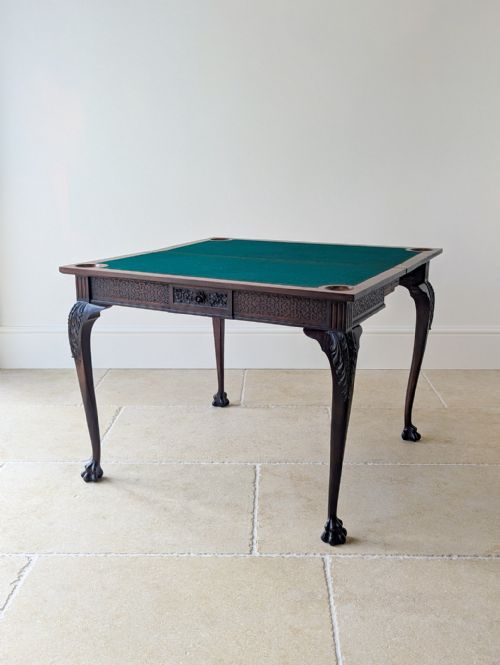
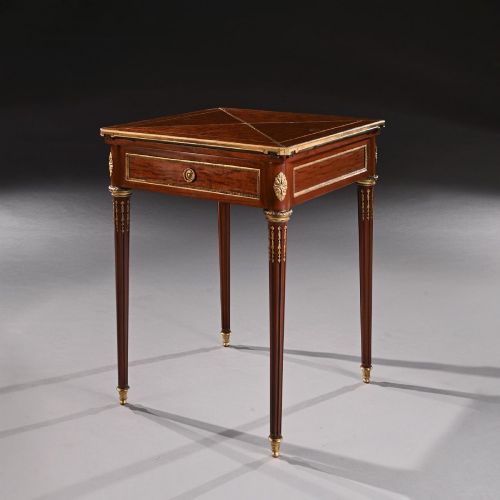
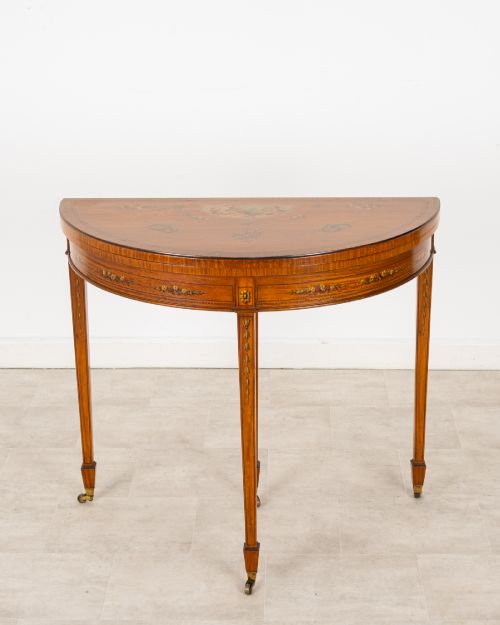
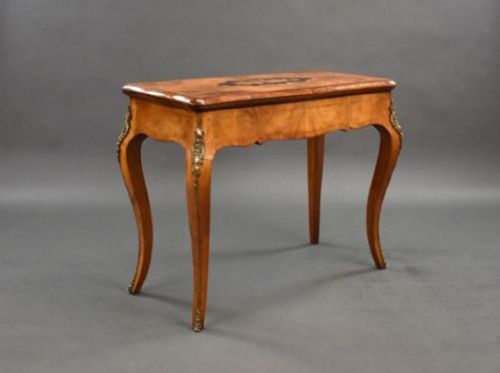
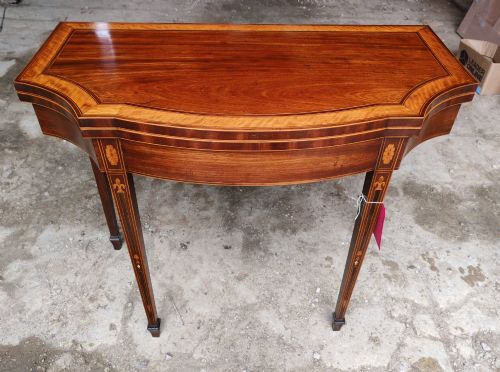
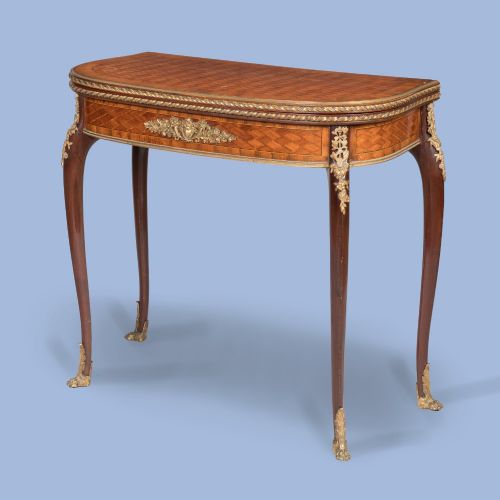
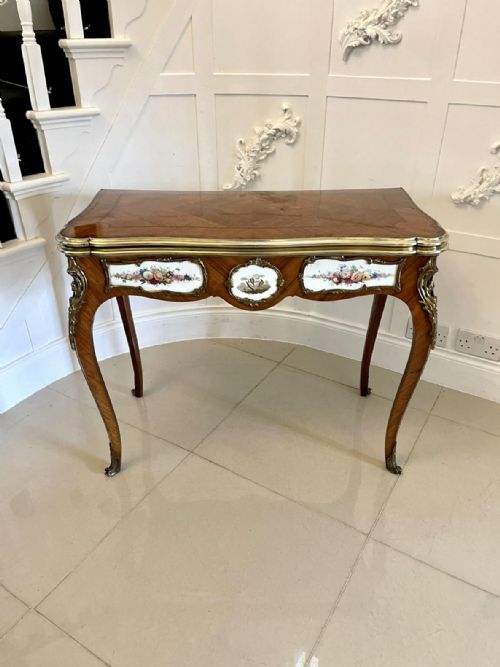
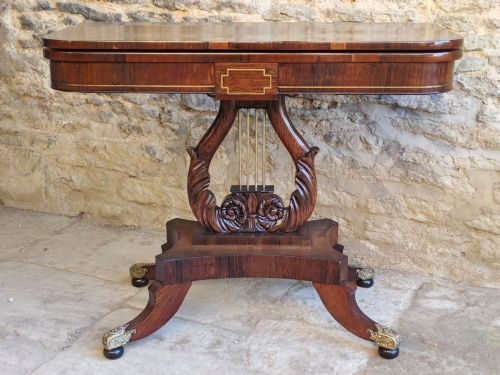
A revival card table adopts historical aesthetic movements such as Georgian, Sheraton, Chippendale, and Louis XV, reinterpreting past forms for later Victorian and Edwardian drawing rooms. These pieces function primarily as console or side tables when closed, expanding via fold-over, rotating, or envelope mechanisms to reveal a baize-lined playing surface.
The selections span from the mid-nineteenth century through the Edwardian era up to nineteen-twenty, reflecting shifting tastes for revivalism across British and continental workshops. Makers utilised dense timbers and intricate veneers to emulate eighteenth-century aesthetics while serving domestic pastimes like card games.
Materials and construction methods
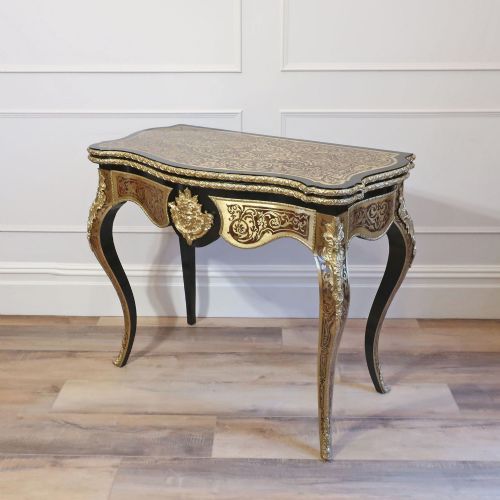
Makers constructed these tables using a carcase of mahogany, walnut, or rosewood, often enhanced with burr walnut, satinwood, kingswood, or ebonised wood veneers. Surface enrichment relied upon marquetry, parquetry, and floral inlay, sometimes accented by cast or chased ormolu mounts and brass hinges.
Structural engineering focused on stable folding mechanisms, including swivel tops and clever envelope folds that pivot on hidden hinges. Carved cabriole legs, tapering square supports, and lyre bases provided support while aligning with the chosen historical style.
Revival Card Table Retail Price Guide 2026
Typical asking prices for revival card table among the pieces listed under this phrase on Sellingantiques today, from the lower quarter to the upper quarter. They describe what is for sale here now, not the wider market.
One Edwardian games table includes the royal and pleasant game of goose directly upon its playing surface.
Factors influencing quality
Quality rests in the precision of the timber selection and the execution of the veneer work, where tightly figured burr walnut or delicate satinwood marquetry demonstrates superior craftsmanship. Workshops known for retail excellence invested heavily in hand-carved details and robust interior pivot mechanisms that operate smoothly over decades.
The distinction between standard commercial output and exceptional cabinet-making lies in the integration of cast bronze or ormolu mounts and the retention of original interior baize or leather playing surfaces. Finer examples display meticulous attention to secondary timbers and concealed construction joints.
Maison Millet·James Shoolbred and Co·Antoine Lampre·G T Morant·François Linke·Edwards and Roberts·Howard and Sons·Maple and Co
The Revival Card Table Glossary
- Envelope table
- A card table with a four-flap folding top that opens diagonally to reveal a baize-lined interior, typical of Edwardian production.
- Marquetry
- Decorative patterns formed by fitting together contrasting veneers of wood, shell, or ivory onto a structural carcase.
- Ormolu
- Gilded bronze mounts applied to furniture edges and legs, frequently seen on French-influenced revival pieces.
- Baize
- A coarse woollen felt material traditionally used to line the playing surface of games tables.
- Parquetry
- Geometric wood-inlay patterns arranged in repeating shapes such as cubes, diamonds, or stripes.
Revival Card Table: Frequently Asked Questions
How do you open a revival card table?
Most examples utilise a fold-over top that swings open on a hinge, requiring the supporting rear leg or framework to pivot outward simultaneously. Envelope designs operate by rotating the corner flaps outward to create a square playing surface.
Take care to release any interior retaining catches before moving the leaves to avoid stressing the antique hinges.
What were revival card tables used for?
These tables served a social function in Victorian and Edwardian drawing rooms, providing a compact surface for tea or decorative objects during the day. In the evenings, they transformed into dedicated areas for card games, chess, and social pastimes.
Their dual-purpose design allowed households to maximise living space without sacrificing formal entertaining requirements.
How can I tell which historical style a table revives?
Examine the leg shapes, carving motifs, and veneer patterns to identify the specific period being emulated. Cabriole legs with acanthus carving often point towards Rococo or Chippendale revival, while straight tapered legs with satinwood banding suggest Sheraton influence.
Makers frequently combined these historical vocabularies with Victorian proportions and construction techniques.