
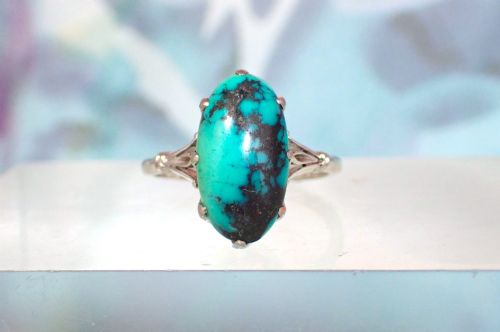
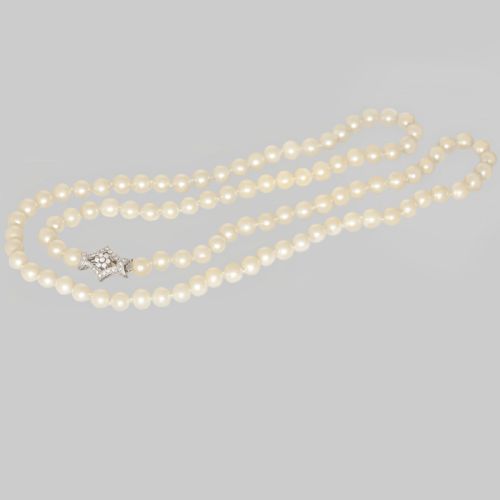


Retro White Gold Jewellery
Retro white gold jewellery brings together mid-century design, platinum, diamonds and bright gemstones in rings, earrings and bracelets suited for daily wear.
Retro White Gold Jewellery
When searching for retro white gold jewellery, collectors encounter pieces spanning several decades from the twentieth century, with a strong representation of items originating from the 1940s and 1950s. These items encompass rings, drop earrings, stud earrings, necklaces, bracelets, pendants, and brooches.
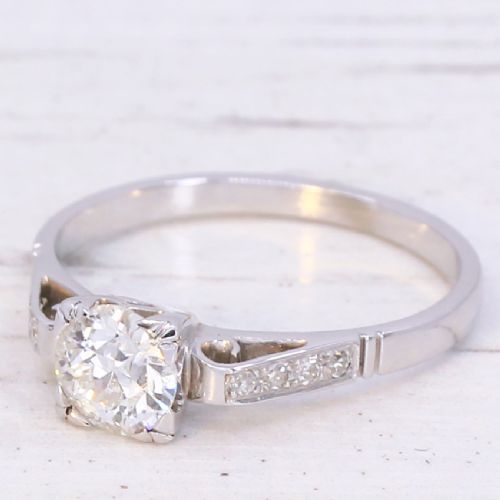
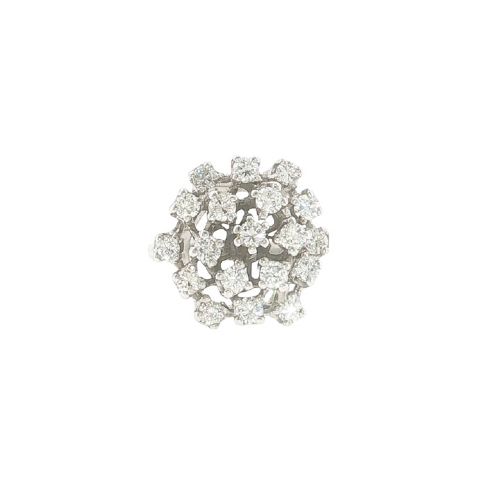
The most common items met on this page are cocktail rings and cluster rings featuring central diamonds or coloured stones like aquamarine and sapphire. These designs often pair white gold with platinum or yellow gold accents to create distinct mid-century styles.
Pieces frequently originate from European workshops, including French and Italian makers, alongside American designs from the mid-century period. Such items reflect the evolving tastes of the decades following the Art Deco era, moving towards bolder scroll panels and fluid shapes.
Materials and construction
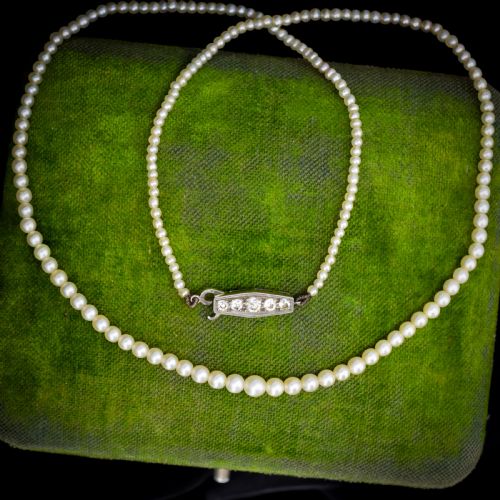
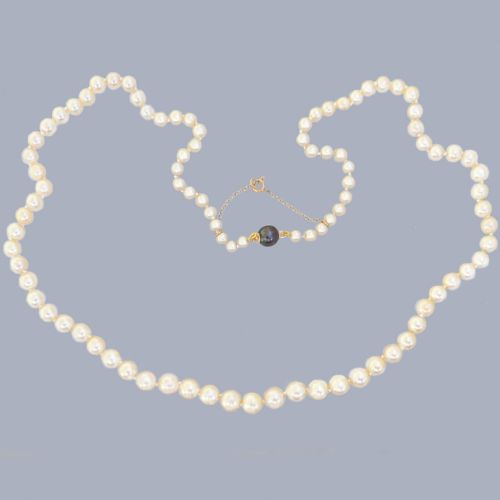
Items are principally fabricated from 18ct white gold, 14ct white gold, and platinum, frequently incorporating natural gemstones such as diamonds, pearls, sapphires, and aquamarines. Metalwork techniques of the period involve careful casting and hand-finishing to support complex cluster and swirl settings.
Several rings utilise a cluster design resembling a dancer's skirt, aptly named the ballerina ring.
Factors determining quality
The distinction between standard examples and superior items rests upon the weight, clarity, and cut of the primary gemstones, such as large central aquamarines, rubies, or diamonds. Master lapidary work and symmetrical stone arrangement elevate the overall standard of cluster and cocktail rings.
Execution of the metalwork also defines the tier of a piece, observable in the precision of scroll panels, omega backs, and intricate gallery wirework. Original components, secure stone settings, and balanced proportions across bracelets and earrings indicate higher craftsmanship.
The Retro White Gold Jewellery Glossary
- Old cut diamond
- A diamond cut popular before modern brilliant standards, characterised by a smaller table, higher crown, and large culet facet. These stones exhibit a softer candlelit sparkle.
- Cocktail ring
- A large, prominent ring designed to draw attention during evening social events. They frequently feature oversized central gemstones surrounded by smaller diamonds.
- Ballerina ring
- A cluster ring style featuring a central diamond or gemstone encircled by tapered baguettes or smaller stones resembling a ballerina's tutu.
- Transitional cut
- A diamond cut used during the period when cutters moved from old European cuts to modern round brilliants. It shares traits of both styles.
- Mabe pearl
- A cultured half-pearl grown against the inside shell of an oyster rather than within its body. They yield large, hemispherical pearls ideal for earrings and brooches.
Retro White Gold Jewellery: Frequently Asked Questions
What is retro white gold jewellery?
Retro white gold jewellery comprises rings, earrings, and bracelets produced primarily during the mid-twentieth century, notably the 1940s and 1950s. These pieces utilise white gold and platinum alloys to mount diamonds, sapphires, and cultured pearls.
The style marks a transition from geometric Art Deco designs towards more organic, voluminous shapes, scrollwork, and cluster configurations.
How should I wear these pieces?
These items suit both formal evening occasions and everyday wear, depending on the scale of the item. Cocktail rings and large drop earrings make distinct focal points when paired with simple attire.
Because many vintage pieces feature delicate settings like old cut diamonds and pearls, gentle handling helps preserve the original mountings during regular use.
How do I identify a 1950s piece?
Items from this era often display bold volumetric forms, asymmetrical cluster patterns, and textured scroll panels in white gold. Motifs frequently incorporate large aquamarines, rubies, or mabe pearls alongside transitional and old cut diamonds.
Maker's marks, specific clasp designs like omega backs, and characteristic construction methods help confirm the period of manufacture.
Are these pieces made of platinum?
Many items combine white gold with platinum, particularly in the settings holding the diamonds. Platinum provided the necessary strength for secure claw and bezel work during the mid-century period.
Testing the metal or examining hallmarks reveals whether a piece uses 14ct white gold, 18ct white gold, or platinum components.