


Retro Style Diamond Ring
A retro style diamond ring brings heavy metalwork and bold geometry to the hand, drawing on the aesthetic of the 1930s, 1940s and 1950s.
Retro Style Diamond Ring
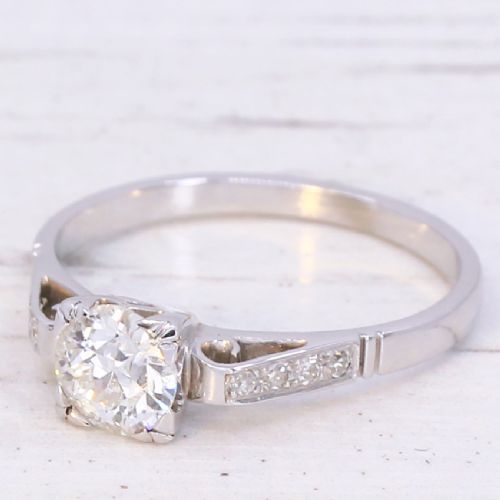
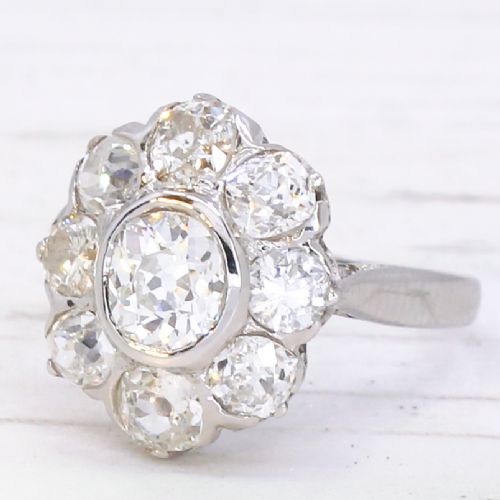
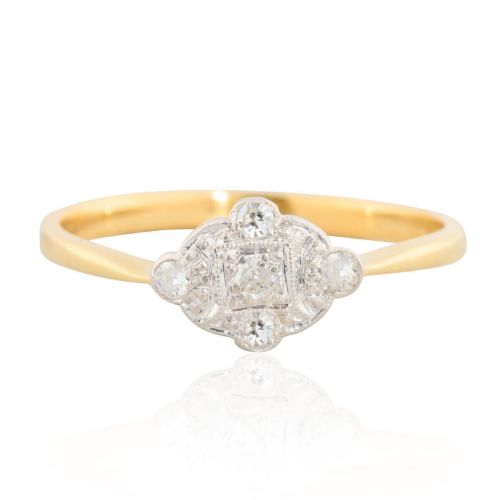
When you search for a retro style diamond ring, you encounter pieces spanning the 1930s, 1940s, 1950s and 1960s. These items range from engagement rings to bold cocktail designs and cluster formations.
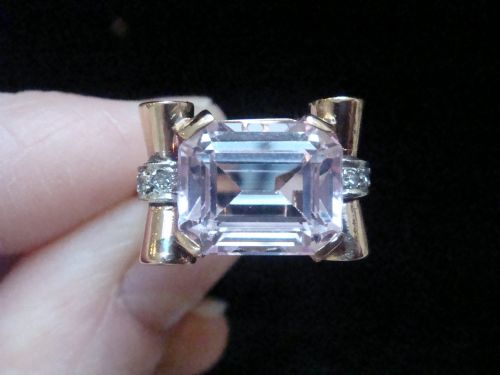
The most common versions on this page are engagement rings and dress rings set with diamonds alongside sapphires, rubies, kunzite or emeralds. The forms draw heavily upon the distinct aesthetic of the mid-century period and the heavy architecture of the tank style.
Makers and designers of these decades favoured substantial gold settings and contrasting platinum highlights. The resulting jewellery carries a distinct heft and presence on the finger that separates it from earlier delicate Edwardian work.
How they were made
These rings utilise platinum and various carats of gold, including 18ct yellow gold, 18ct white gold and 22ct gold. Metals are frequently combined within a single mounting to contrast warm yellow tones with bright white platinum sections.
Diamonds within these pieces are cut in several historic styles, notably old cut, old European cut, rose cut, single cut and emerald cut. Stones are secured in robust claw settings, cluster arrangements or flush pave settings designed to withstand daily wear.
Listings feature items spanning the 1930s, 1940s, 1950s and 1960s, executed in platinum, 18ct gold, 18ct white gold, 18ct yellow gold and 22ct gold.
What varies in quality
The standard of a ring rests upon the weight and purity of the precious metals and the quality of the central stones. Heavier tank rings and substantial platinum mountings command attention through their sheer material substance.
The brilliance of the piece depends on the character of the diamonds and coloured gems, such as natural sapphires, rubies, emeralds and kunzite. Pieces featuring certified or exceptionally large natural stones paired with intricate hand-finished metalwork represent the upper tier of the range.
The Retro Style Diamond Ring Glossary
- Old cut
- A diamond cut by hand before modern machinery standardised proportions, featuring a smaller table and larger facets that create a warm, deep glow under candlelight.
- Tank ring
- A chunky, architectural jewellery style originating in the 1940s, characterised by bold geometric shapes and tracks of metal resembling military vehicle treads.
- Cluster ring
- A setting style where a central gemstone is surrounded by a tight formation of smaller stones, amplifying the overall visual impact on the hand.
- Pave set
- A method of embedding many small diamonds closely together into the metal surface using tiny beads of gold or platinum to secure each stone.
- Rose cut
- A historic diamond cut with a flat base and a domed crown composed of triangular facets, resembling an unopened rosebud.
Retro Style Diamond Ring: Frequently Asked Questions
How do I wear a tank ring?
Tank rings possess substantial weight and architectural volume, making them striking standalone pieces on the hand. They demand space, so pairing them with simpler bands prevents visual crowding.
Because of their broad shoulders and heavy metalwork, consider removing them during strenuous manual tasks to protect the settings.
Are these engagement rings durable?
Rings from the 1930s through to the 1960s were constructed for everyday wear using robust platinum and thick gold shanks. The metals used provide strong structural integrity for daily use.
Regular checks by a jeweller ensure that the claws holding the diamonds and coloured gems remain secure over time.
What is a cluster ring?
A cluster ring arranges multiple smaller stones around a prominent central gem or groups diamonds together to create maximum visual presence. This configuration maximises light reflection across the entire face of the mounting.
Historically, this layout allowed makers to showcase varied stones, including rubies and sapphires alongside diamonds.
How do I date a retro ring?
Dating relies on stylistic cues such as geometric tank motifs, the combination of yellow gold with white platinum, and specific stone cuts like old European or single cuts. Hallmarks stamped inside the band provide further clues to the manufacturing origin.
Comparing the overarching design language to mid-century trends helps narrow down the decade of production.