
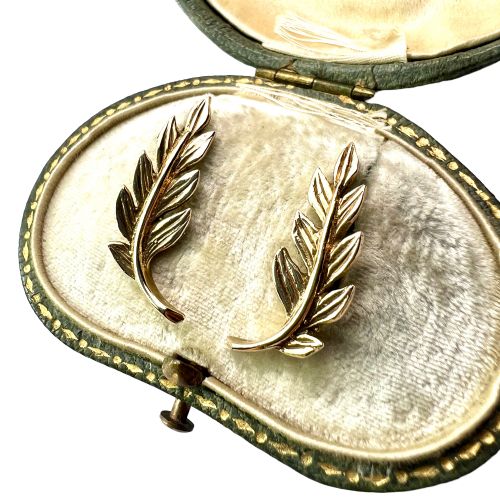


Retro Gold Studs
Retro gold studs deliver mid-century punch in small scales, pairing warm metal tones with bright gemstones for everyday wear.
Retro Gold Studs
When you search for retro gold studs, you find earrings and occasionally cufflinks spanning the 1930s to the 1960s, capturing the robust designs of the Mid-Century, Retro, and Art Deco periods. These pieces take various geometric and floral forms, frequently set with diamonds, pearls, or colourful cabochons.
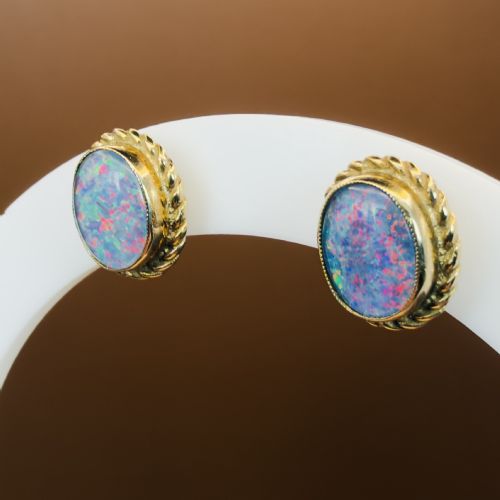
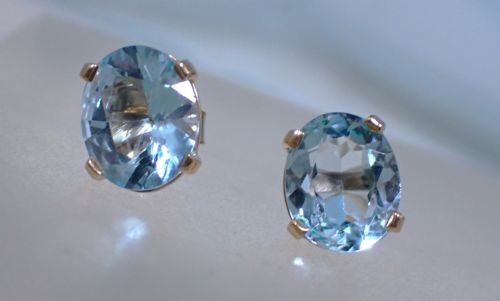
The version you are most likely to meet on this page is a 9ct or 14ct yellow or white gold stud featuring gems like aquamarine, opal, turquoise, or garnet, often shaped as clusters or leaves from the 1950s and 1960s.
Materials and Construction
Goldsmiths utilised 9ct, 14ct, and 18ct yellow and white gold, alongside platinum and silver gilt, forming the structural bases for stone settings and decorative motifs.
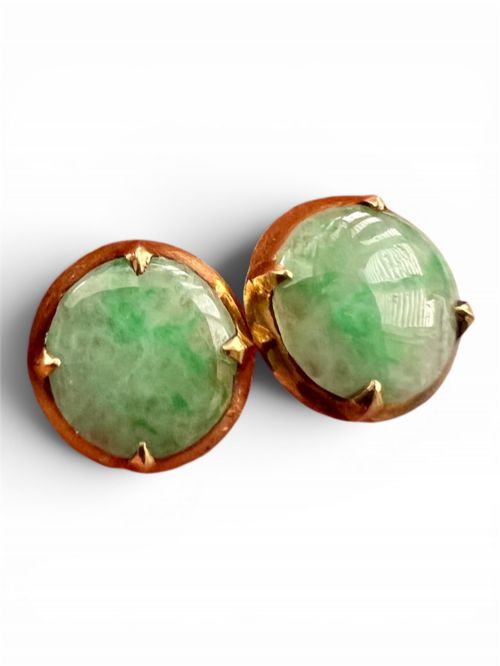
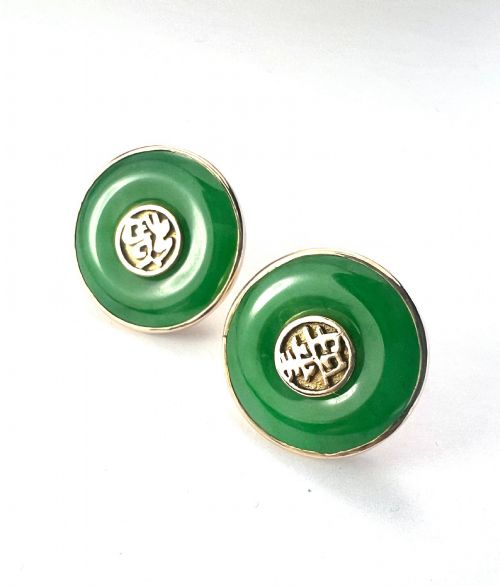
Pieces incorporate diamonds, cultured and mabe pearls, enamel, and a wide variety of coloured stones such as lapis lazuli, jadeite, zircon, and sapphire, secured in clusters, bezels, and floral arrangements.
One designer item arrives complete with its original storage box, preserving the exact packaging from the 1960s.
Distinctions in Quality
The calibre of these items depends on the weight and purity of the gold, alongside the saturation and clarity of central gemstones like aquamarine, opal, and diamond.
Superior examples demonstrate meticulous stone matching in clusters, secure mounting of cabochons, and substantial metal weight rather than hollow construction.
Andrew Grima·Christian Dior
The Retro Gold Studs Glossary
- Cabochon
- A gemstone shaped and polished with a smooth, rounded surface rather than faceted. This style highlights the natural colour and inclusions of stones like turquoise, jade, and garnet.
- Mabe Pearl
- A cultured hemispherical half-pearl grown against the inside of an oyster shell rather than within its body. These appear prominently in mid-century cluster designs.
- Zircon
- A natural silicate mineral occurring in various colours, frequently utilised in vintage jewellery for its high refractive index and diamond-like brilliance.
- Doublet
- A composite gemstone made of two joined sections, often pairing a thin slice of precious opal with a supportive backing material. This technique provides the visual depth of a solid stone.
Retro Gold Studs: Frequently Asked Questions
What periods do retro gold studs come from?
These items predominantly originate from the 1930s, 1940s, 1950s, and 1960s, encompassing Art Deco, Retro, and Mid-Century design aesthetics.
Designs shift from the geometric lines of the thirties to the bolder floral and cluster motifs of the post-war decades.
How do I secure non-pierced retro earrings?
Certain vintage pairs utilise screw-back or clip-on mechanisms rather than standard posts for pierced lobes.
These mechanical backs adjust to fit the ear securely without requiring piercings.
What gemstones appear most frequently?
Listings regularly feature diamonds, pearls, aquamarines, opals, and turquoise set into yellow and white gold.
Coloured stones are frequently arranged in floral cluster patterns or flanked by accent diamonds.
Are these pieces made of solid gold?
The evidence records items constructed from 9ct, 14ct, and 18ct gold in both yellow and white varieties, alongside gold-plated options.
Metal purity stamps and hallmarks generally designate the specific gold content used by the maker.