




Retro Gold Statement Ring
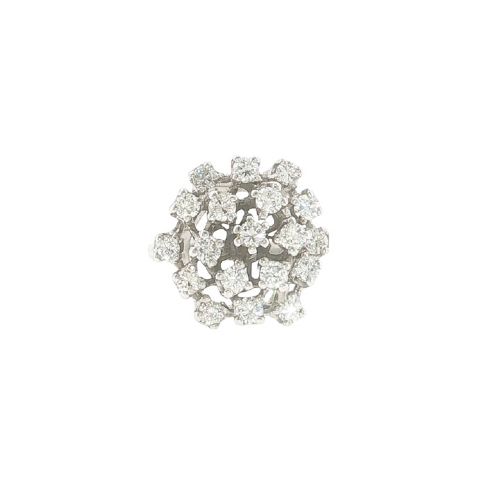
A retro gold statement ring delivers bold architectural presence through heavy gold settings and substantial centre stones designed to catch the eye.
Retro Gold Statement Ring
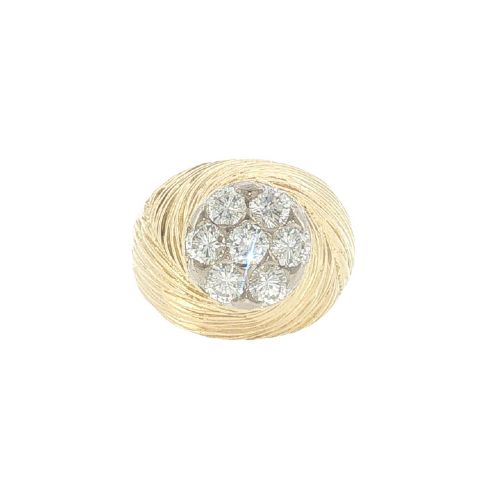
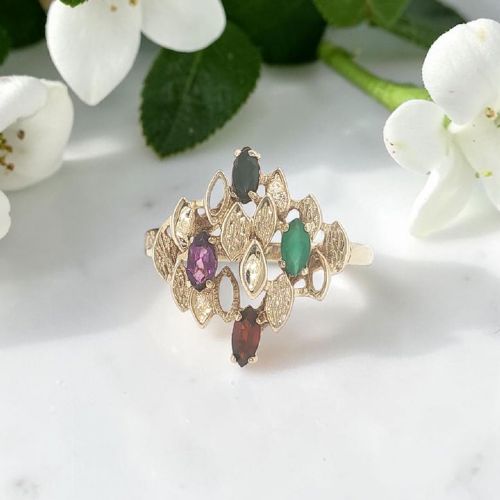
A retro gold statement ring captures the heavy, sculptural aesthetic popular from the 1940s through the 1970s, incorporating significant mid-century modern and Art Deco influences. Buyers encounter substantial cocktail and cluster forms built from solid 18ct yellow or white gold, often dominated by oversized coloured gemstones.
The selections span periods from Edwardian and 19th-century origins up to later modern designs, with mid-century and 1950s interpretations forming the core of the selection. These pieces frequently utilise tank styles, bombé profiles, and scroll panels that sit high on the finger.
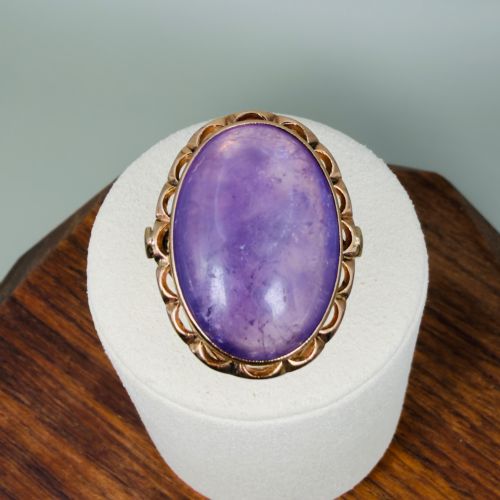
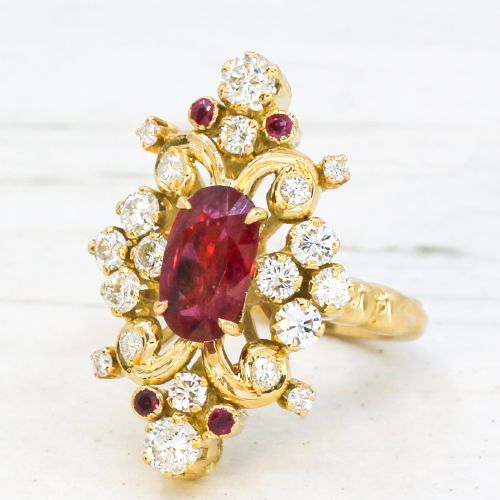
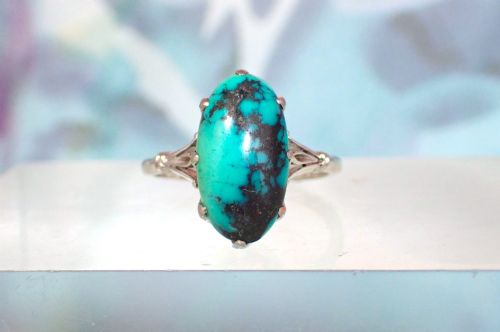
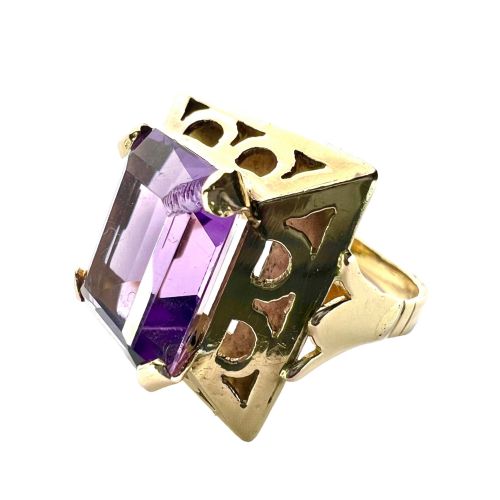
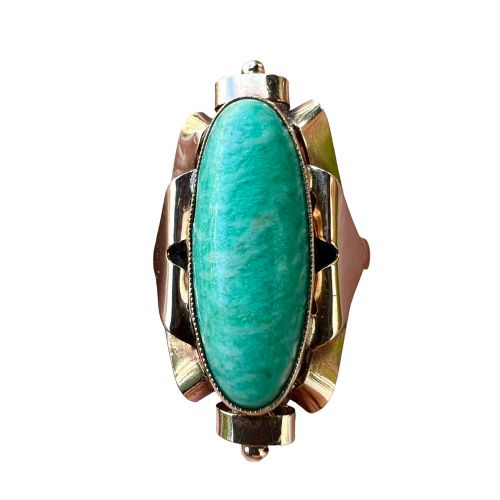
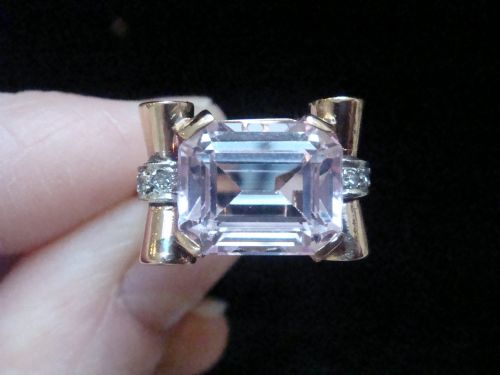
Central stones range from massive aquamarines and amethysts to vibrant turquoise, kunzite, and rubies, accompanied by supporting diamonds. Each piece functions as an assertive piece of hand ornament created to be seen from a distance.
Materials and Construction
Makers utilised heavy gauges of 18ct yellow and white gold alongside 14ct and 9ct variations to construct robust mountings capable of supporting massive central gems. Casting and heavy sheet fabrication created the structural ribbons, scrolls, and three-dimensional bombé contours typical of the period.
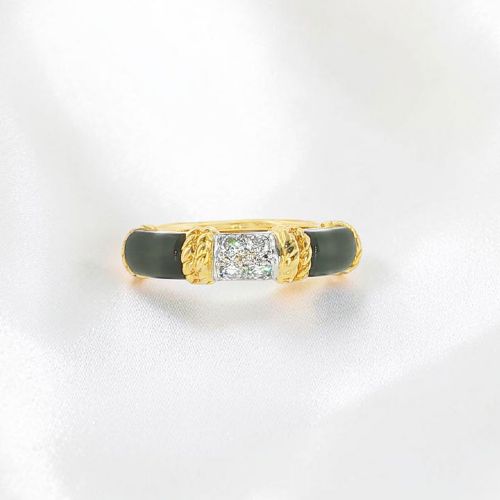
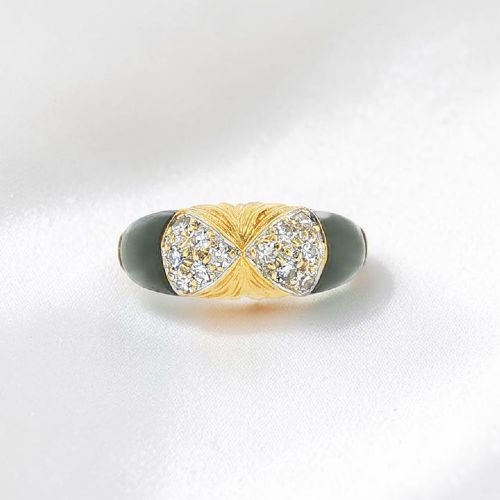
Gemstones such as large aquamarines, cabochon jade, and multi-carat tourmalines or amethysts were secured with heavy claw settings, bezel mounts, or integrated channel work. Diamond accents and calibre-cut rubies or emeralds were flush-set or pavé-set to enhance the sculptural metallic surfaces.
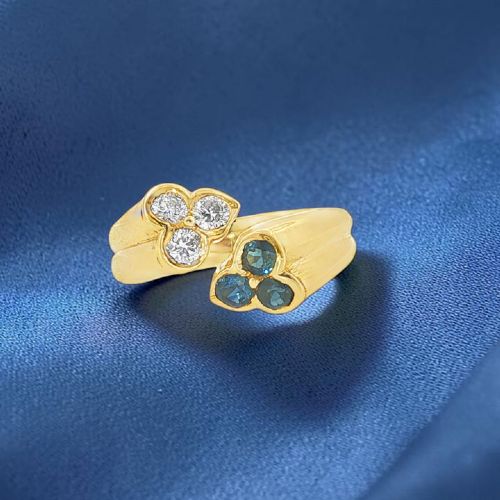
Listings feature 18ct yellow and white gold alongside platinum-topped mountings set with diamonds, emeralds, sapphires, and rubies.
Assessing Quality and Execution
Quality rests in the architectural harmony of the design and the weight of the precious metal relative to the scale of the gemstones. Superior examples demonstrate rigorous metalwork where scroll panels, tank steps, and gallery wirework align seamlessly without excess solder.
The calibre of the central stone largely dictates the grade of the jewel, separating standard commercial pieces from exceptional workshop creations. Natural unheated gems with clean saturation and precise pavilion depths elevate the execution significantly above standard paste or treated stones.
Kutchinsky
The Retro Gold Statement Ring Glossary
- Bombé ring
- A rounded, dome-shaped ring style that swells outward from the finger to create a voluminous profile. This silhouette defined much of mid-century high jewellery design.
- Tank ring
- A heavy geometric ring style inspired by military hardware, featuring bold stepped shoulders and angular metalwork typical of the 1940s. These pieces often showcase a central emerald-cut gemstone flanked by diamond accents.
- Cabochon
- A gemstone shaped and polished with a smooth, convex surface rather than faceted. This cut highlights the internal colour and optical phenomena of opaque or translucent stones like turquoise and jade.
- Ballerina ring
- A cluster ring featuring a central stone encircled by a fluted halo of tapered baguettes or brilliant-cut diamonds. The resulting outline resembles a dancer's tutu.
- Retro modern
- A design movement spanning the 1940s and 1950s characterised by oversized forms, stylised scrollwork, and a heavy preference for yellow and rose gold.
Retro Gold Statement Ring: Frequently Asked Questions
How do I clean a large cocktail ring?
Warm soapy water and a soft brush remove everyday oils from the metal and stone settings safely. Avoid harsh chemical dips, particularly if the ring contains porous gems like turquoise or opal.
Pat the piece completely dry with a lint-free cloth after rinsing. Regular professional checks ensure heavy claws remain secure around oversized centre stones.
Can I wear a statement ring daily?
Daily wear is possible if you account for the elevated profile and heavy weight of the design. High-set stones and substantial galleries catch on clothing more easily than low-profile bands.
Reserve the ring for occasions where you are not performing heavy manual tasks. Removing the piece during sports or gardening protects the gold work and soft gems.
What defines 1950s jewellery design?
The decade moved away from wartime austerity towards opulent, oversized motifs executed in thick yellow and white gold. Forms became sculptural, incorporating abstract ribbons, floral sprays, and voluminous domes.
Gemstones were selected for maximum visual impact, often pairing massive aquamarines or amethysts with brilliant-cut diamond highlights. The results were confident ornaments made to command attention.
How do I check ring sizing?
Wide-shank rings and large cluster settings often require a slightly larger size than a simple thin band. The extra metal coverage across the finger restricts natural movement.
Consult a jeweller experienced in vintage pieces to measure your finger accurately. Altering a heavy gold shank requires skill to preserve hallmarks and structural integrity.