




Retro Glass Desk Light
A retro glass desk light brings functional warmth to a workspace, combining period charm with sculptural forms.
Retro Glass Desk Light
A retro glass desk light occupies the intersection of practical workspace illumination and decorative arts, typically taking the form of table lamps and desk lamps. When you search for this phrase, you encounter pieces spanning the Victorian era through the mid-twentieth century, with the 1930s representing a dominant period in the selection.
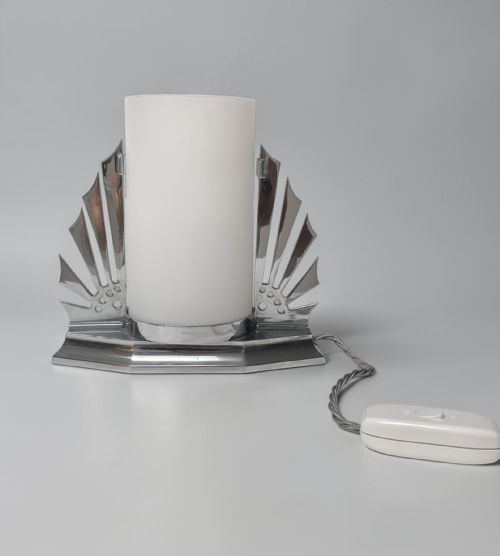
The materials and styles cluster heavily around Art Deco and Modernist designs, alongside Edwardian and 19th Century examples. Most specimens pair glass components with bases fashioned from brass, chrome, wood, or marble.
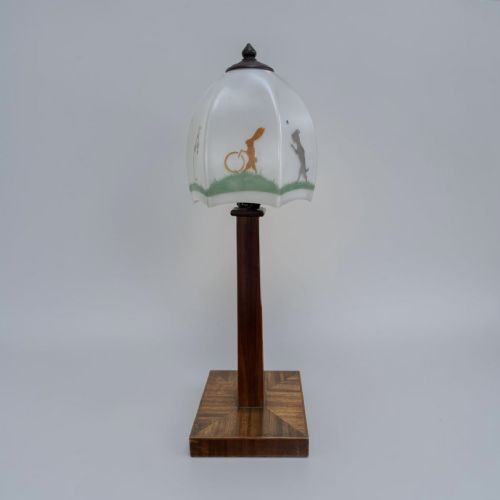
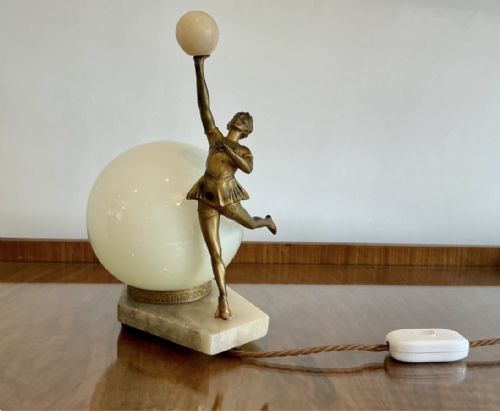
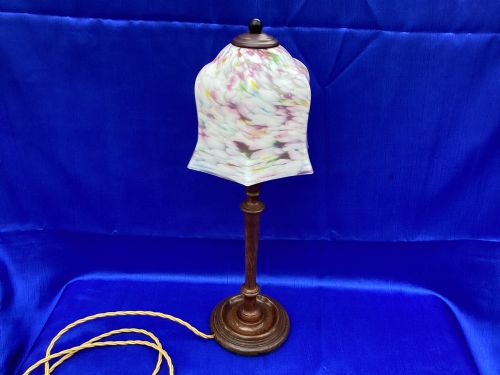
The forms vary from mushroom lamp profiles and shell-shaped bases to figural studies involving nudes and animals. You are most likely to meet frosted, opaline, or mottled glass shades supported by metal or wooden structures.
Quality factors in construction and design
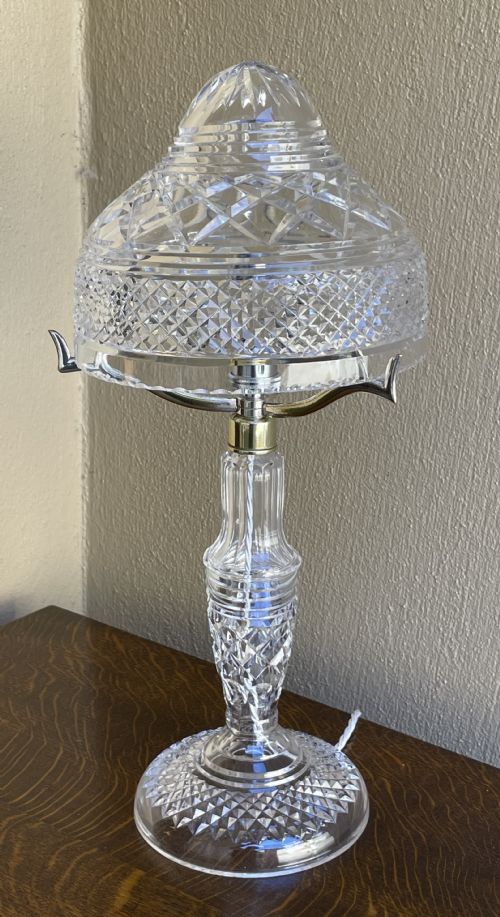
The distinction between standard production and superior examples lies in the weight of the materials and the crispness of the glass moulding. High-end pieces display heavier brass or chrome gauge, precise cutting in crystal, and complex figural casting on the base.
Design integration separates ordinary lighting from notable work, particularly where glass and metal join seamlessly. Superior pieces exhibit distinct period characteristics, such as the geometric lines associated with Karl Palda designs or French Art Deco manufacture.
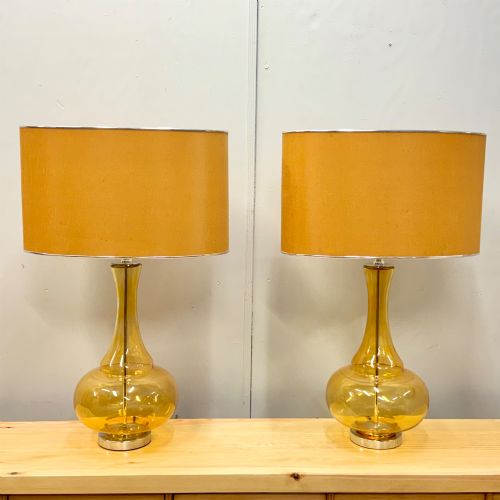
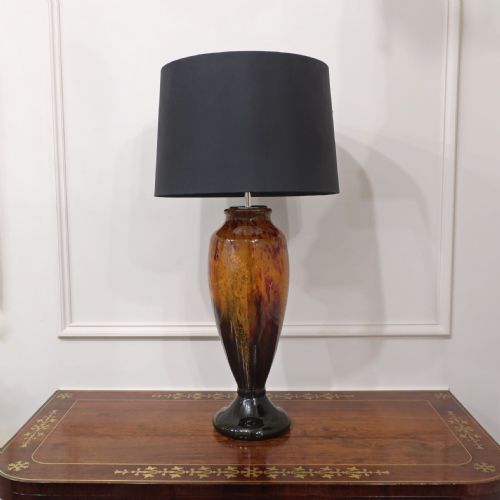
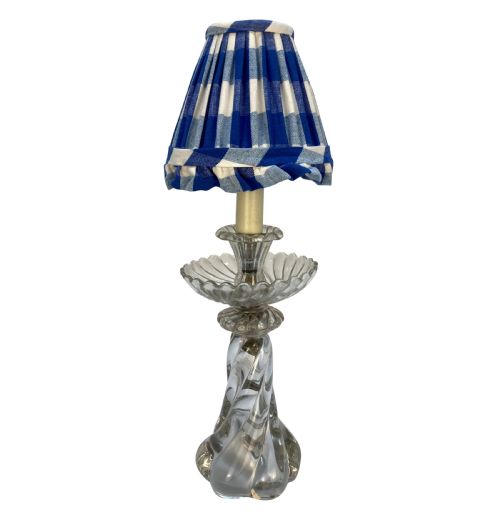
Glass varieties include opaline, frosted, amber, and cut crystal, paired primarily with brass, chrome, wood, and marble bases.
Charles Schneider·Karl Palda
The Retro Glass Desk Light Glossary
- Opaline Glass
- A milky, semi-translucent glass developed in the nineteenth century. It diffuses light softly and appears frequently in period desk lamps.
- Art Deco
- A design style dominant in the 1920s and 1930s characterised by stylised motifs, geometric shapes, and streamlined forms. It heavily influences the lamps in this selection.
- Mushroom Lamp
- A lighting form defined by a rounded, domed glass shade resembling a mushroom cap. This shape directs light downwards onto a desk surface.
- Bakelite
- An early plastic used for electrical components and switchgear. Its presence indicates authentic mid-century manufacturing methods.
- Modernist
- A style focusing on function, clean lines, and rejection of historic ornamentation. In these listings, it describes cubic and streamlined lamp forms.
Retro Glass Desk Light: Frequently Asked Questions
What periods do these lamps cover?
The selection spans from the 19th Century and Victorian eras through Edwardian examples up to the 1930s and 1940s. Art Deco and Modernist styles dominate the grouping.
Most pieces originate from the interwar period, reflecting the design shifts of that decade.
How do I identify an Art Deco desk lamp?
Art Deco lamps typically feature geometric patterns, stylised figures, or streamlined chrome and brass construction. Look for stepped bases and zig-zag motifs.
Mottled or frosted glass shades are also common indicators of this period's aesthetic.
Were all these lamps originally electric?
Several pieces originate as oil or paraffin lamps from the Victorian and Edwardian periods. These often undergo conversion to electricity later.
Original electrical fittings appear alongside converted burners and fonts.
What materials are used in the bases?
Bases incorporate a range of materials including brass, chrome, wood such as oak and mahogany, and marble. Figural bases depicting animals or human forms also occur.
Heavy metals and stone provide the necessary stability for glass-shaded table lamps.