





Retro Drop Earrings
These retro drop earrings bring distinctive mid-century character and bold geometry to the ear, offering the precise architectural weight and vibrant stones collectors seek.
Retro Drop Earrings
When you search for retro drop earrings, you find distinctive dangling designs originating primarily from the 1930s through to the 1960s. These pieces span Art Deco, mid-century modern, and modernist styles, capturing the evolving aesthetic of twentieth-century jewellery design.
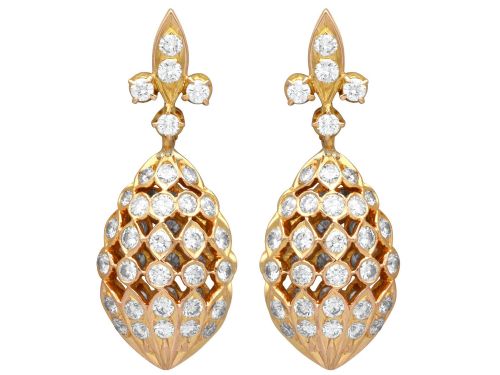
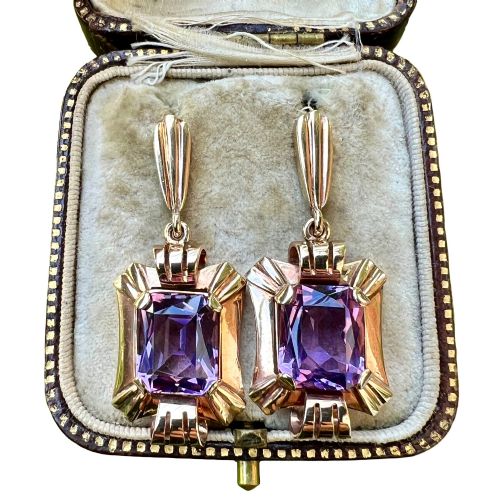
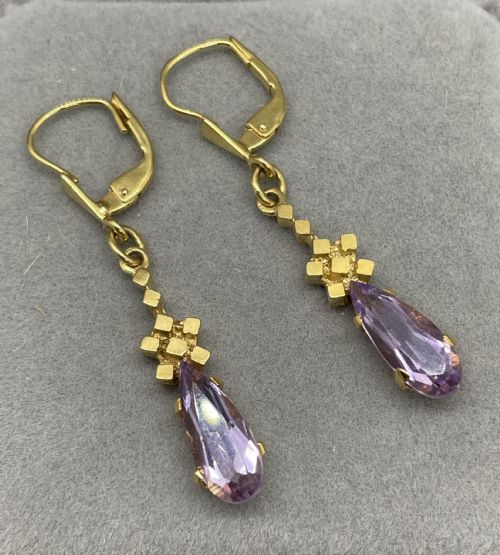
The most common examples on this page feature gold or white gold settings paired with diamonds, amethysts, aquamarines, and even experimental materials like bakelite. Forms range from chunky tassel structures to delicate teardrops and twirls.
Originating across four distinct decades, these drops reflect both the restrained geometry of the thirties and the exuberant, sculptural forms of the fifties and sixties. Buyers encounter everything from simple silver amber pieces to elaborate gemstone suites.
How they were made
Goldsmiths constructed these drop earrings using traditional casting and setting techniques in yellow gold, white gold, and silver. Gemstones such as diamonds, rubies, and amethysts were securely prong or bezel set to catch the light during movement.
Alternative materials like bakelite and chrome define the modernist and Art Deco revival pieces, reflecting industrial manufacturing shifts of the period. Foxtail chains and structured wirework added flexibility and dynamic movement to tassel and pendant designs.
Retro Drop Earrings Retail Price Guide 2026
Typical asking prices for retro drop earrings among the pieces listed under this phrase on Sellingantiques today, from the lower quarter to the upper quarter. They describe what is for sale here now, not the wider market.
The listings span four distinct decades from the 1930s to the 1960s, incorporating materials from traditional diamonds and 9ct gold to industrial bakelite and chrome.
What varies in quality
The overall standard of these earrings depends heavily on the precision of the metalwork and the quality of the selected gemstones. Heavier gold gauges and well-matched stones separate exceptional examples from lighter, more commercial productions.
Design integrity also dictates worth, with bolder modernist and Art Deco forms demonstrating superior sculptural ambition. The longevity of the drop mechanism and the security of the fastenings further distinguish finer pairs.
The Retro Drop Earrings Glossary
- Drop earrings
- Earrings that extend below the earlobe, typically featuring a fixed top with a swinging lower component. This style creates continuous movement as the wearer turns their head.
- Bakelite
- An early synthetic phenol-formaldehyde plastic introduced in the early twentieth century. It appears in modernist and Art Deco pieces for its vibrant colour and bold sculptural potential.
- Foxtail chain
- A flexible jewellery chain constructed from curved links that resemble the bushy tail of a fox. In drop earrings, this technique provides fluid, tactile movement.
- White gold
- An alloy of gold and at least one white metal such as palladium, nickel, or silver. It gained widespread popularity in mid-century jewellery to complement brilliant-cut diamonds.
Retro Drop Earrings: Frequently Asked Questions
How do I clean vintage drop earrings?
Most metal and gemstone drops tolerate a gentle wash in warm soapy water using a soft brush. Avoid submerging organic materials like amber or soft plastics in water.
Dry each piece thoroughly with a lint-free cloth before storage. Professional ultrasonic cleaning should be reserved for durable gemstones without delicate glued components.
Are these earrings comfortable for daily wear?
Weight varies considerably between chunky gold or gemstone suites and lighter modernist chrome pieces. Heavier pairs suit evening events or shorter durations.
Inspect the backings and posts to ensure they distribute the weight evenly across the lobe. Well-balanced drops sit securely without pulling uncomfortably.
How can I tell a 1940s piece from a 1960s one?
Forties pieces often retain the geometric austerity of late Art Deco, frequently utilising yellow gold and calibrated gemstones. Fifties and sixties designs tend towards bolder abstracts, whiter metals, and experimental textures.
Clasp styles and construction methods also offer clues to the manufacturing decade. Comparing the overall silhouette against known twentieth-century design shifts helps confirm the era.
Can I wear these with modern outfits?
These versatile drops pair effortlessly with contemporary minimalist clothing, adding an instant focal point to simple necklines. The contrasting decades provide an intentional, curated juxtaposition.
Allow the earrings to anchor the ensemble by keeping other accessories restrained. They transition smoothly from daytime tailoring to evening attire.