






Retro Drinks Cart
A retro drinks cart brings period glamour and practical hosting style into a modern room through clever tiering and rollable mobility.
Retro Drinks Cart
A retro drinks cart combines surface space with mobility, offering tiered designs made for serving beverages and displaying barware. These pieces range from simple tea trolleys to elaborate display stands and bar carts.
The selections span several decades, notably the 1920s, 1930s, and 1940s, alongside later mid-century examples. Styles traverse Art Deco, Hollywood Regency, and French mid-century influences.
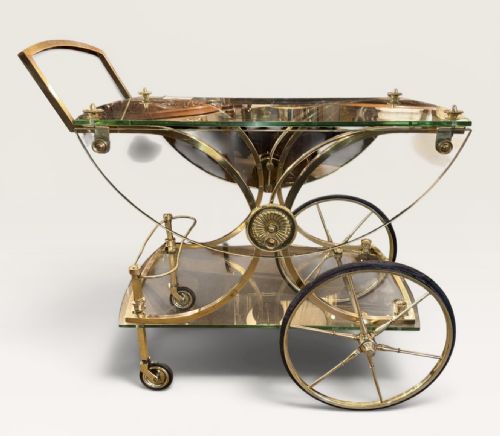
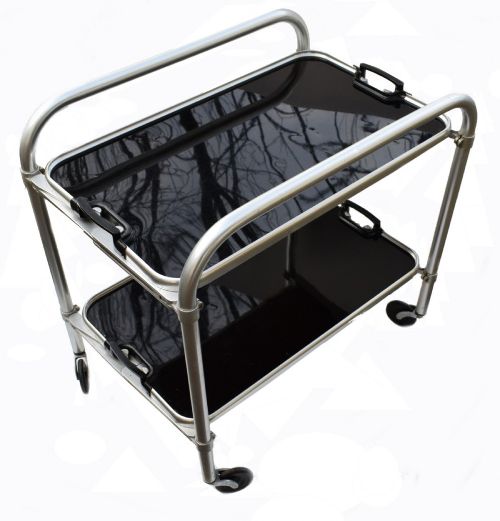
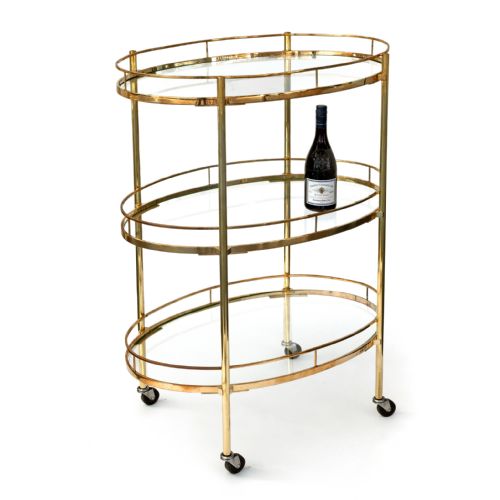
Buyers will encounter items ranging from removable carrying trays and two-tier aluminum hostess bar carts to cane-bound beech trolleys and brass display stands. Glass and metal dominate the forms alongside walnut and mahogany timbers.
How they were made
Metal fabrication defines many pieces, utilising chrome, brass, and aluminium alongside silver-plated components. Smiths and manufacturers shaped these metals into tubular frames, galleried edges, and wheeled trolley structures.
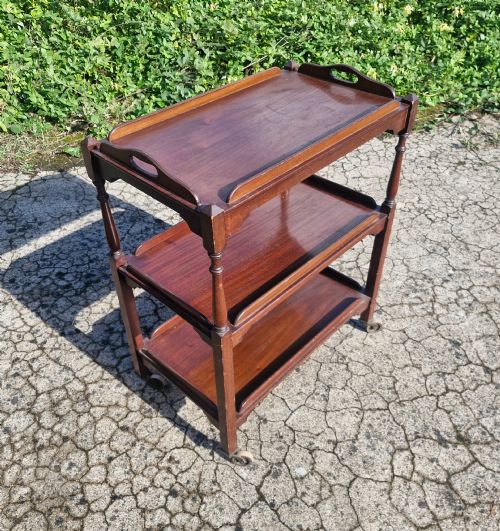
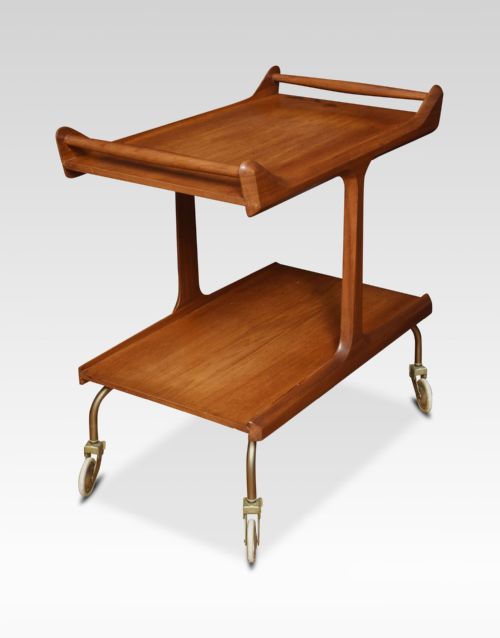
Timber construction relies on hardwoods such as walnut and mahogany, alongside beech bound with cane. Carpenters built sturdy frames designed to support multiple levels of glass or wooden shelving.
Retro Drinks Cart Retail Price Guide 2026
Typical asking prices for retro drinks cart among the pieces listed under this phrase on Sellingantiques today, from the lower quarter to the upper quarter. They describe what is for sale here now, not the wider market.
Keep an eye out for novelty barware trays depicting Charlie Chaplin, bringing unexpected silent-film charm to your cocktail hour.
What varies in quality
Materials and maker attribution separate standard items from notable examples. Pieces created by recognised firms command attention through superior weight, metal finishing, and timber selection.
Design complexity and structural integrity distinguish the builds. Multi-tiered brass display stands, galleried edges, and cane-bound frames demonstrate higher craftsmanship than basic utility trolleys.
Maison Bagues·J. B. Chatterley & Sons·James Dixon & Sons·Lusty of Leicester·C S Green & Co.·Gaskell & Chambers
The Retro Drinks Cart Glossary
- Art Deco
- A design style characterised by sleek geometric forms, modern materials, and streamlined shapes originating in the early twentieth century.
- Hostess Trolley
- A wheeled serving cart designed for transporting food, tea, or cocktails across rooms during social gatherings.
- Cocktail Shaker
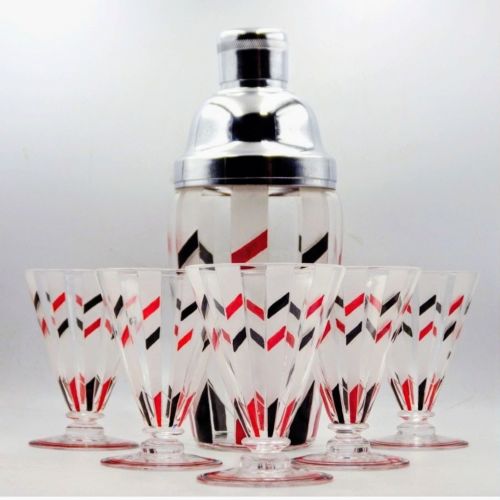
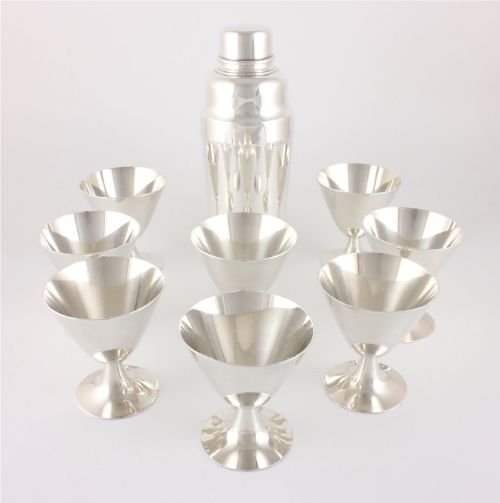
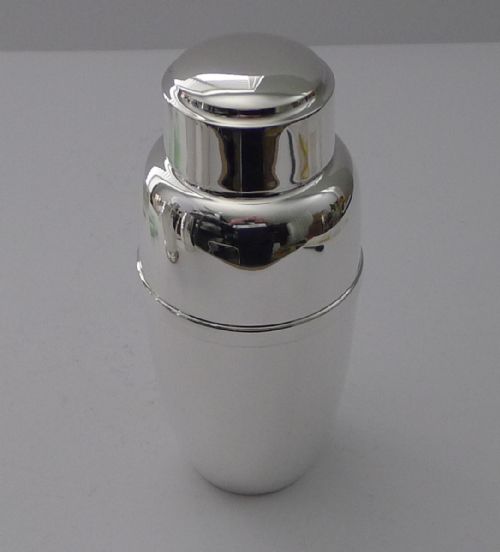
- A barware vessel used to mix drinks by shaking, frequently produced in silver plate during the 1930s and 1940s.
- Gallery
- A raised ornamental border or railing fitted around the edge of a tray or trolley shelf to prevent items from sliding off.
- Hollywood Regency
- An opulent decorative style incorporating reflective surfaces, polished metals, and theatrical glamour.
Retro Drinks Cart: Frequently Asked Questions
What is a retro drinks cart used for?
These carts serve as mobile surfaces for holding bottles, glassware, and cocktail shakers during gatherings. They function equally well as permanent display furniture in a living room or dining space.
Their tiered structure allows owners to organise barware efficiently while adding a decorative focal point to an interior.
How do I identify an Art Deco drinks cart?
Art Deco trolleys typically feature geometric lines, polished chrome or aluminium frames, and contrasting walnut or mahogany elements. They often incorporate streamlined curves and tiered glass shelving.
Many examples from this period date from the 1930s and reflect the architectural and industrial design trends of the era.
Are these carts suitable for everyday use?
Most pieces are built with sturdy metal or hardwood frames designed for practical mobility on smooth flooring. Their original purpose as hostess or tea trolleys means they were engineered to carry heavy glass and tableware.
Care should be taken with vintage silver plating and antique glass surfaces to maintain their condition during regular hosting duties.
What materials were commonly used?
Makers utilised a combination of metals including chrome, brass, aluminium, and silver plate alongside timber frames in walnut, mahogany, and beech. Glass panels, mirrors, and cane binding frequently complete the construction.
These materials vary by period, with chrome and mirrored glass dominating 1930s modernist pieces and warmer woods appearing in earlier designs.