

Retro Dress Ring
A retro dress ring brings bold mid-century scale, colourful gemstones and heavy gold work to the hand.
Retro Dress Ring
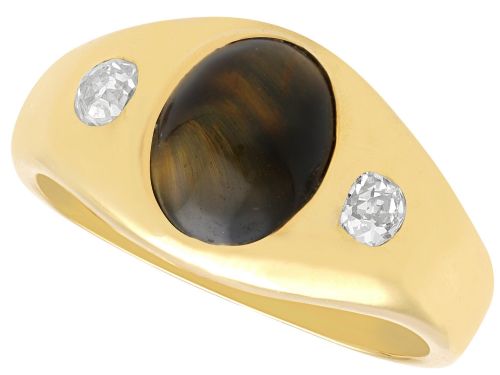
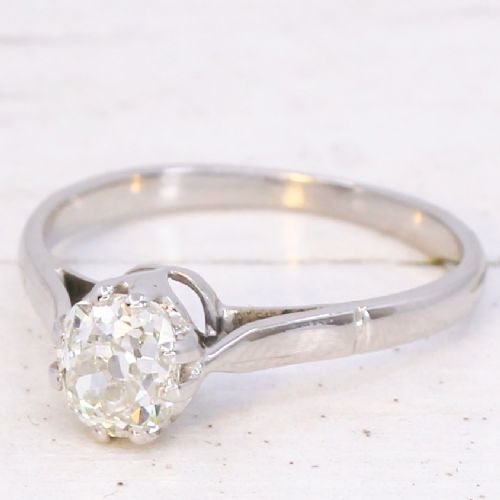
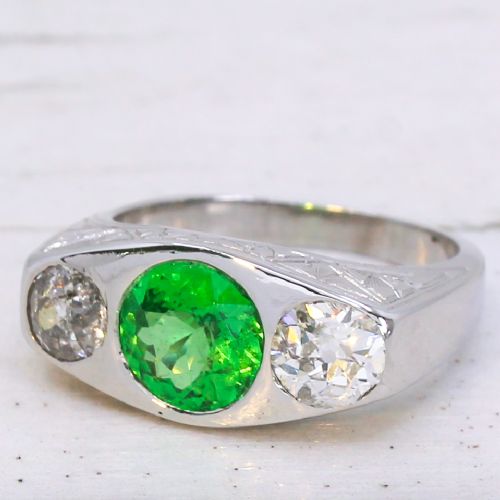
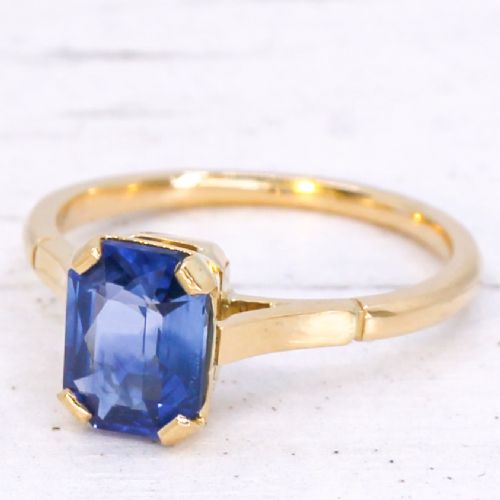
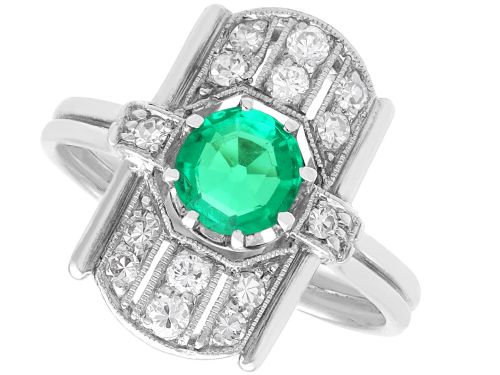
A retro dress ring is a statement piece designed for evening wear and social occasions, drawing on styles from the 1940s, 1950s and 1960s. These pieces often feature substantial mounts and prominent centre stones intended to catch the eye across a room.
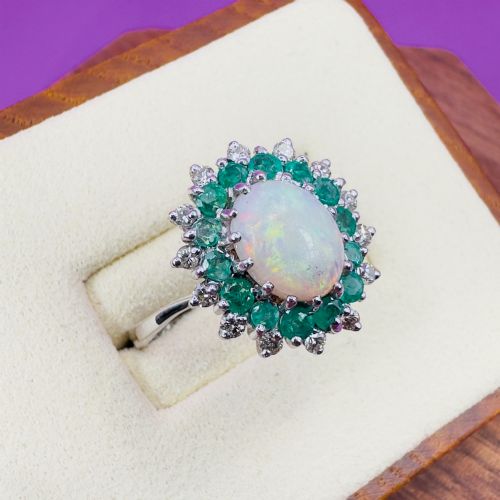
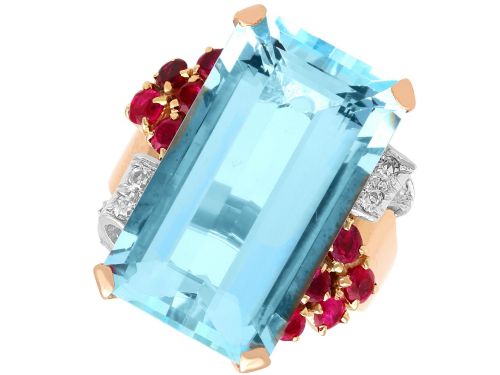
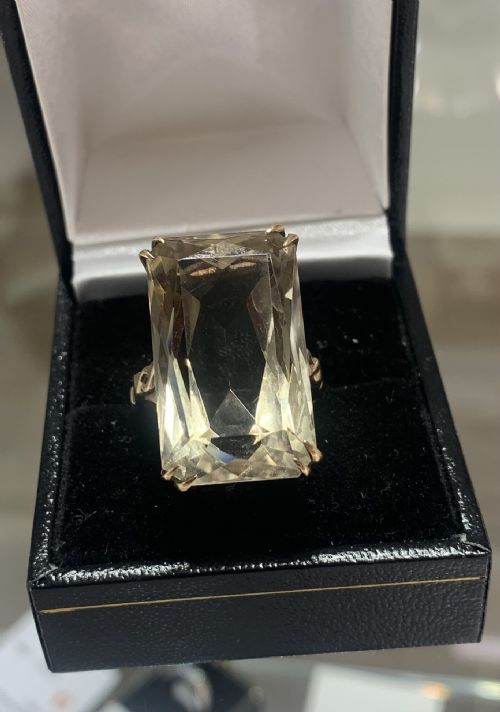
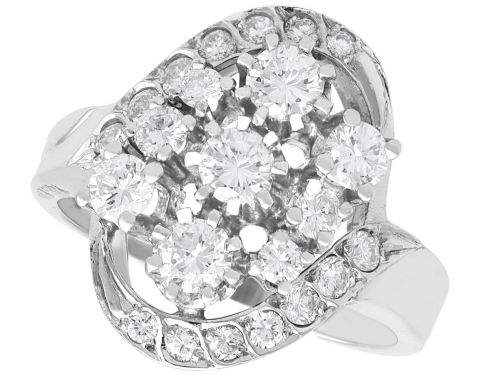
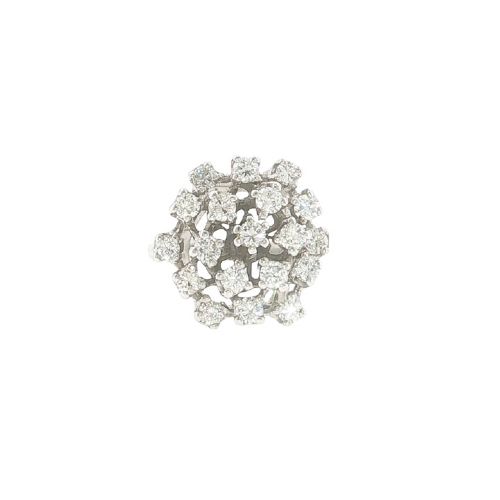
Buyers will encounter generous cocktail rings set with large aquamarines, amethysts, opals and multi-coloured gem clusters alongside refined diamond clusters and geometric bands. The aesthetic spans straightforward mid-century designs to flamboyant 1970s modernist creations.
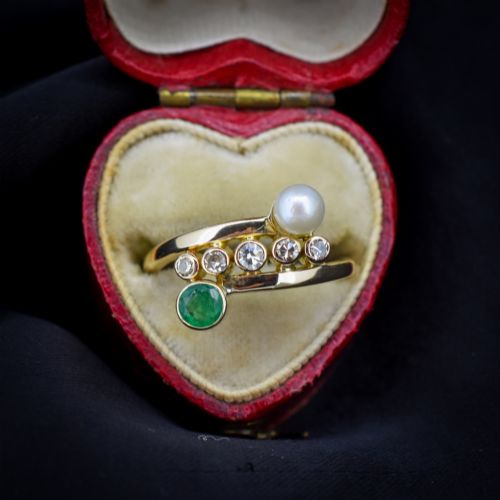
Origins stretch from British workshops to French ateliers, encompassing Edwardian roots and Art Deco influences that bled into post-war jewellery design. Gold purity varies across these decades, utilising 9ct, 14ct and 18ct alloys in yellow, white and rose tones, alongside platinum.
Materials and construction
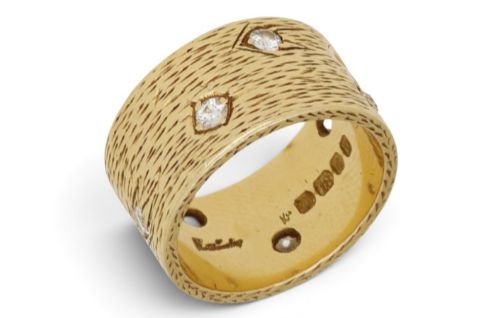
Goldsmiths worked extensively with 18ct yellow and white gold, platinum and rising quantities of 14ct and 9ct gold to construct heavy, sculptural mounts. Textured finishes, bypass twists and tank-style architecture give these rings their characteristic physical weight and dimensional presence.
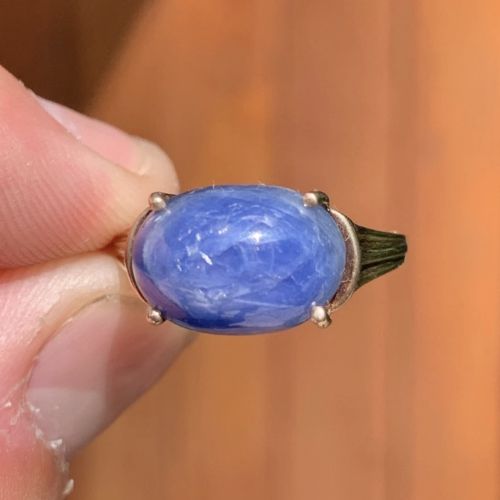
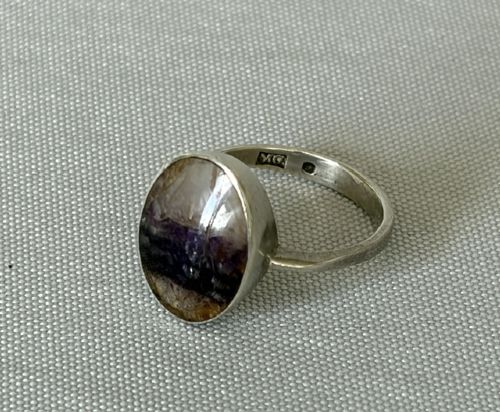
Settings incorporate prominent diamonds, sapphires, rubies and emeralds alongside unusual or organic stones such as Blue John, lavender jade, kunzite and black onyx. Stones are secured in robust claws, bezels and elaborate cluster arrangements designed to support high-carat centre gems.
Retro Dress Ring Retail Price Guide 2026
Typical asking prices for retro dress ring among the pieces listed under this phrase on Sellingantiques today, from the lower quarter to the upper quarter. They describe what is for sale here now, not the wider market.
Several rings utilise unusual British Blue John fluorite, turning Yorkshire mining heritage into mid-century cocktail glamour.
Markers of distinction
The distinction between ordinary and exceptional examples lies in the originality of the design, the weight of the precious metal and the quality of the selected gemstones. Heavier gauge metalwork and substantial stone carat weights elevate a piece above standard mass production.
Maker attribution plays a definitive role, with signed pieces from established London workshops commanding greater interest through superior finishing and intricate hand-texturing on the gold. The clarity, untreated status and lively colour saturation of coloured stones further divide the tiers.
Kutchinsky
The Retro Dress Ring Glossary
- Tank ring
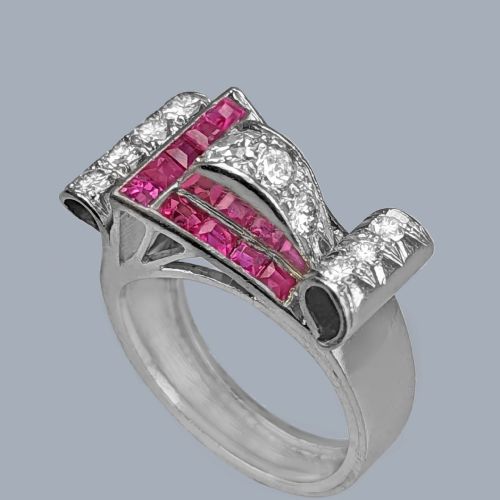
- A bold, chunky ring style developed during the 1940s, named for its resemblance to military tank treads. These pieces feature stepped, geometric gold shoulders flanking a central stone.
- Cocktail ring
- An oversized, decorative ring worn to draw attention, typically featuring large central gems surrounded by smaller diamonds. They gained immense popularity during post-war social gatherings.
- Bypass ring
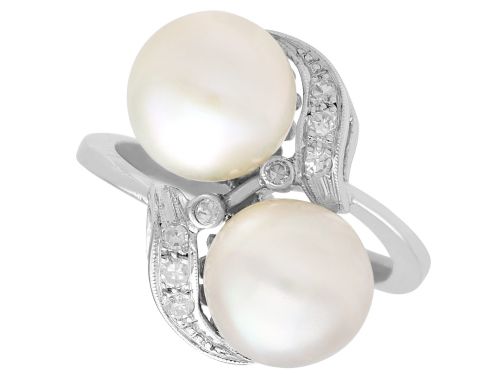
- A design where the shank sweeps around the finger in opposing curves, often crossing over each other to hold two different stones in a twist motif.
- Old cut diamond
- A precursor to the modern brilliant cut featuring a smaller table, higher crown and larger culet. These stones catch candlelight with a softer, broader flash.
Retro Dress Ring: Frequently Asked Questions
How do I wear a retro dress ring?
These statement pieces are traditionally worn on the right hand as a focal point of an evening outfit. Their substantial size means they often sit best on the middle or ring finger without crowding adjacent jewellery.
Because many examples feature prominent mounts or high-set stones, consider pairing them with simple bands if you choose to stack other rings on your hand.
What periods do these rings cover?
The selection spans from Edwardian and Art Deco antecedents through the wartime 1940s, the post-war 1950s and into 1970s modernist designs. Each decade brought distinct shifts in gold weight, stone combinations and geometric structure.
Mid-century and 1970s iterations tend to display the most exuberant use of textured gold and large semi-precious quartz or beryl varieties.
Are these rings suitable for daily wear?
While many are robustly constructed from heavy gold or platinum, their decorative nature and large centre stones require some mindfulness during active tasks. Rings set with softer materials like opal, turquoise or pearls need particular care to avoid knocks.
Checking the security of the claw settings with a loupe periodically helps protect valuable sapphires, rubies and diamonds from accidental loss.
How can I tell a 1940s ring from a 1970s one?
Forties pieces frequently employ tank-style stepped geometry and rose gold influenced by wartime material restrictions and military aesthetics. Seventies rings often abandon symmetry entirely in favour of heavy textured gold, modernist lattices and brutalist finishes.
Hallmarks, where present, provide definitive dates alongside stylistic clues such as the transition from soft floral clusters to stark abstract shapes.