


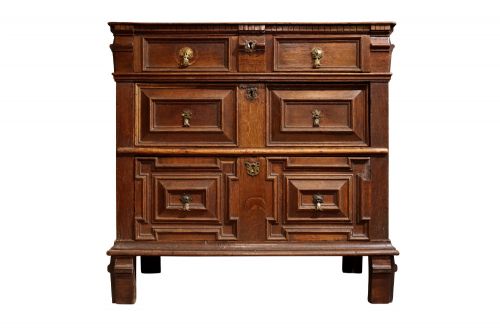


Restoration Style Drawers
Restoration style drawers bring robust timber and grand seventeenth or nineteenth century presence straight into a modern interior.
Restoration Style Drawers
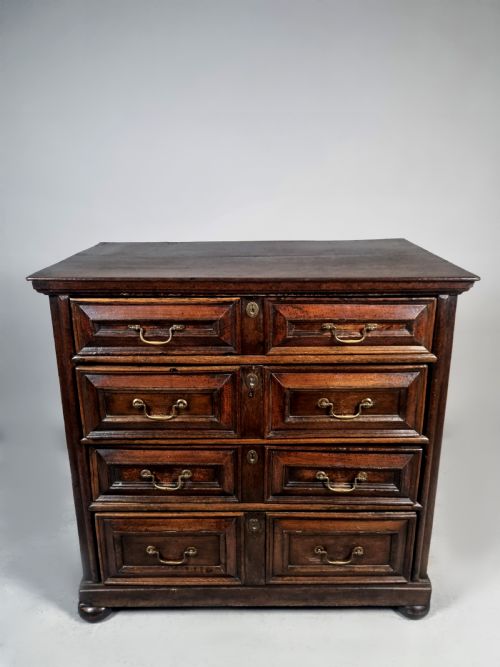
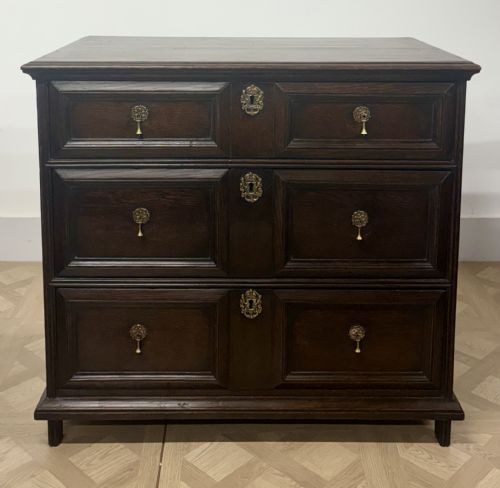
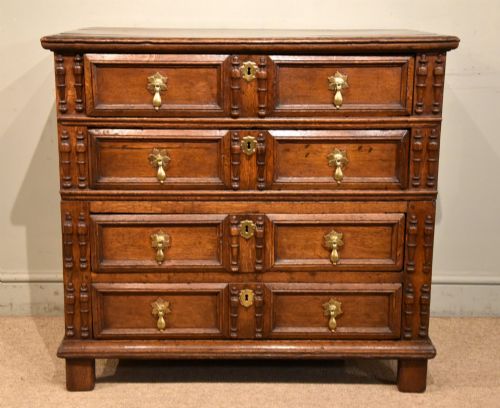
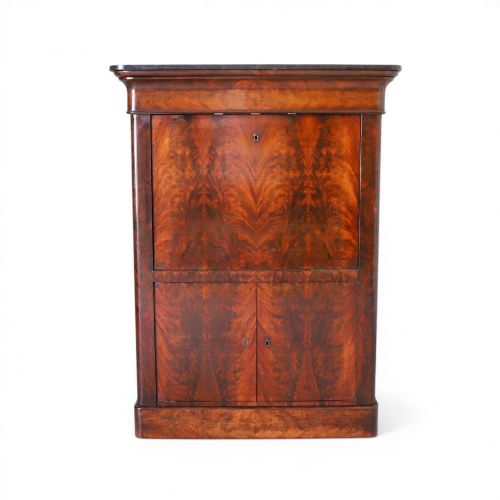
The forms vary between practical two part chests, tall secretaire cabinets with fitted writing compartments, and occasional side tables topped with marble. Oak and walnut dominate the structural framing, while fruitwood and burr elm provide richly figured drawer fronts that catch the light. Each piece balances utilitarian storage with the architectural detailing characteristic of the Restoration period.
How they were made
Carpenters constructed these carcasses primarily from solid oak and walnut, utilising heavy timber framing to ensure long term stability. Drawer fronts frequently display intricate bookmatched veneers in burr elm, flame mahogany, or walnut, glued carefully to secondary woods to create striking grain patterns.
Metal hardware plays a functional and decorative role, featuring brass handles and escutcheons secured to the drawer faces. On nineteenth century French commodes, heavy marble slabs sit neatly upon the upper surface, adding weight and a cool tactile contrast to the warm timber beneath.
Restoration Style Drawers Retail Price Guide 2026
Typical asking prices for restoration style drawers among the pieces listed under this phrase on Sellingantiques today, from the lower quarter to the upper quarter. They describe what is for sale here now, not the wider market.
Several cabinets conceal secret compartments behind their fitted writing drawers, offering a clever nod to historic espionage.
What varies in quality
The depth and crispness of the moulded fronts separate standard examples from finer works, particularly on seventeenth century oak pieces where geometric panels demand precise chisel work. Timber selection drives much of the distinction, with highly figured burr walnut and burr elm commanding attention through intricate grain movement.
The integrity of the original hardware and the smoothness of the drawer action indicate the level of care taken during construction. Pieces that retain their original brass mounts and unwarped timber panels demonstrate superior workshop execution.
The Restoration Style Drawers Glossary
- Commode
- A low French chest of drawers, often topped with marble and finished with decorative wood veneers. This form became popular during the nineteenth century revival periods.
- Secretaire
- A cabinet incorporating a pull down writing flap that conceals small interior drawers and pigeonholes. It combines desk functionality with standard drawer storage.
- Burr
- A growth on a tree trunk that produces swirling, highly decorative wood grain when sliced into veneers. Cabinetmakers used burr elm and burr walnut on prominent drawer fronts.
- Moulding
- A shaped strip of timber fixed to the drawer fronts or frame to create depth and shadow. Seventeenth century oak pieces rely heavily on geometric moulded designs.
- Carolean
- The artistic style spanning the reign of Charles II, characterised by robust proportions and rich surface carving. It forms the foundation of seventeenth century revival furniture.
Restoration Style Drawers: Frequently Asked Questions
What periods do these pieces date from?
The listings span seventeenth century originals alongside nineteenth century revival works and pieces from nineteen hundred. Each period brings distinct timber choices and regional cabinetmaking techniques.
Revival pieces often reinterpret earlier motifs using French Empire or Carolean styles, while seventeenth century examples display authentic period wear and joinery.
How were these chests used historically?
These chests provided essential storage for textiles, garments, and valuables within domestic bedchambers and parlours. Taller cabinets often included writing compartments for correspondence and document storage.
The inclusion of secret drawers in certain commodes allowed owners to secure sensitive items away from daily view.
How do I care for timber surfaces?
Maintain the wood by applying quality natural wax sparingly and buffing gently with a soft cloth. Avoid placing these pieces in direct sunlight or near heat sources to prevent timber splitting.
Marble tops on French commodes require simple cleaning with a damp cloth and mild soap to protect the polished stone.
How do I distinguish oak from walnut pieces?
Oak exhibits a pale, coarse grain with visible medullary rays, making it ideal for heavy structural framing. Walnut displays a darker, smoother tone with varied grain patterns suitable for fine veneers.
Seventeenth century pieces lean heavily towards sturdy oak, whereas later French commodes favour walnut and burr elm.