



Repousse Silver Milk Pitcher
These repousse silver milk pitcher examples combine raised metalwork with domestic utility, offering tactile charm for the table.
Repousse Silver Milk Pitcher
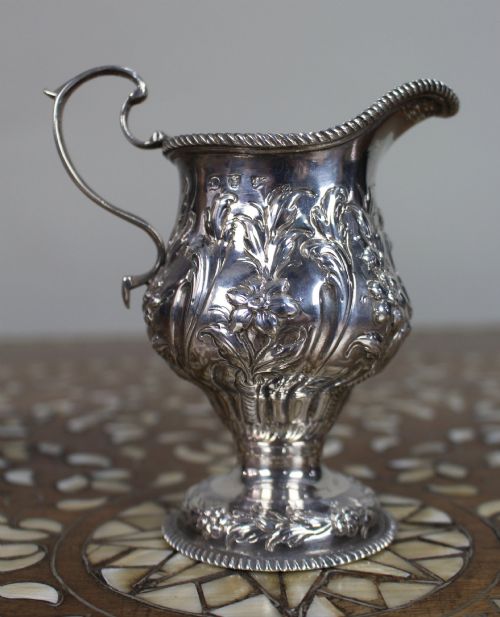
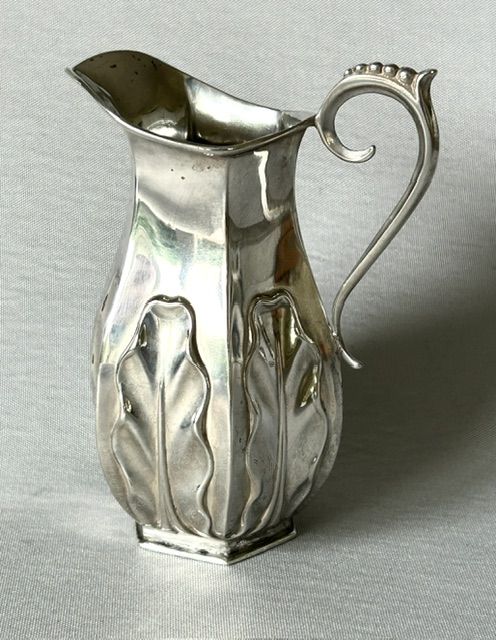
A repousse silver milk pitcher serves as a small vessel designed for pouring cream or milk at tea and dining tables, frequently taking the form of a cream jug. Buyers searching for a repousse silver milk pitcher will encounter various historical interpretations ranging from Georgian designs to later Victorian naturalist and revival styles. The selection includes domestic British examples alongside pieces originating from international workshops such as Chinese Export makers.
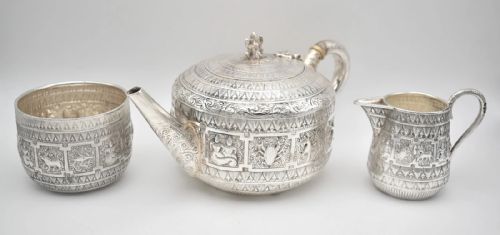
Most items appearing under a repousse silver milk pitcher search date from the nineteenth century, encompassing Victorian and Edwardian periods alongside earlier Georgian specimens. Forms span compact cream jugs, small bamboo-handled jugs, and occasional pieces that formed part of larger tea services. Stylistic variations cover plain Rococo revivals, intricate zodiac and Indianesque motifs, and dragon-decorated vessels.
Materials and construction methods
The construction of a repousse silver milk pitcher relies primarily on sterling silver and standard silver, occasionally supplemented by interior gilding known as silver-gilt. Smiths shaped these vessels through hammering and raising techniques before employing repousse work, pushing the metal from the reverse side to create raised decorative reliefs on the exterior surface. Handles on smaller pitchers occasionally incorporate alternative organic elements such as bamboo to contrast with the metallic body.
Makers finished each repousse silver milk pitcher with hand-chasing to refine details within the raised patterns, establishing crisp floral, animal, or mythical motifs. Hallmarks stamped directly into the metal provide official records of assay offices, standard purity, and date letters corresponding to specific years of production.
Repousse Silver Milk Pitcher Retail Price Guide 2026
Typical asking prices for repousse silver milk pitcher among the pieces listed under this phrase on Sellingantiques today, from the lower quarter to the upper quarter. They describe what is for sale here now, not the wider market.
The inventory includes both British provincial items and Chinese Export pieces featuring bamboo-effect handles.
Factors distinguishing quality
Quality in a repousse silver milk pitcher rests upon the depth, clarity, and precision of the hammer-work and subsequent chasing. Superior examples display high definition in the raised motifs without thinning the silver wall excessively during the forming process. The crispness of chased lines and the balance of the handle relative to the spout dictate the overall refinement of the piece.
The integrity of maker marks and hallmarks adds contextual depth, whereas crisp casting or fabrication of applied elements such as feet and rims indicates superior craftsmanship. A well-executed repousse silver milk pitcher maintains structural rigidity and secure handle attachment despite the decorative manipulation of the metal.
George Fox·Luen Hing
The Repousse Silver Milk Pitcher Glossary
- Repousse
- A metalworking technique where the design is hammered into relief from the reverse side of the object. This method creates tactile, three-dimensional decorative surfaces.
- Hallmark
- An official stamp applied to precious metals indicating purity, maker, and assay office. These marks allow collectors to verify the origin and date of the silver.
- Gilt
- A thin layer of gold applied to the interior or exterior surface of silver objects. This treatment protected the silver from tarnishing when exposed to acidic liquids like milk.
- Chasing
- Working the metal from the front side with punches and hammers to refine repousse details. This secondary process sharpens lines and adds texture to the design.
Repousse Silver Milk Pitcher: Frequently Asked Questions
What is a repousse silver milk pitcher used for?
These vessels were created to hold and pour milk or cream during tea service and dining occasions. Their decorative exteriors made them suitable for display on the table alongside matching teapots and sugar basins.
Over time, many of these pitchers transitioned into decorative cabinet pieces or flower vases while retaining their traditional domestic utility.
How do I identify the date of a pitcher?
Dating relies primarily on the physical hallmarks stamped onto the body of the silver, which correspond to specific assay office records and date letter cycles. Stylistic clues such as Rococo revival scrolls or naturalist floral motifs also point toward specific decades like the Victorian era.
Comparing the handle construction and decorative technique helps narrow down the production period when hallmarks are rubbed or absent.
Are these pitchers made of solid silver?
The majority of pieces encountered are constructed from solid sterling silver or standard silver grades. Some examples feature an interior layer of gilt, which is a gold wash applied over the silver base.
Makers utilised solid silver to ensure durability and to allow for the deep hammer-work characteristic of repousse decoration.
How should I clean a silver milk pitcher?
Maintenance requires gentle washing with warm water and mild soap, followed by drying with a soft cloth to prevent water spots. Specialised silver polishes should be used sparingly to avoid wearing away the fine details of the repousse relief.
Proper storage in a dry environment helps minimise natural tarnishing between uses.