

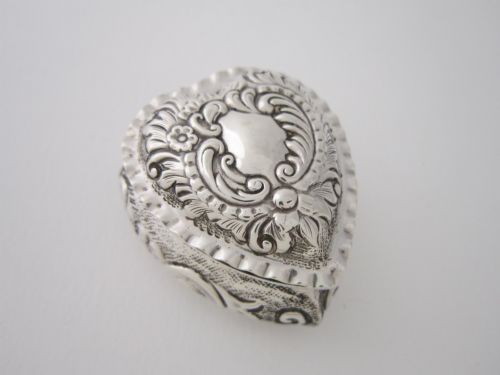
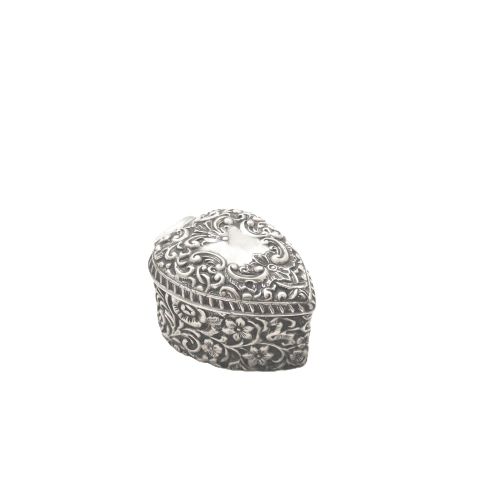

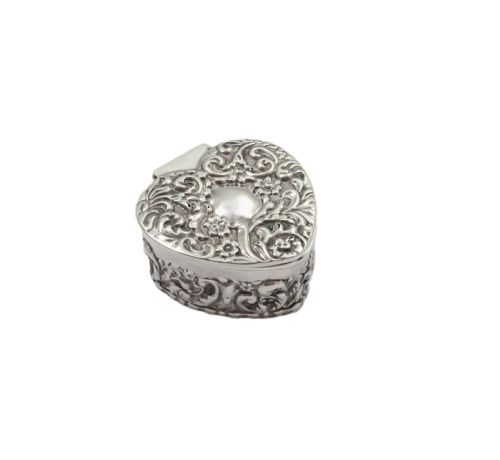

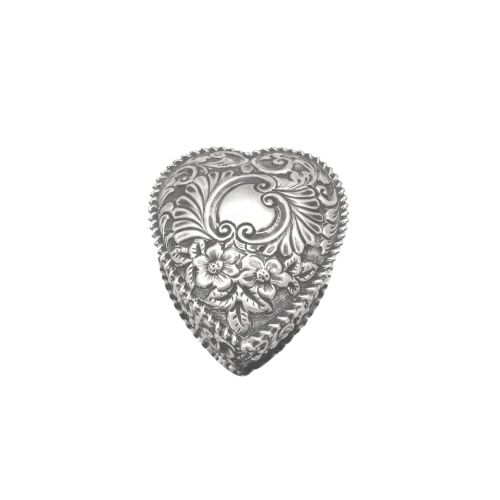


Repousse Silver Heart Box
These repousse silver heart box pieces are charming receptacles shaped for keepsakes, prized for their intricate metalwork and romantic form.
Repousse Silver Heart Box
You are most likely to meet sterling silver examples bearing dates from the late nineteenth century through to the early twentieth century. Some pieces combine cut glass or cut crystal bodies with silver lids, while others are entirely formed of silver.
Origins span British Assay Office pieces from London alongside regional styles such as Anglo-Indian silver work. The primary function remains decorative and domestic, serving as dressing table accessories for precious small items.
How they were made
The makers utilised sterling silver and vermeil, shaping them into distinct heart profiles through metalworking techniques. Cut glass and cut crystal were also employed for the lower bodies of certain boxes, providing a contrast to the metal lids.
Surface ornamentation relies on repousse work, where metal is hammered from the reverse side to form raised patterns and motifs. This technique creates tactile relief across the silver lids of the trinket boxes.
Object forms span small pill boxes, ring containers, and larger trinket boxes shaped as hearts.
What varies in quality
The crispness and depth of the repousse decoration dictate the visual merit of the piece. Shallower hammering yields a softer design, whereas deep, well-defined relief demonstrates superior artisan skill.
The thickness of the sterling silver and the precise alignment of the hinged lid determine the structural integrity. Weight and material purity, such as the presence of vermeil plating, further distinguish individual examples.
The Repousse Silver Heart Box Glossary
- Repousse
- A metalworking technique where the design is hammered into relief from the reverse side. This method creates decorative patterns on the surface of the silver.
- Sterling Silver
- An alloy comprising ninety-two point five percent silver and seven point five percent other metals, usually copper. This standard is frequently marked on British boxes.
- Vermeil
- Sterling silver plated with a thin layer of gold. This finish adds a warm tone to the interior or exterior of the container.
- Cut Crystal
- High-clarity glass cut with geometric or decorative facets. It forms the heavy bases of several heart-shaped boxes.
Repousse Silver Heart Box: Frequently Asked Questions
What were heart silver boxes used for?
These containers served primarily on dressing tables to hold rings, small jewellery pieces, or pills. Their intimate scale made them suitable personal accessories.
Over time, they transitioned from functional items to decorative objects collected for their craftsmanship.
How do I date a silver heart box?
Dating relies on hallmarks stamped into the silver, which indicate the assay office, year, and maker. Stylistic clues such as Victorian or Edwardian motifs also help narrow the timeframe.
Comparing the form against known production years clarifies the period of manufacture.
Are all heart boxes solid silver?
Not every box is entirely made of metal. Several examples feature glass or crystal bodies fitted with a decorative silver lid.
Examining the base material reveals whether the piece combines glasswork with metalworking.
How should I care for silver boxes?
Maintenance involves gentle cleaning to preserve the repousse relief without wearing down the raised metal details. Avoiding abrasive polishes protects the antique finish.
Storing them away from excessive moisture keeps the silver and any glass components in stable condition.