

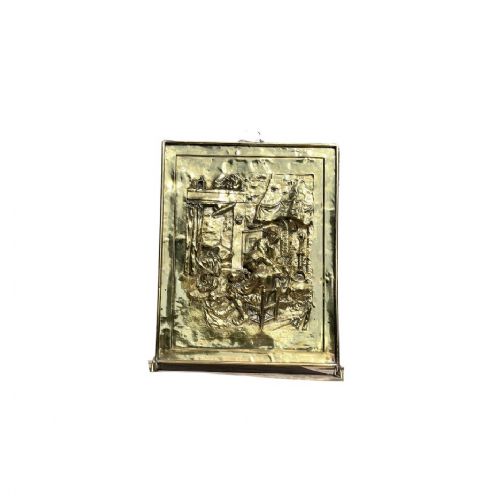

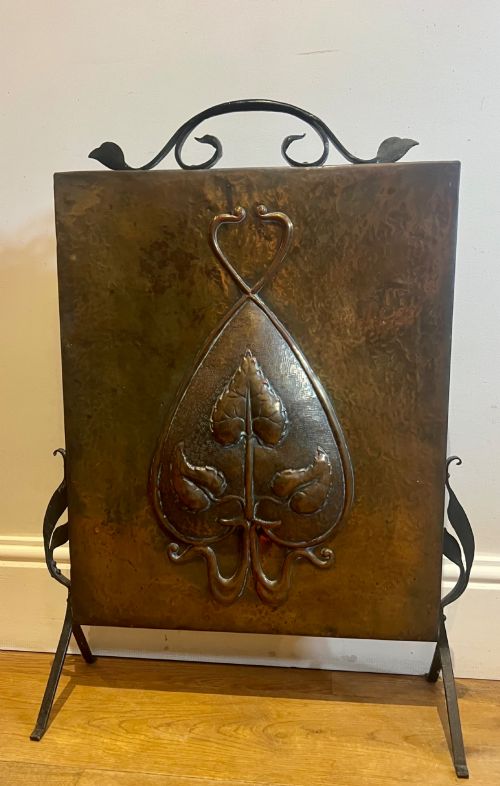
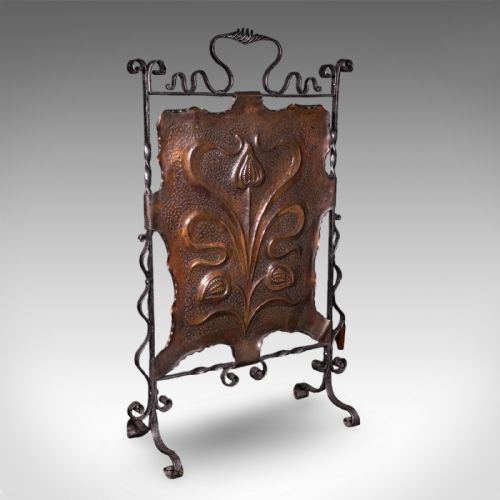


Repousse Hearth Guard
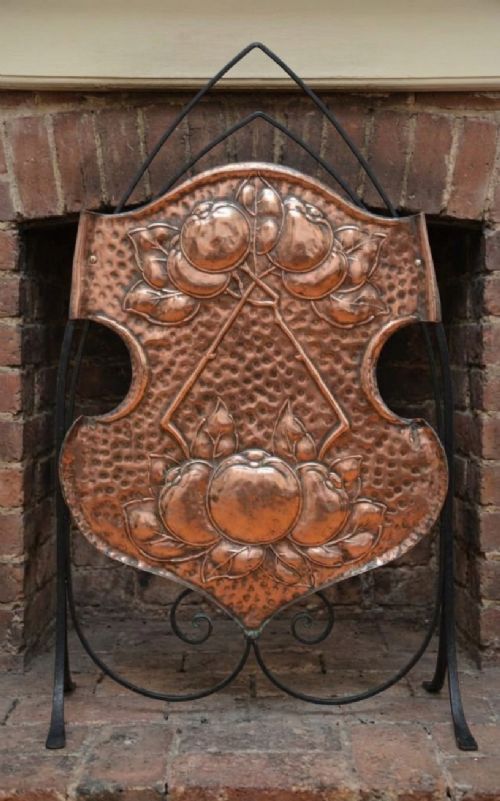
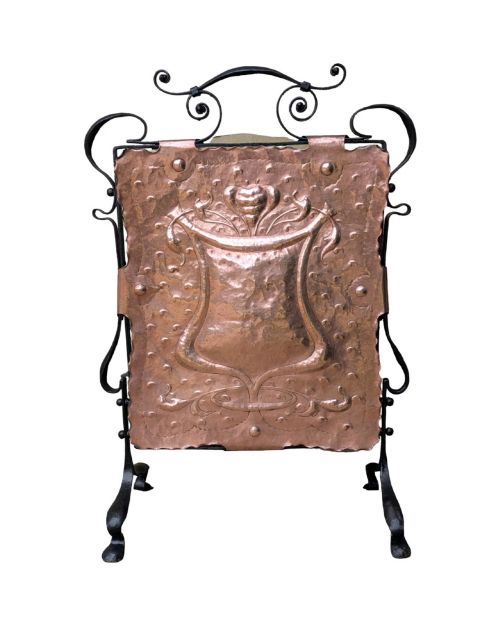
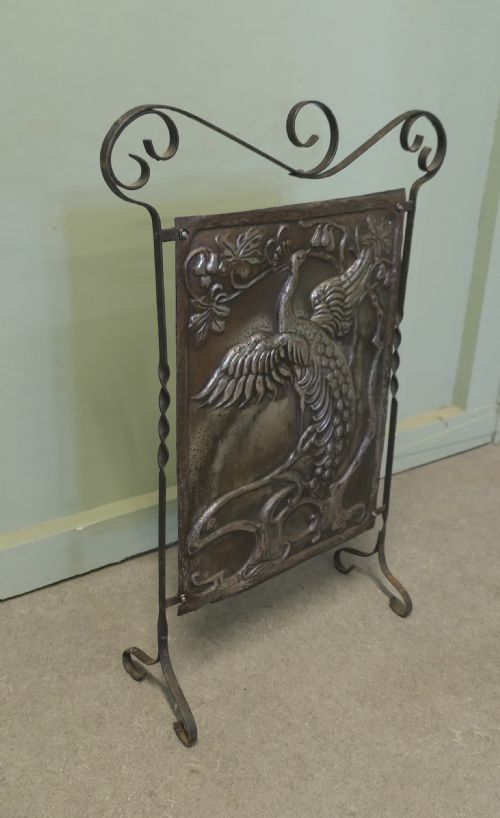
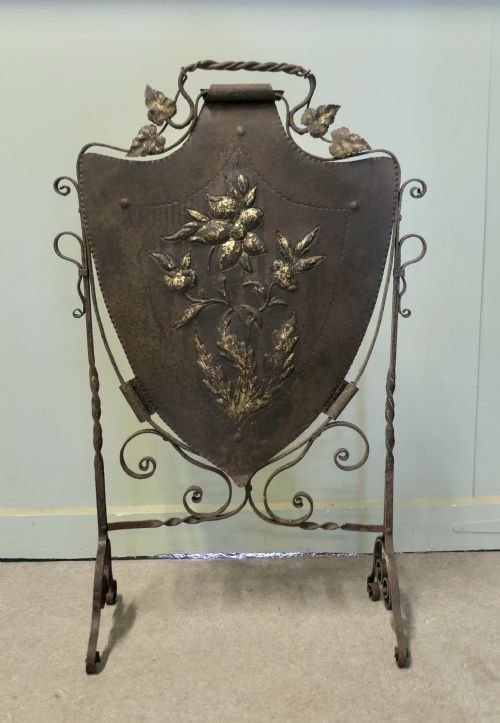
These repousse hearth guard pieces combine functional protection with hand-worked metal panels, offering a decorative centrepiece for period fireplaces.
Repousse Hearth Guard
A repousse hearth guard is designed to protect a room from stray embers while adding a decorative focal point to the fireplace. The listings show forms primarily catalogued as fire screens, fireplace screens, and fire fenders.
Most examples found here date from the Victorian and Edwardian eras, alongside pieces attributed to the nineteenth and early twentieth centuries. Stylistic influences span Arts and Crafts, Art Nouveau, Gothic Revival, and Dutch Renaissance Revival designs.
Makers utilised various metals, combining hammered panels with supporting frames. Common configurations pair a decorative metal panel with wrought iron or brass framing to create a stable domestic accessory.
How they were made
Copper and brass serve as the primary materials for the worked panels, allowing artisans to shape designs from the reverse using hammers and punches. Wrought iron and cast iron provide rigid support frames and sturdy bases for the lighter metal screens.
Oak and wire mesh appear alongside mirror glass and gilt elements to complete the structural and reflective details of the fireplace accessories. Metal components are often polished or left with darker patination depending on the specific period aesthetic.
Repousse Hearth Guard Retail Price Guide 2026
Typical asking prices for repousse hearth guard among the pieces listed under this phrase on Sellingantiques today, from the lower quarter to the upper quarter. They describe what is for sale here now, not the wider market.
Listings feature items spanning the Victorian and Edwardian periods, alongside seventeenth-century Dutch examples.
What varies in quality
The distinction between standard and superior examples lies in the depth and clarity of the hammered metalwork. Hand-hammered panels with intricate motifs demonstrate greater technical skill than simpler pressed sheets.
Construction methods also separate the ranges, particularly in how securely the metal panel integrates with the iron or oak frame. Heavier gauge metals and robust joinery indicate more durable domestic pieces.
The Repousse Hearth Guard Glossary
- Repousse
- A metalworking technique where the artisan hammers a design from the reverse side to raise relief details on the front surface. This method defines the primary decorative panels on these hearth guards.
- Arts and Crafts
- A design movement favouring handcraftsmanship, traditional materials, and simple forms over mass production. Many screens on this page reflect this aesthetic through exposed ironwork and hammered copper.
- Art Nouveau
- A style characterised by organic, flowing lines, floral motifs, and natural asymmetrical curves. Pieces in this category often feature plant-inspired repousse designs on the metal panel.
- Fire Fender
- A low metal kerb placed around the hearth to contain ash and wood. Some variations incorporate screen elements to combine floor protection with spark defence.
- Gothic Revival
- An architectural and decorative style drawing on medieval forms, pointed arches, and heraldic motifs. Screens matching this description utilise shields and heavy iron framing.
Repousse Hearth Guard: Frequently Asked Questions
What is a repousse hearth guard?
A repousse hearth guard is a decorative metal screen placed in front of an active fireplace. It acts as a physical barrier against sparks while displaying hammered surface ornamentation.
The listings show these functional items span several late nineteenth and early twentieth-century design movements, including Arts and Crafts and Art Nouveau.
How were these screens used?
These screens served primarily to shield rooms from the radiant heat and stray embers of open coal or wood fires. They also masked the dark hearth opening during warmer months when fires were not lit.
Households positioned them directly against the fireplace opening or as part of a wider fender surround.
How do I identify an Arts and Crafts screen?
Arts and Crafts screens typically display visible hand-working marks on copper or brass panels, paired with plain wrought iron supports. The design avoids excessive machinery finish in favour of honest structural construction.
Motifs often draw from simple nature themes or heraldry rather than classical revival ornamentation.
What materials are most common?
Copper and brass form the majority of the decorative hammered panels found in these listings. Wrought iron and cast iron provide the structural frames, occasionally supplemented by oak or wire mesh.
Mirror glass and gilt accents also appear on specific reflector styles.