



Renaissance Style Armchairs
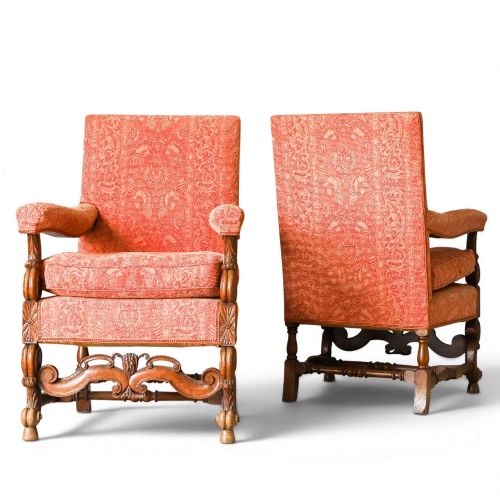
These renaissance style armchairs bring heavy timber frames and rich upholstery into a room.
Renaissance Style Armchairs
When you search for renaissance style armchairs, you encounter heavy seating built to make an architectural statement in a room. These chairs draw on historical forms from the seventeenth and nineteenth centuries, taking inspiration from Italian, French, and Spanish revivals.
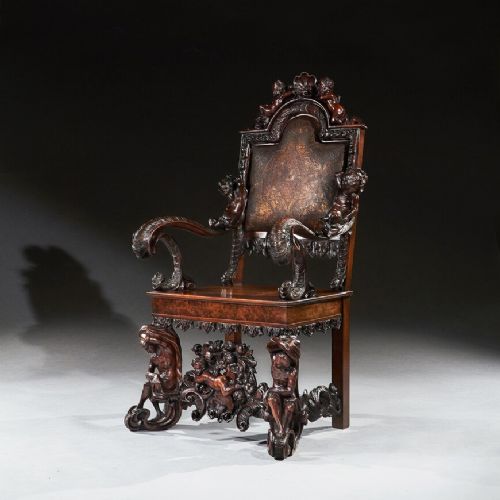
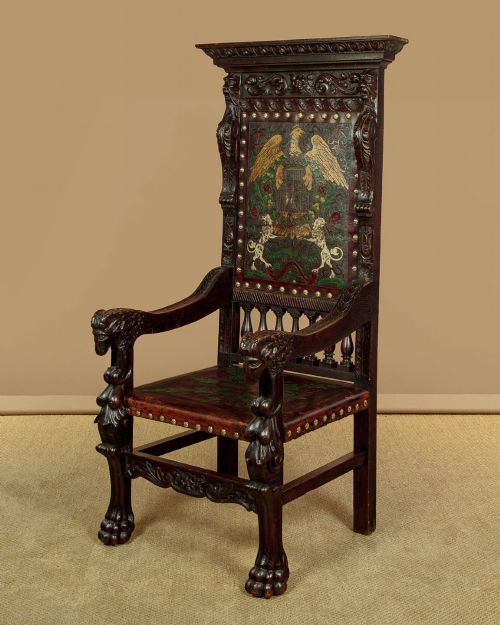
The pieces appearing on this page include walnut and oak frames alongside upholstered forms. You will find elbow chairs, throne chairs, and X-frame seats alongside dining chairs.
Nineteenth century revivals dominate the selection, bringing nineteenth century interpretation to earlier forms like the Savonarola and Dante chairs. Seventeenth century originals also appear, offering authentic period construction.
How they were made
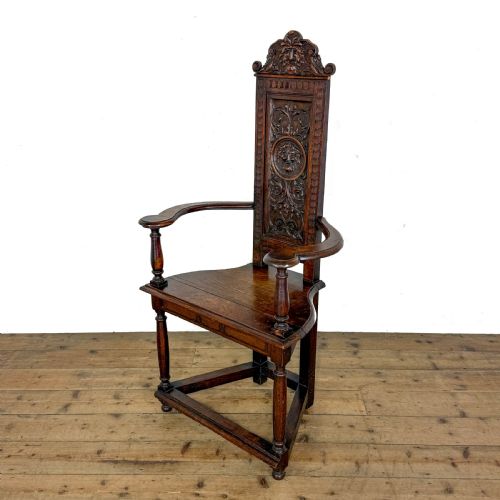
Makers shaped these chairs from dense hardwoods, primarily utilising walnut and oak for the structural frames. Carving is central to the construction, with deep relief work ornamenting the woodwork.
Upholstery forms a major part of the finish, utilising leather, tapestry, and heavy woven textiles. Metal elements such as brass appear as decorative studs or structural accents alongside polychrome painted details.
Renaissance Style Armchairs Retail Price Guide 2026
Typical asking prices for renaissance style armchairs among the pieces listed under this phrase on Sellingantiques today, from the lower quarter to the upper quarter. They describe what is for sale here now, not the wider market.
The caquetoire was originally designed with a wide front so women wearing large farthingale skirts could sit down without crushing their garments.
What varies in quality
Depth and crispness of the timber carving separate standard examples from superior pieces. Workshop execution dictates whether ornament appears sharp and purposeful or soft and flat.
The integrity of the frame construction and the quality of the textile or leather coverings determine the overall grade of the chair.
Andrea Brustolon·White, Allom & Co.
The Renaissance Style Armchairs Glossary
- Savonarola
- A folding X-frame armchair originating in the Italian Renaissance. It uses curved wooden slats crossing to form the base.
- Caquetoire
- A light sixteenth century conversation chair featuring a high narrow back and a trapezoidal seat. The name derives from the French verb for chatting.
- Curule
- An X-frame seat structure derived from ancient Roman magistrate chairs. This form appears frequently in nineteenth century revival seating.
- Polychrome
- Painted in several colours. This surface treatment decorates the timber on certain period seating.
Renaissance Style Armchairs: Frequently Asked Questions
What is a Savonarola chair?
A Savonarola chair is an X-frame folding seat built with intersecting wooden slats. It provides a distinct architectural silhouette.
These chairs date back to the Italian Renaissance and saw widespread revival during the nineteenth century.
Are these chairs comfortable to sit in?
Many renaissance style armchairs feature upholstered leather or textile pads designed for support. Their upright frames reflect historical seating posture.
Adding a tailored squab cushion can improve comfort for daily use in a modern room.
How do I care for antique wood and leather?
Protect the timber frames by maintaining stable room humidity and applying appropriate wax polish sparingly. Avoid placing the chairs in direct sunlight.
Treat leather upholstery with specialised conditioners to prevent the material from drying out over time.