



Renaissance Oak Box
These pieces known as a renaissance oak box combine heavy timber construction with centuries of historic craftsmanship, offering both striking visual presence and practical storage.
Renaissance Oak Box
A renaissance oak box encompasses sturdy coffers, chests, and storage trunks originating from the sixteenth century through to later revival periods. Buyers searching for these items will encounter robust containers constructed primarily for domestic storage and security in early households.
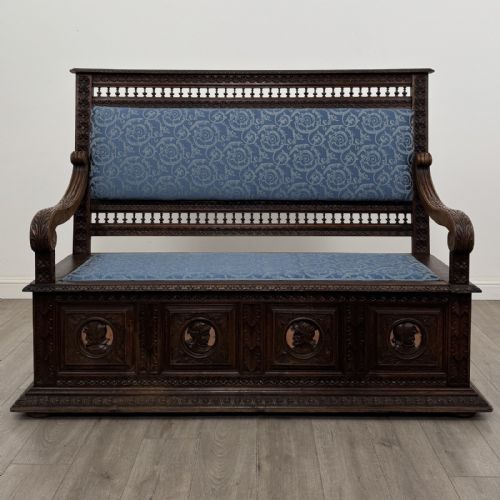
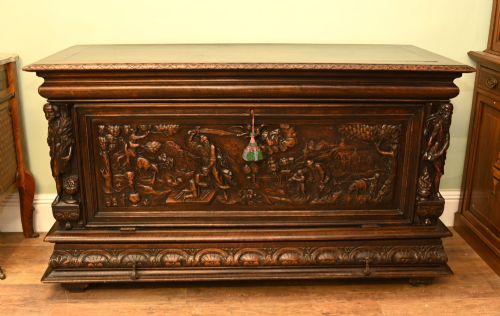
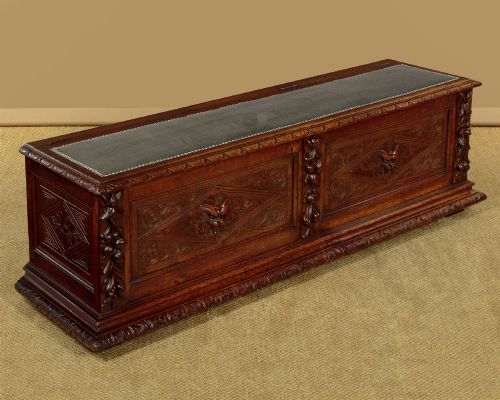
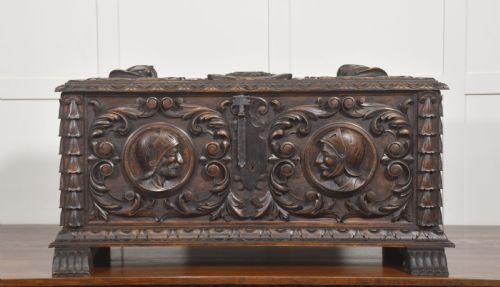
Forms vary from full floor-standing coffers and hall benches to individual coffer fronts salvaged from earlier periods. This mixture provides collectors with options ranging from rustic early utility pieces to ornate continental furniture.
Materials and Construction
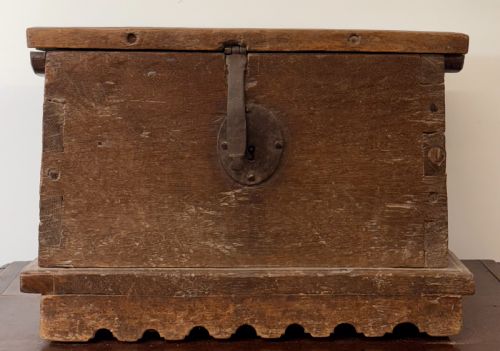
Constructed predominantly from heavy oak and walnut, these boxes rely on dense hardwoods selected for durability and longevity. Joinery methods reflect the period of origin, utilising thick timber planks joined to withstand heavy daily use.
Iron and wrought iron hardware, including strap hinges, brackets, and heavy locks, provide structural reinforcement and security. Brass elements and leather details appear on specific continental and revival pieces, adding textural contrast to the dark wood.
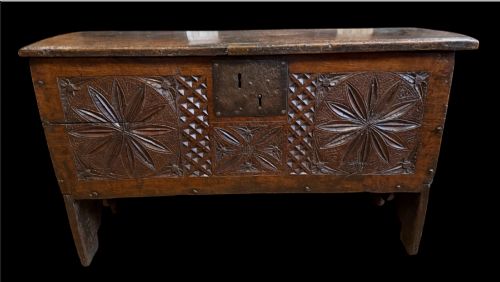
Carving techniques employed on the surface decoration range from simple chip carving to detailed figural medallions and Flemish Renaissance motifs. Artisans worked directly into the solid timber blanks, creating deep relief panels that define the regional style.
Renaissance Oak Box Retail Price Guide 2026
Typical asking prices for renaissance oak box among the pieces listed under this phrase on Sellingantiques today, from the lower quarter to the upper quarter. They describe what is for sale here now, not the wider market.
Listings feature items spanning multiple centuries, from the 16th Century through to 19th Century revivals, alongside styles like Flemish and Spanish Renaissance.
Quality and Character
The distinction between standard items and superior examples lies in the integrity of the timber and the depth of the hand carving. Original ironwork and unaltered structure elevate a piece above later adaptations or heavily restored boxes.
Regional execution dictates the aesthetic weight, with Flemish and Spanish examples displaying intricate figural work compared to simpler domestic plank construction. Surface patination accumulated through centuries of handling distinguishes authentic aged timber from modern finishing.
The Renaissance Oak Box Glossary
- Cofer
- A large strongbox or chest used for storing valuables, linen, or documents in domestic settings. These heavy containers often featured iron bindings for enhanced security.
- Cassone
- An ornate chest or coffer associated with Renaissance Italy, frequently decorated with carvings or paintings. These pieces served both functional storage and ceremonial roles in wealthy households.
- Plank coffer
- A primitive form of chest constructed from thick boards joined at the edges without complex framing. This early method represents some of the oldest surviving storage furniture.
- Revival
- A later artistic movement that reinterprets historical styles, such as Tudor or Flemish Renaissance designs. Nineteenth-century workshops frequently produced these historicist pieces to satisfy Victorian demand for antique aesthetics.
- Medallion
- A circular or oval decorative panel containing carved figural or geometric motifs. Renaissance carvers utilised these elements to break up large flat wooden surfaces.
Renaissance Oak Box: Frequently Asked Questions
What is a renaissance oak box?
It is a heavy timber storage chest or coffer dating from the sixteenth century or created during later nineteenth-century revival movements.
These containers were built for domestic security and storage, featuring solid wood construction and often detailed carving.
How were these chests used originally?
Households utilised these heavy boxes to store valuable textiles, documents, silver, and clothing securely.
Because furniture was scarce in early homes, large coffers also served double duty as seating or tables.
How can I tell the period?
Dating relies on examining the joinery methods, timber species, hardware, and carving styles characteristic of specific centuries.
Sixteenth-century examples display primitive planking or early regional motifs, whereas nineteenth-century revival pieces often show different tool marks and assembly techniques.
How do I care for antique oak?
Maintain stable indoor humidity levels and keep the wood away from direct heat sources to prevent timber splitting.
Apply traditional wax sparingly to nourish the dry surface without building up modern chemical residues.