



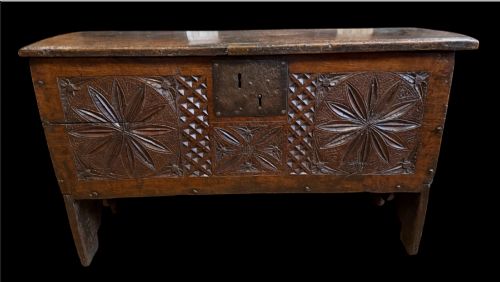


Renaissance Coffer
A renaissance coffer is a heavy storage chest of solid timber and iron, built to hold valuables and anchor a grand room.
Renaissance Coffer
A renaissance coffer represents the solid storage furniture of sixteenth and seventeenth century Europe, built from heavy timbers to hold textiles, plate and family valuables. These pieces range from plank chests to elaborate Italian cassoni and Flemish storage boxes.
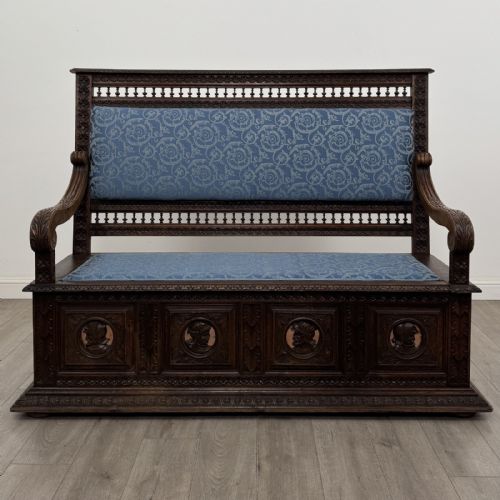
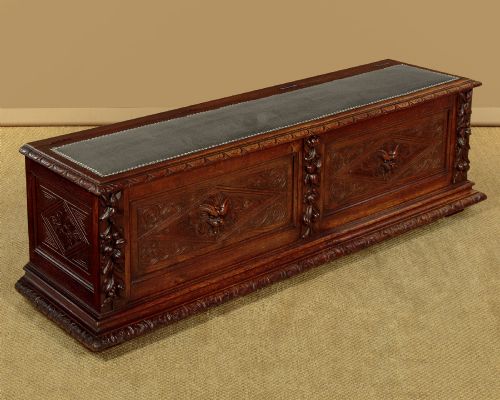
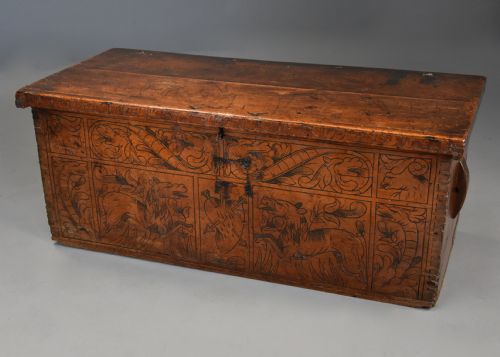
Buyers meeting this selection find oak and walnut examples alongside cypress and cedarwood chests. Forms extend from low plank coffers to carved fronts, hall benches, and bone-inlaid table caskets.
The objects stem from English, Italian, Spanish and Flemish workshops across the sixteenth and seventeenth centuries, with later revival interpretations appearing from the Victorian era and the end of the nineteenth century.
How they were made
Carpenters constructed these chests from heavy native hardwoods like oak and walnut, joined by pegs and framed panels. Secondary woods such as cypress and cedarwood appear in Italian examples, selected for their aromatic qualities and resistance to pests.
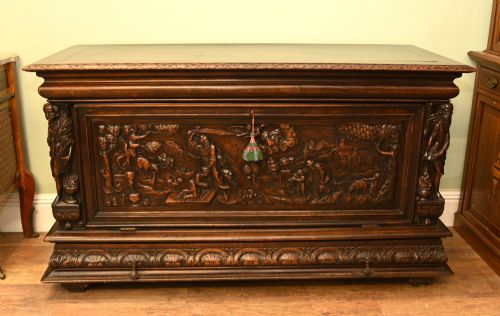
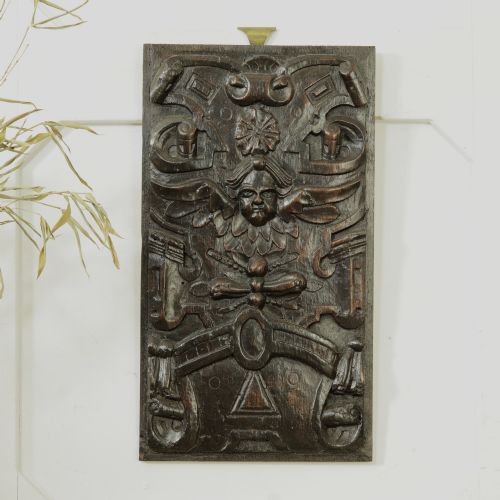
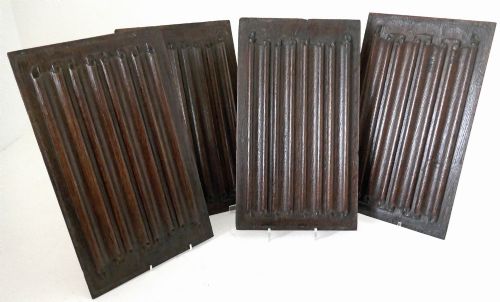
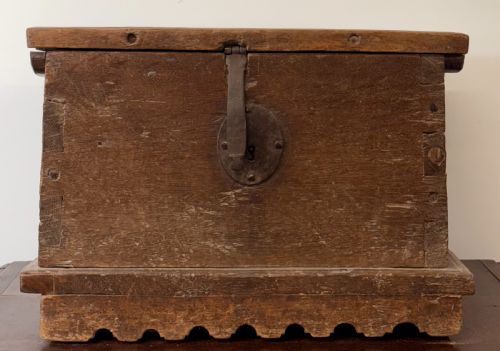
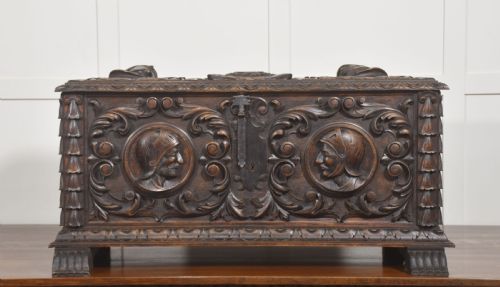
Surface ornament relied on deep hand carving, linenfold panels, figural medallions, and high-relief panels. Blacksmiths provided structural strength through wrought iron straps, hinges, and heavy locks, while bone inlay and gilding decorated finer Italian cassone chests.
Renaissance Coffer Retail Price Guide 2026
Typical asking prices for renaissance coffer among the pieces listed under this phrase on Sellingantiques today, from the lower quarter to the upper quarter. They describe what is for sale here now, not the wider market.
Listings feature oak, walnut, cypress, and cedarwood alongside iron-bound Nuremberg caskets and bone-inlaid table caskets.
What varies in quality
Quality rests in the crispness of the hand carving and the integrity of the original timber construction. Pieces retaining their early ironwork, original hinges and untouched surface patination stand apart from heavily restored examples.
The skill of the artisan defines the upper tier, visible in detailed figural medallions and balanced proportions rather than plain plank construction. The survival of original gilding, bone inlay or polychrome decoration marks the distinction between standard storage boxes and high-status cassoni.
The Renaissance Coffer Glossary
- Cassone
- A large Italian chest or coffer used for storing household valuables, often decorated with carving, gilding or painting. These form the grander end of coffer design.
- Linenfold
- A style of wood carving that mimics folded linen cloth, common on sixteenth century panels. It provides texture to plain timber surfaces.
- Plank coffer
- A primitive storage chest constructed from thick boards joined at the corners without complex framing. This form represents early utilitarian furniture.
- Settle
- A wooden bench with a high back and solid arms, often incorporating a coffer base for storage. They served as seating near hearths.
- Patina
- The surface sheen and colour developed by timber and metal over centuries of handling and age. Original patination indicates untouched surfaces.
Renaissance Coffer: Frequently Asked Questions
What is a renaissance coffer?
A renaissance coffer is a heavy wooden storage chest made during the sixteenth and seventeenth centuries in Europe. They were built to hold textiles, documents, and valuable household goods.
Over time these chests evolved into decorative furniture pieces, incorporating intricate carvings, figural panels, and iron reinforcements. They form the ancestors of modern chests and blanket boxes.
How were coffers used?
Historically these chests served as secure storage for valuable garments, silver, and money in wealthy households. Their heavy timber construction and iron locks protected contents from theft and fire.
They also functioned as seating benches or tables when space was limited, and travelled easily due to their robust build. Today they serve as statement storage pieces in hallways and living rooms.
How do I live with a coffer?
A coffer fits well as a coffee table substitute in a sitting room, providing hidden storage for blankets and books. In a hallway, a coffer with a back acts as a bench while holding everyday items.
Keep wooden coffers away from direct heat sources and radiators to prevent timber splitting. Regular dusting and occasional wax treatment maintain the dry finish of old oak and walnut.
How do I tell periods apart?
Early sixteenth century pieces show plain plank construction or simple linenfold carving with visible tool marks. Seventeenth century examples often introduce geometric mouldings and more complex panel framing.
Revival pieces from the nineteenth century display machine-cut elements, lighter timber weights, and crisp symmetrical carving that lacks centuries of wear. Italian cassoni show distinct regional styles with walnut, bone inlay, and gilded details.