



Religious Devotional Art
Religious devotional art comprises oil paintings, carved wooden figures, and gold pendants made to inspire prayer and contemplation across centuries.
Religious Devotional Art
Religious devotional art spans centuries of personal and communal piety, taking the form of oil paintings, miniatures, and sculpted figures. You will encounter works originating from Italian, Spanish, French, and Low Country schools, reflecting distinct regional traditions.
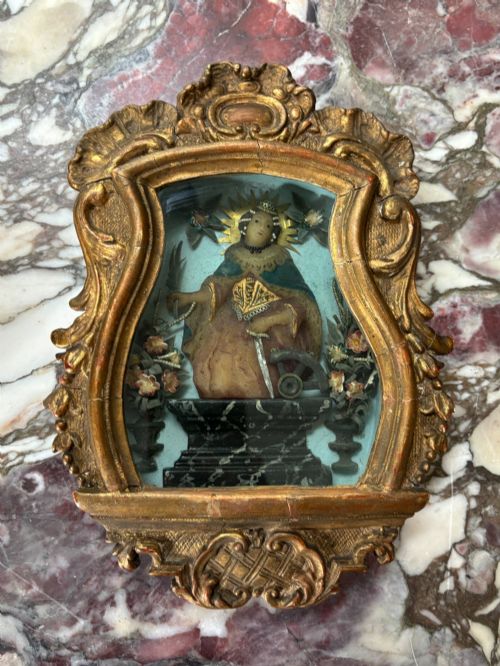
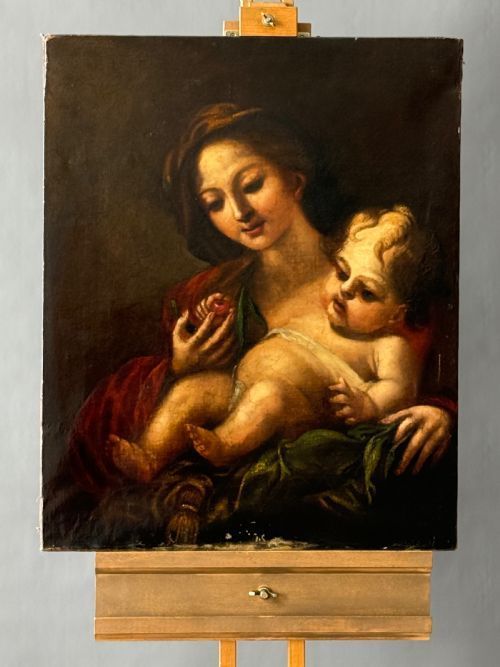
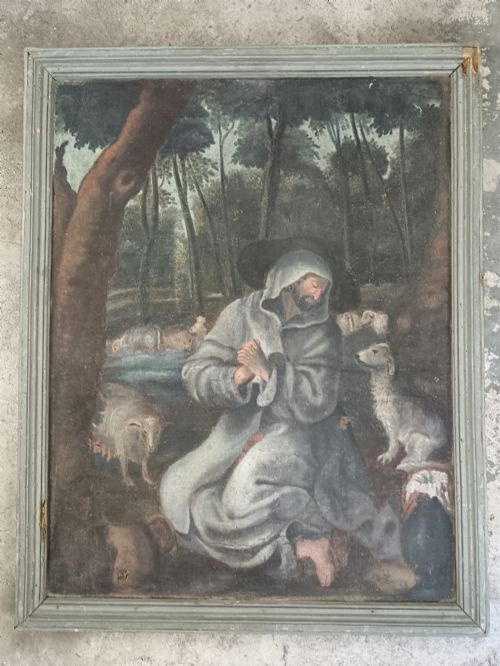
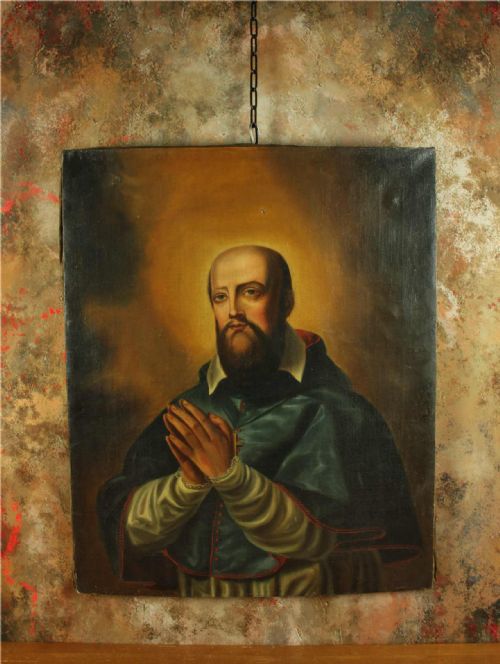
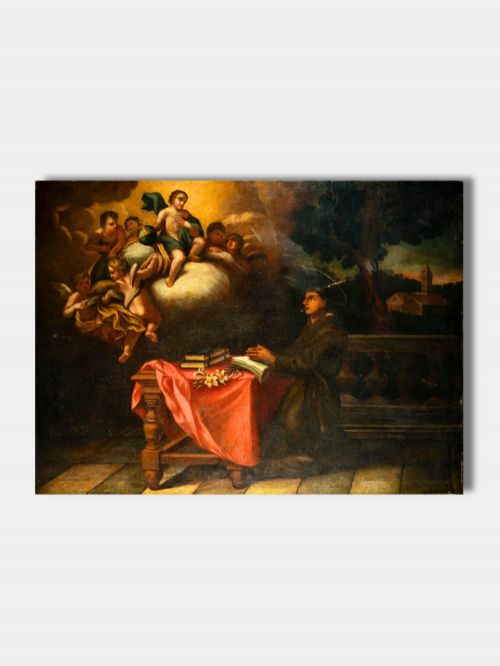
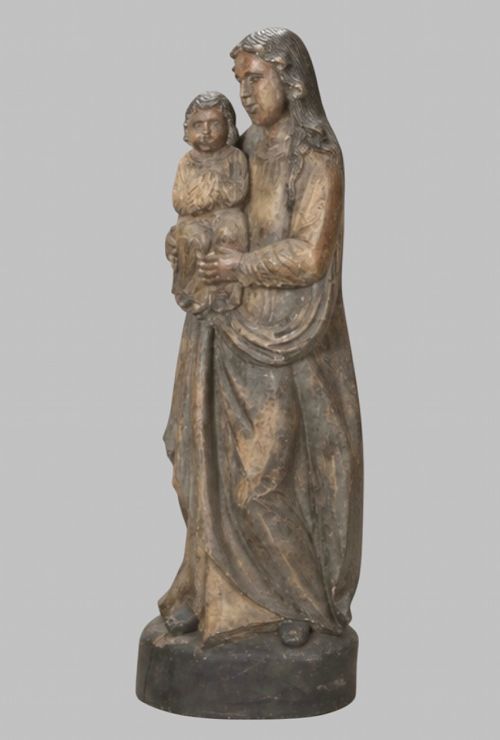
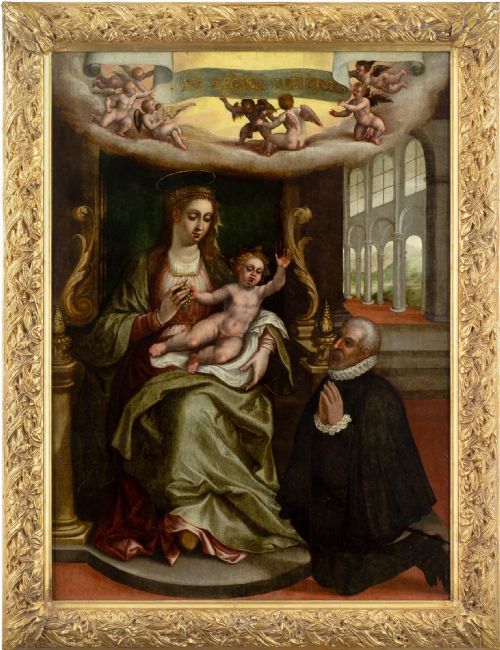
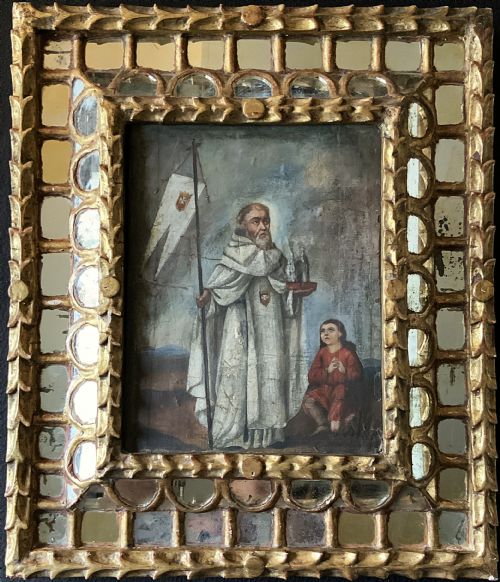
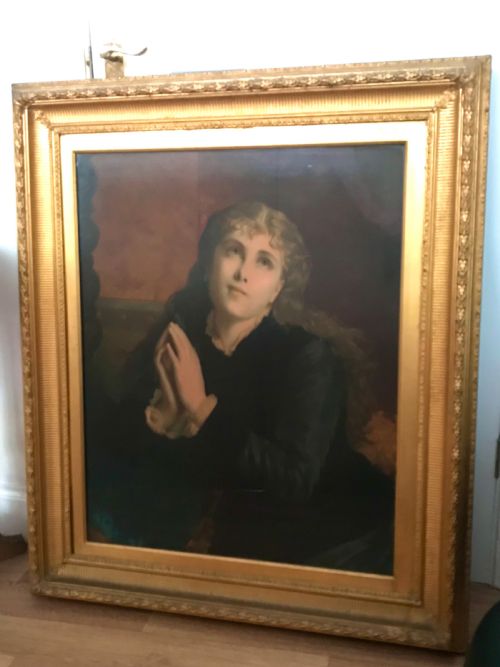
The most common pieces on this page are oil paintings on canvas depicting saints and the Madonna, alongside carved wooden statues and small pendants in gold. These objects range from naive folk art pieces to accomplished works by followers of old masters.
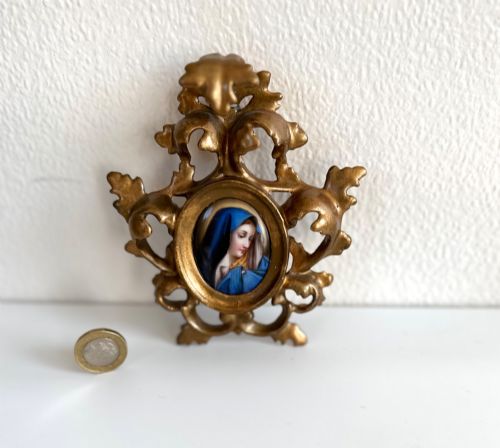
Dating primarily from the seventeenth through the nineteenth centuries, these items often incorporate giltwood frames, shadow boxes, or delicate enamel work. They represent the tangible material culture of European religious devotion.
Materials and Technique
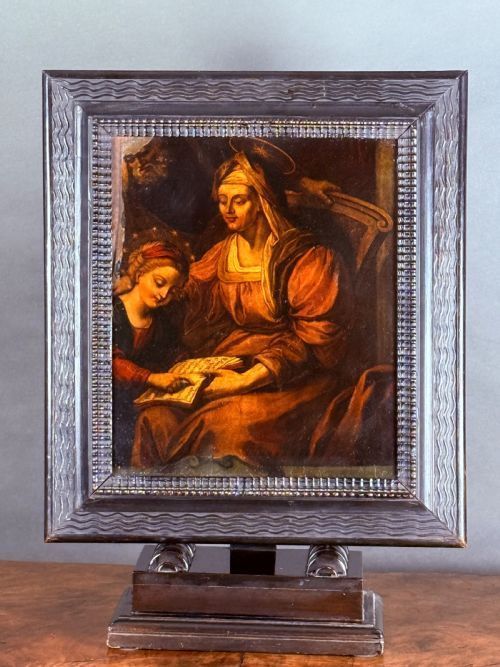
Painters utilised canvas, wood panels, and paper, applying oil pigments to achieve deep shadows and luminous drapery. Giltwood frames frequently enclose these canvases, adding architectural weight to the visual composition.
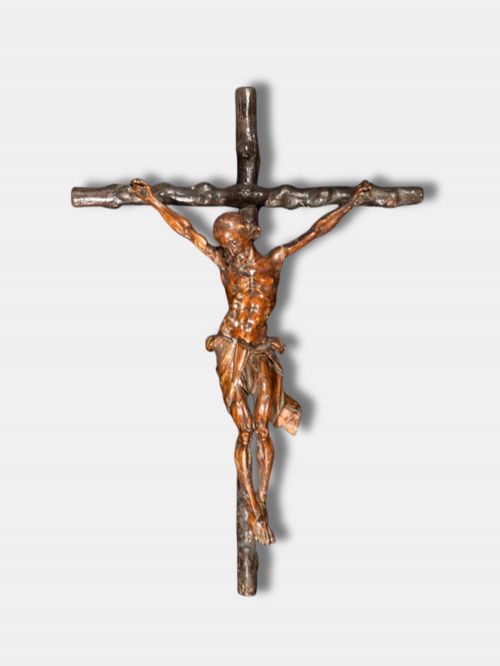
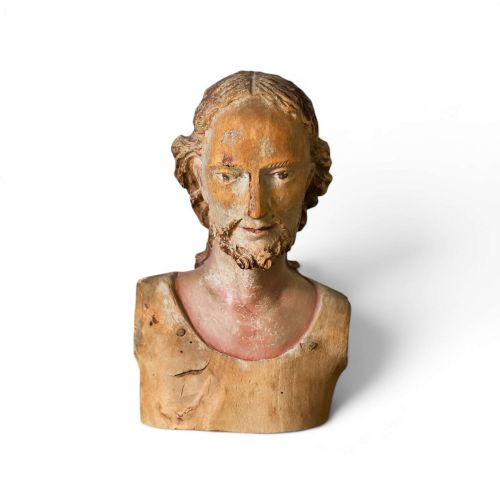
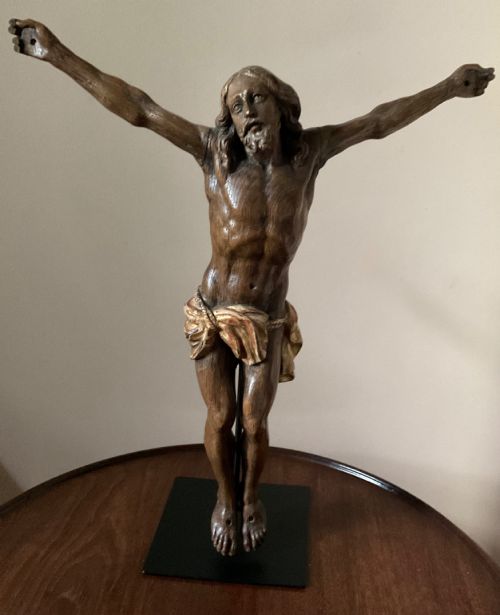
Sculptors carved wood, olive wood, and wax into three-dimensional figures, often applying polychrome paint and gilding to enhance realism. Miniature pendants combined eighteen-karat yellow gold with enamel techniques such as plique-à-jour.
Makers also employed reverse glass mezzotint and Limoges enamel, demonstrating diverse craft traditions across different centuries and regions. Each medium required specific handling, from the preparation of the gesso ground to the firing of glass and enamel.
Religious Devotional Art Retail Price Guide 2026
Typical asking prices for religious devotional art among the pieces listed under this phrase on Sellingantiques today, from the lower quarter to the upper quarter. They describe what is for sale here now, not the wider market.
Listings for religious devotional art include pieces from the sixteenth century up to the mid-twentieth century, featuring canvas, carved wood, and eighteen-karat gold.
Gradations of Quality
Quality in religious devotional art rests upon the anatomical precision of the figures and the expressiveness of the painted faces. Works attributed to the circle of known old masters or skilled followers display superior draughtsmanship compared to simpler folk art examples.
The integrity of the original surface materials, such as untouched polychrome paint on carved wood or the preservation of an early giltwood frame, elevates a piece. Subtle details like pentimenti in oil paintings reveal the working process of the artist.
Miniature metalwork and jewellery demonstrate quality through the crispness of the stamping in gold and the translucency of the enamel work. Finer execution in both painting and sculpture results in a more commanding presence.
Jozef Janssens·Miguel Barroso·Emile Monier·Emile Dropsy·Costantino Frixione·Raffaello Sanzio Da Urbino·Juan Ruiz Soriano·Gaspar de Figueroa
The Religious Devotional Art Glossary
- Pentimento
- An alteration in a painting, evidenced by previous strokes or shapes showing through. This alteration demonstrates the artist changing their composition during the painting process.
- Polychrome
- Decorated in a variety of colours. This term frequently describes carved wooden statues and home altars painted to resemble life.
- Giltwood
- Wood that has been covered with a thin layer of gold leaf or powder. It is commonly found framing seventeenth and eighteenth-century oil paintings.
- Plique-à-jour
- A enamelling technique where the enamel is applied in cells without a backing, allowing light to shine through the transparent material. It appears on fine nineteenth-century pendants.
- Ex-voto
- A votive offering presented to a saint or divinity in fulfilment of a vow. These collections capture tangible expressions of gratitude and petition.
Religious Devotional Art: Frequently Asked Questions
What is religious devotional art?
Religious devotional art consists of visual and sculptural works created to aid personal prayer and religious observance. These items range from small portable pendants to large oil paintings intended for domestic or institutional altars.
Created across various European traditions, these pieces depict biblical scenes, the Madonna and child, and individual saints. They serve as physical focal points for spiritual contemplation and historical piety.
How were antique devotional paintings used?
Antique devotional paintings were placed in homes, private chapels, and churches to facilitate daily prayer. Smaller works and miniatures allowed individuals to carry their faith while travelling.
Larger canvases and framed panels hung in domestic spaces as central elements of family worship. They acted as visual prompts for meditation and intercession.
How do I care for antique wooden sculptures?
Antique wooden sculptures require stable environmental conditions with moderate humidity and temperature. Keep them away from direct sunlight and heat sources to prevent the wood and polychrome paint from cracking.
Dust them gently with a soft, dry brush rather than using liquid cleaners or polishes. Preserving the original surface requires minimal intervention.
How can I tell the period of a painting?
The period of a painting is often indicated by the canvas preparation, stretcher construction, and the style of the pigmemts. Stylistic markers such as Baroque drapery or Renaissance compositional symmetry provide further clues.
Examining the accompanying frame can also help date the piece, as original giltwood frames frequently match the era of the artwork. Technical analysis by a conservator can confirm underlying materials.