

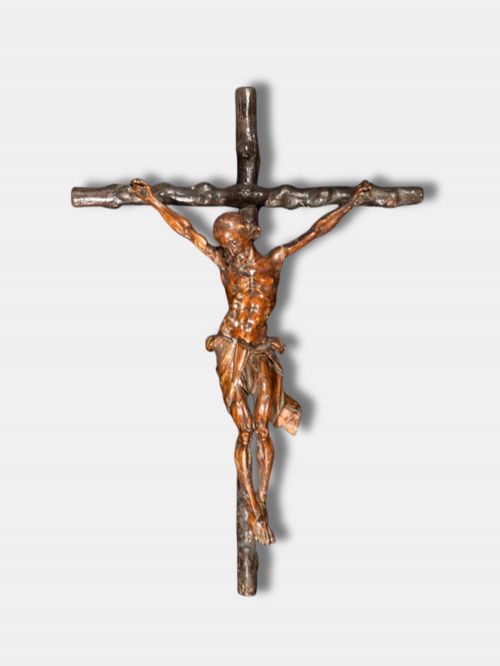


Religious Cross Sculpture
These religious cross sculpture pieces are devotional artefacts carved from wood or cast in iron, offering quiet presence and centuries of tactile craftsmanship.
Religious Cross Sculpture
A religious cross sculpture encompasses devotional objects such as crucifixes, standing crucifixes, wall panels, and relief sculptures depicting sacred figures like the Corpus Christi. Buyers encountering these pieces will find forms ranging from substantial wall sculptures to grave markers and domestic devotional objects.
The selections span several centuries, drawing from periods such as the 16th, 17th, 18th, and 19th centuries, alongside later 1930 examples. These works originate from various European traditions, reflecting both ecclesiastical solemnity and regional folk art practices.
Materials and construction
Carved wood provides the primary medium for these sculptures, utilising hardwoods like boxwood, oak, and olive wood to achieve intricate detail in figures and cross structures. Artisans frequently employed polychrome finishes, gesso, and gold leafing to enhance the visual impact of the sacred narratives.
Metalworking also appears through cast iron and bronze plaques, offering durability and heavy relief work for grave markers and commemorative panels. These varied techniques demonstrate the distinct methods workshops used to render devotional scenes across different centuries.
Religious Cross Sculpture Retail Price Guide 2026
Typical asking prices for religious cross sculpture among the pieces listed under this phrase on Sellingantiques today, from the lower quarter to the upper quarter. They describe what is for sale here now, not the wider market.
Decorative styles span Spanish and French Baroque, Northern Renaissance, Gothic Revival, and German Folk Art.
Assessing quality and execution
The preservation of original surface treatments, such as polychrome pigments, gesso, and gilding, significantly elevates an object's integrity. Subtle tool marks and the natural ageing of hardwoods like boxwood or oak further indicate the authenticity and direct touch of historical handwork.
Gian Federigo Bonzagna
The Religious Cross Sculpture Glossary
- Corpus Christi
- The Latin term for the body of Jesus Christ depicted on the cross. It forms the central sculptural focus of a crucifix.
- Polychrome
- Painted in several colours. This surface treatment was frequently applied to wooden religious carvings to heighten realism.
- Gesso
- A plaster-like mixture applied to wood surfaces as a base for painting or gilding. It provides a smooth ground for intricate detail.
- Relief Sculpture
- A sculptural technique where figures project from a flat background surface. Relief panels often portray narrative scenes like the stations of the cross.
Religious Cross Sculpture: Frequently Asked Questions
How were these sculptures used?
These sculptures served primarily as focal points for prayer, meditation, and liturgical observance in churches, homes, and outdoor memorial sites.
Larger iron examples functioned as grave markers, while smaller boxwood and bronze pieces were intended for private devotion.
How do I live with a wooden cross sculpture?
Displaying these sculptures requires stable indoor environments away from direct sunlight and sudden humidity shifts to protect historical wood and polychrome surfaces.
Mounting them securely on walls or placing them on sturdy bases allows the intricate carvings to be appreciated safely.
How are different periods identified?
Periods are distinguished through stylistic markers such as the ornate flourishes of Baroque design or the restrained lines of folk art and Art Deco.
Material choices, tool marks, and the natural patina accumulated on oak, boxwood, and iron also help indicate an object's age.