



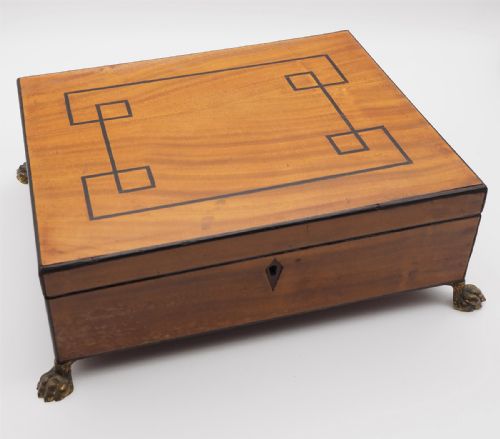


Regency Workbox
A regency workbox brings refined compartmentalised order to needlecraft, offering exquisite small scale joinery that houses sewing tools within decorative wooden enclosures.
Regency Workbox
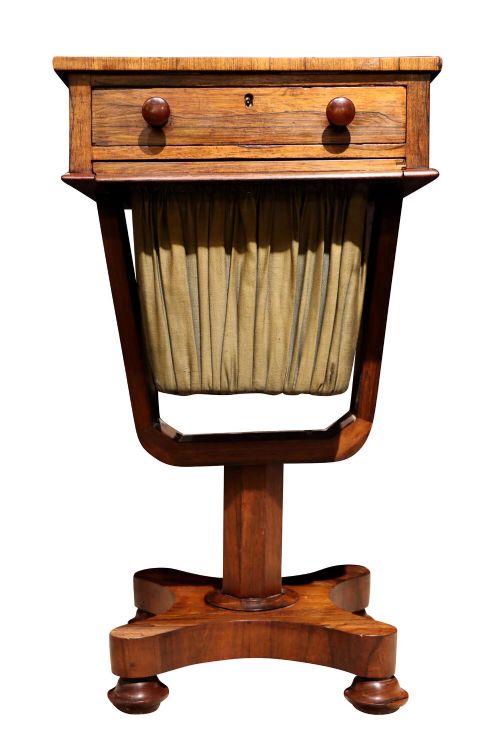
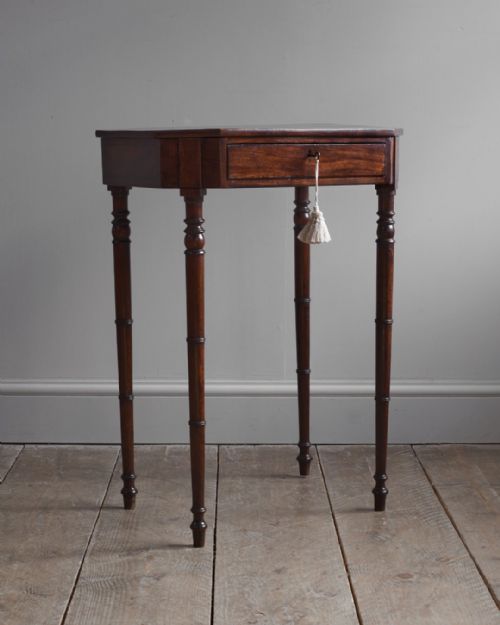
A regency workbox comprises portable tabletop caskets alongside larger pedestal sewing tables originating from the early nineteenth century. These pieces were designed to hold threads, needles, fabrics, and small personal valuables within fitted interior trays.
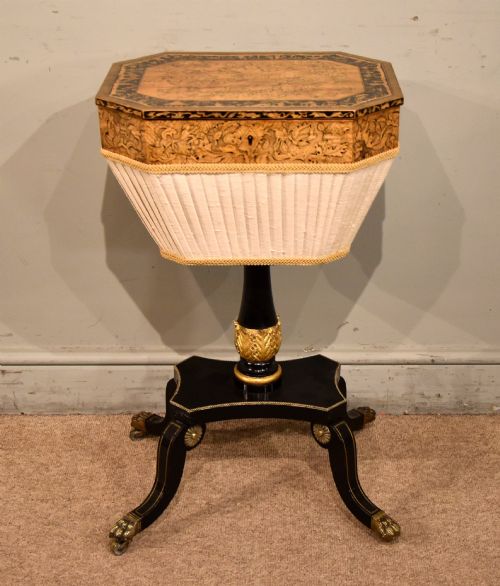
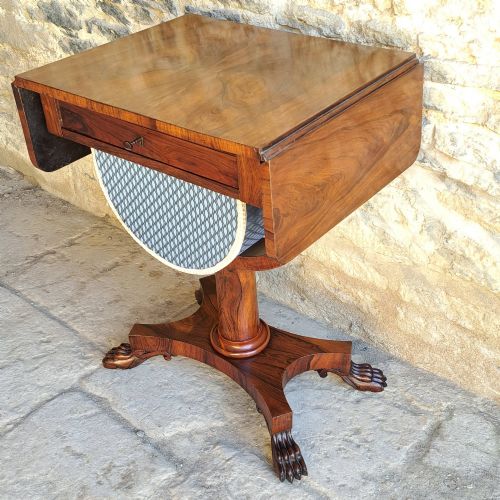
The portable box format sits directly upon surfaces, whilst the table variants incorporate drop leaves, pedestals, and hanging fabric bags for ongoing needlework. Both forms share a focus on concealing utility behind polished exterior veneers.
Rosewood and mahogany dominate the offerings, frequently enhanced with brass inlay, mother of pearl, or penwork decoration. Buyers encounter various iterations spanning table top caskets to free standing occasional tables equipped for sewing.
How they were made
Cabinet makers built these pieces using dense tropical hardwoods such as rosewood and mahogany over foundational timbers, applying fine veneers to exterior surfaces. Satinwood, coromandel, and burr ash appear alongside maple as contrasting decorative veneers.
Surface ornamentation involved intricate brass stringing, mother of pearl inlay, and penwork artistry rendered in delicate ink lines. Interiors frequently featured silk linings, fitted compartments, and original gold fittings to organise delicate sewing implements.
Regency Workbox Retail Price Guide 2026
Typical asking prices for regency workbox among the pieces listed under this phrase on Sellingantiques today, from the lower quarter to the upper quarter. They describe what is for sale here now, not the wider market.
Some boxes preserve their original handwritten needlework notes tucked into tiny secret compartments, waiting two centuries to be read.
What varies in quality
Quality rests in the precision of the joinery and the selection of figured timber grains, such as flame mahogany or richly grained rosewood. Superior examples exhibit seamless brass inlay and carefully matched veneers across all visible surfaces.
The integrity of internal fittings dictates the standing of a piece, with intact silk linings, original compartments, and functional locks commanding greater interest. Secondary woods and simplified construction methods indicate utilitarian manufacture rather than high workshop output.
The Regency Workbox Glossary
- Penwork
- A decorative technique utilising fine ink drawings on light wood surfaces, often depicting architectural scenes or coastal views. Brighton chain pier designs represent a notable subset of this detailed artistry.
- Work table
- A multi-functional piece of furniture combining an occasional table surface with internal storage or a suspended fabric bag for needlework. These items often double as lamp tables.
- Veneer
- A thin layer of superior wood applied to a foundational timber base to create decorative exterior patterns. Rosewood and mahogany veneers define the aesthetic of this period.
- Writing slope
- A portable box featuring a slanted hinged lid designed for correspondence, frequently combined with sewing and jewellery compartments. Leather bindings often line the writing surfaces.
- Mother of pearl
- An iridescent inner shell material used for geometric inlay or escutcheon plates on box lids. It provides sharp contrast against dark rosewood surfaces.
Regency Workbox: Frequently Asked Questions
What is a regency workbox used for?
These pieces served as dedicated repositories for sewing implements, threads, pins, and small personal valuables. Ladies utilised the internal trays and compartments to keep needlecraft materials organised during quiet domestic hours.
Portable caskets allowed owners to carry their current projects between rooms, whilst table versions remained stationary as functional items of drawing room furniture.
How do I identify a regency period piece?
Examination of the timber species, construction methods, and decorative motifs helps establish the period. Rosewood and mahogany construction paired with brass inlay or penwork typically points to the early nineteenth century.
Proportions remain restrained and elegant, reflecting the architectural tastes of the regency era prior to heavier Victorian styling.
Are these boxes portable?
Tabletop caskets feature integrated carrying handles or manageable proportions designed for movement between rooms. They were made to sit upon side tables or desks during use.
Pedestal sewing tables, conversely, remain stationary pieces of furniture intended for permanent placement beside seating.
What woods were used?
Makers relied heavily on imported tropical hardwoods, specifically rosewood and mahogany, chosen for their deep colour and grain. Satinwood, coromandel, birdseye maple, and burr ash appear as contrasting decorative elements.
Secondary native timbers often form the internal partitions and concealed structural components of the boxes.