



Regency Three Plate Mirror
A regency three plate mirror brings architectural balance and reflective light to a room, dominated by overmantel forms from the nineteenth century.
Regency Three Plate Mirror
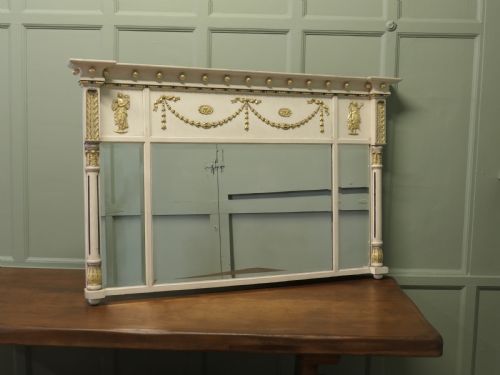
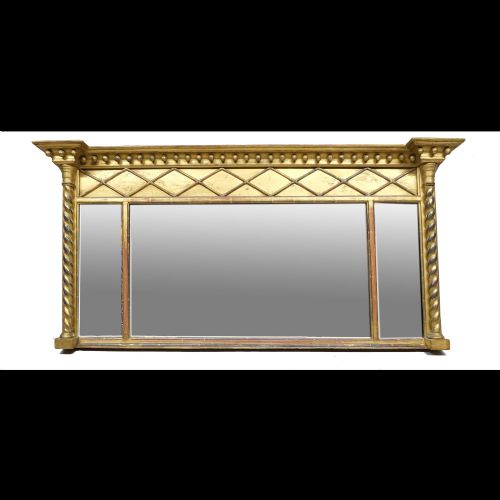
A regency three plate mirror takes the form of an overmantel or wall glass designed to sit above a fireplace or along a principal wall. The listings on this page are dominated by nineteenth century examples, specifically from the Regency, Victorian, and late Georgian periods.
Most pieces encountered here are overmantel mirrors featuring compartmentalised or triptych plates set within horizontal gilt frames. Makers of the period often incorporated classical motifs such as laurel wreaths and griffin friezes into these wide formats.
While the overarching style is Regency or neoclassical, the selection also includes later Victorian iterations and Scottish or Italian influences. These diverse origins share a common focus on tripartite glass division to expand visual space.
How they were made
Makers constructed the structural frames primarily from wood, applying gesso and composition ornament to build up crisp neoclassical details before gilding the surface. Ebonised wood, mahogany, and rosewood also appear across the surviving pieces.
The characteristic tripartite glass configuration uses three separate mirror plates divided by slender mullions or frame sections. This technique accommodated the manufacturing limits of large glass production during the period while creating a distinct rhythm across the wall.
Griffins and laurel wreaths stand guard over the glass, ensuring your mantelpiece carries the full weight of classical authority.
What varies in quality
The refinement of the moulded gesso and carved ornamentation dictates much of the visual distinction between examples. Crisp, deeply undercut relief work on friezes and cornices marks out superior craftsmanship against softer, more generalised decoration.
The integration of the tripartite plates within the frame structure reveals the maker's hand, particularly in how harmoniously the sections balance one another. Richness of the original gilding and the preservation of the underlying surfaces further separate standard production from exceptional pieces.
Ciceri and Co
The Regency Three Plate Mirror Glossary
- Overmantel mirror
- A large horizontal mirror designed specifically to be hung on the wall directly above a fireplace mantelpiece. These pieces often feature divided plates to span the width of the hearth.
- Triptych
- A mirror divided into three distinct vertical sections or plates within a single frame. This layout is typical of large nineteenth-century overmantel glasses.
- Giltwood
- Timber that has been covered with a thin layer of gold leaf over a prepared gesso base. It provides the bright reflective surface characteristic of classical mirrors.
- Composition
- A moulded material made from whiting, linseed oil, resin, and glue, pressed into moulds to create decorative ornaments on frames. It allowed makers to produce intricate classical details efficiently.
- Gesso
- A plaster-like mixture applied to wooden frame bases to provide a smooth surface for gilding and fine carving work. It takes crisp detail exceptionally well.
Regency Three Plate Mirror: Frequently Asked Questions
Where should I hang a regency three plate mirror?
These mirrors were traditionally designed to sit above a fireplace mantelpiece, where their horizontal proportions anchor the chimney breast and reflect light back into the room.
They also work effectively along principal wall spaces in reception rooms or hallways where a wide, architectural focal point is required.
How do I distinguish a Regency mirror from a Victorian one?
Regency frames lean heavily into crisp neoclassical motifs such as classical friezes, bollusters, and tight reeding executed in giltwood and gesso.
Victorian interpretations often show heavier proportions or slight stylistic shifts while maintaining the traditional tripartite plate arrangement.
Why are there three plates instead of one?
Nineteenth-century glass manufacturing technology struggled to produce large, flawless single sheets of mirror glass on a commercial scale.
Dividing the surface into three compartments solved this technical limitation while creating a balanced aesthetic that suited wide architectural expanses.
What is the difference between giltwood and painted finishes?
Giltwood involves applying gold leaf over a prepared gesso and wood base to create a bright, light-reflecting surface favoured in formal neoclassical interiors.
Painted and parcel gilt versions combine dark or neutral painted bodies with selective gilded highlights for a more subdued decorative effect.