

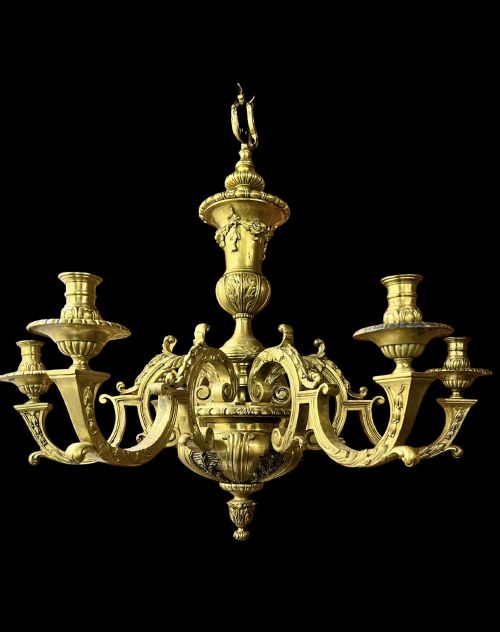


Regency Style Pendant Light
A regency style pendant light brings classical proportion and glittering cut glass crystal to a room.
Regency Style Pendant Light
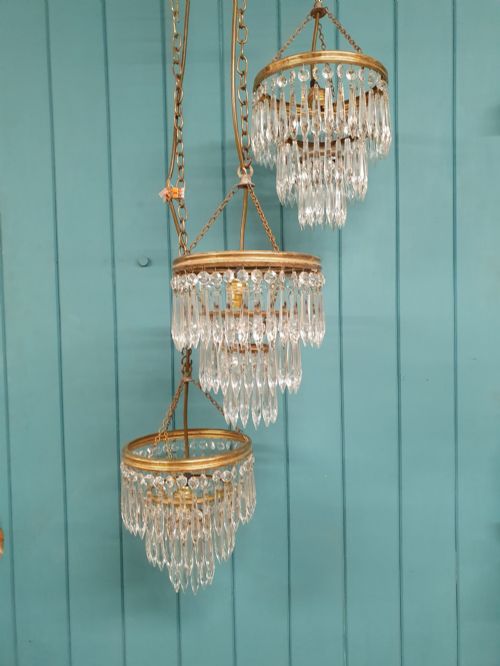
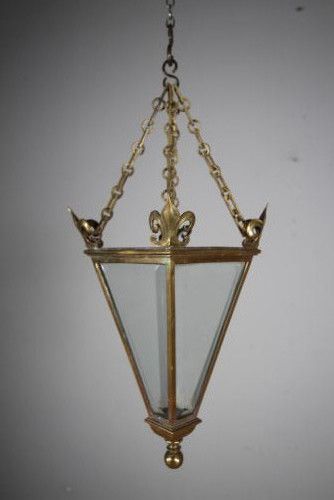
A regency style pendant light typically takes the form of a chandelier, hall lantern, or hanging lantern suspended from the ceiling. These pieces draw upon French Empire, English Neoclassical, and Regency design vocabulary, spanning periods from the nineteenth century through the Edwardian era and the nineteen-thirties.
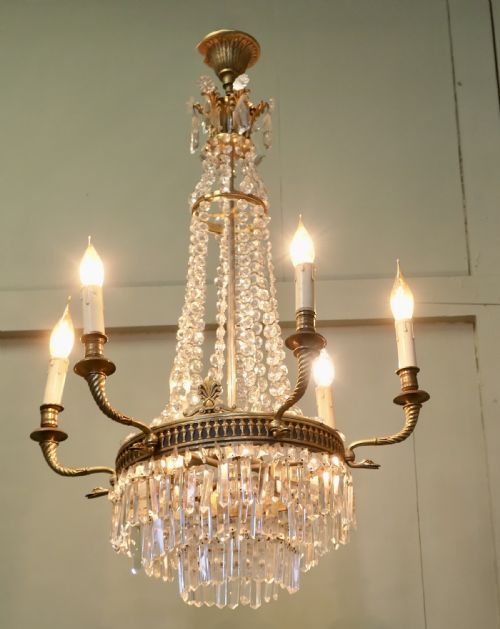
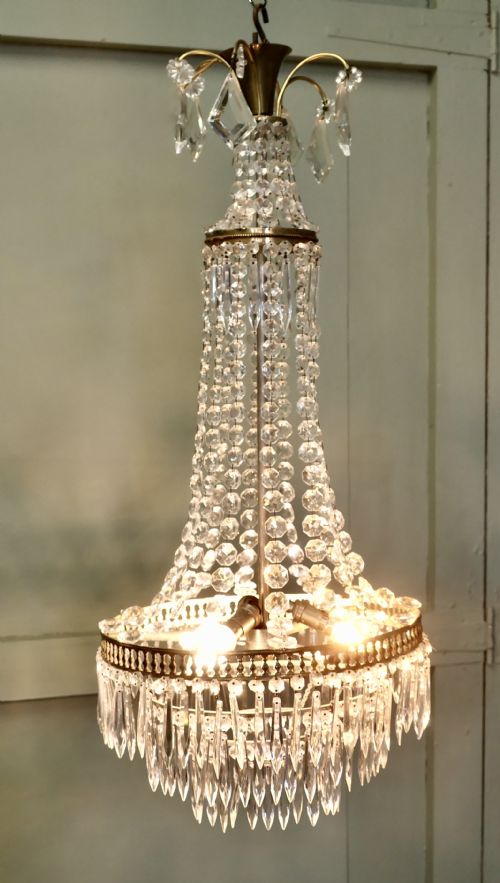
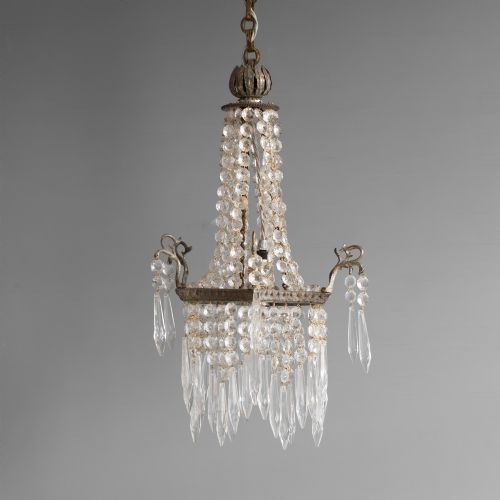
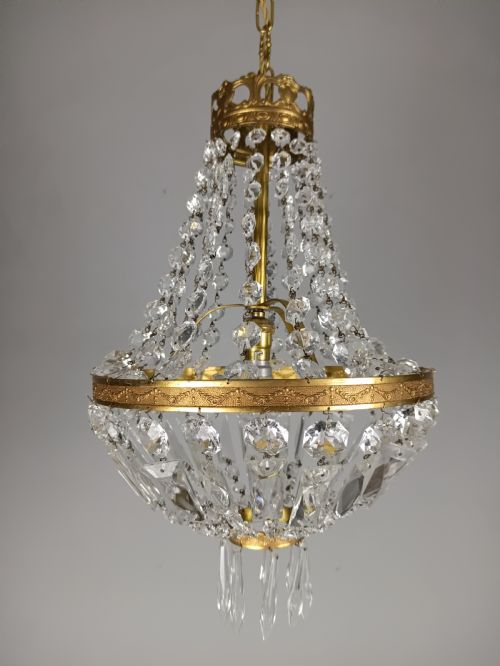
Buyers will most frequently encounter brass, gilded bronze, and metal frames dressed with cut glass crystal drops, tents, and bags. Forms range from compact single-light lanterns and small spike chandeliers to grand multi-tiered fixtures featuring numerous branches and elaborate glass work.
Materials and construction methods
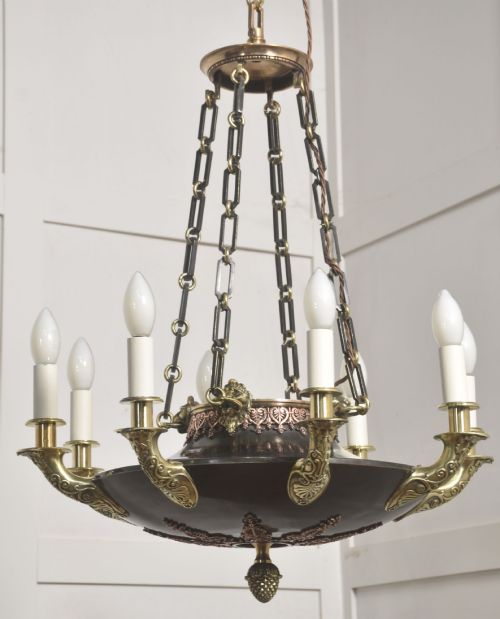
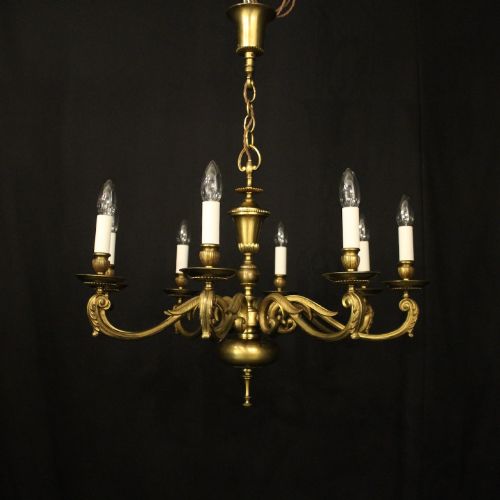
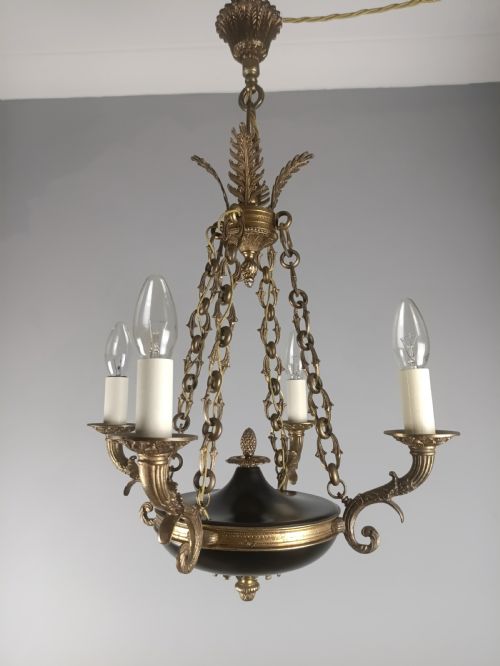
The structural framework relies heavily on brass, gilt bronze, patinated bronze, and silver-plated metal, shaped into arms, hoops, and decorative mounts. These metal elements provide the rigid skeleton required to support suspended glass components.
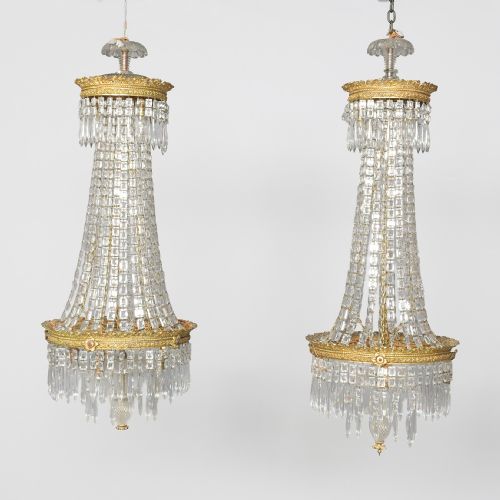
Glass and crystal elements are cut, shaped, and hung in formations such as tents, waterfalls, and bags. Individual drops and beads are linked together by wire to drape gracefully across the bronze and brass armature.
Listings span the nineteenth century through the nineteen-thirties, incorporating Edwardian productions and Empire Revival styles.
What distinguishes finer examples
Quality reveals itself in the weight and crispness of the metal casting, particularly on bronze mounts and rams head details. Finer frames exhibit sharper chasing and richer gilding that holds its lustre across the brass armature.
The cut and clarity of the crystal drops determine the brilliance of the piece when illuminated. Superior examples use heavy, precisely cut glass that refracts light cleanly through tents, bags, and waterfalls without cloudiness.
Wedgwood
The Regency Style Pendant Light Glossary
- Tent and bag chandelier
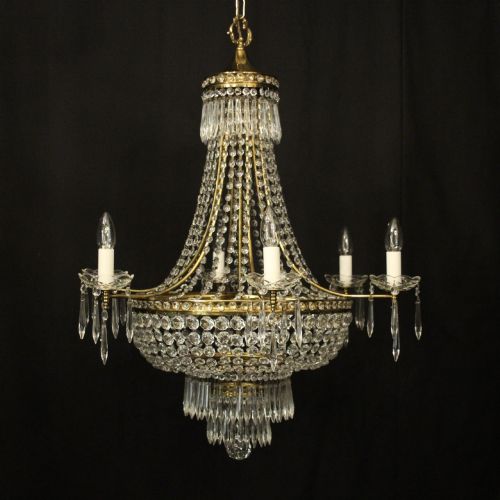
- A lighting fixture featuring an upper conical section of glass strings resembling a tent, paired with a lower bag-shaped gathering of crystal drops.
- Spike chandelier
- A central vertical metal rod or spike that carries tiers of glass swags, drops, and radiating candle arms.
- Hall lantern
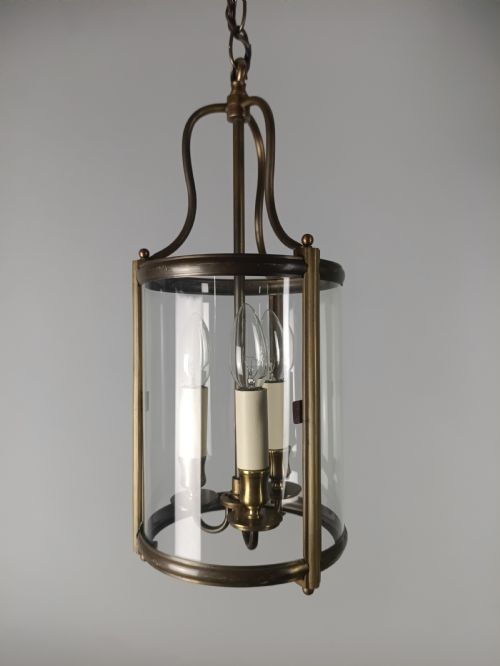
- An enclosed ceiling-hung light fixture designed specifically for corridors, vestibules, and entrance halls.
- Gilt bronze
- Metal alloy cast with intricate detail and coated in a layer of gold leaf or gilt finish, often seen on French Empire frames.
- Cut glass
- Glass that has been faceted on a wheel to create sharp edges that catch and reflect interior light.
Regency Style Pendant Light: Frequently Asked Questions
What rooms suit a regency style pendant light?
These hanging fixtures suit entrance halls, dining rooms, and drawing rooms where high ceilings allow the glass drops and branching arms adequate space to hang.
Compact lanterns and smaller bag chandeliers work effectively in more intimate vestibules or bedrooms requiring focused overhead illumination.
How do I determine the period of a light?
Dating relies on examining the construction of the metal frame, the wiring methods, and the style of the brass or bronze casting. Nineteenth-century pieces often display heavier patination and hand-formed metalwork compared to later revival pieces.
Twentieth-century interpretations from the nineteen-twenties and thirties frequently utilise standardised brass components while retaining classical French Empire and Regency silhouettes.
Are these lights wired for modern use?
Most antique and vintage fixtures arrive adapted for contemporary electrical standards, though buyers should verify the internal wiring upon acquisition. Professional installation ensures that heavy brass and crystal assemblies hang securely from ceiling joists.
Rewiring historical fittings preserves the structural integrity of fragile metal arms and internal lamp holders.
How do tent and bag chandeliers differ?
A tent configuration uses strings of crystal beads stretching from a central crown down to the outer perimeter, creating a triangular silhouette. A bag formation gathers cascading drops into a rounded, pouch-like lower basket beneath the main frame.
Many grander fixtures combine both elements into a single multi-tiered design featuring waterfalls and swags.