




Regency Style Mahogany Commode
A regency style mahogany commode offers deep timber tones and classical proportions, bringing stately elegance and practical storage to any traditional bedroom.
Regency Style Mahogany Commode
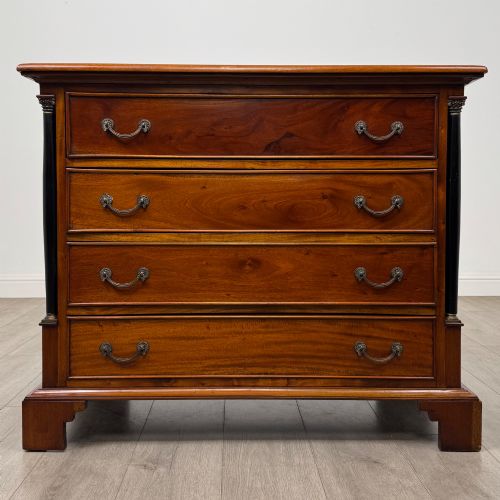
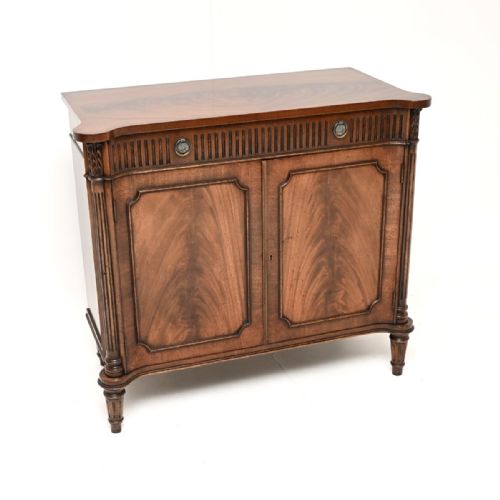
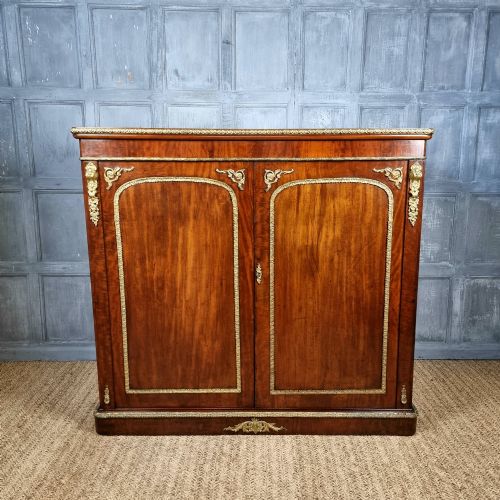
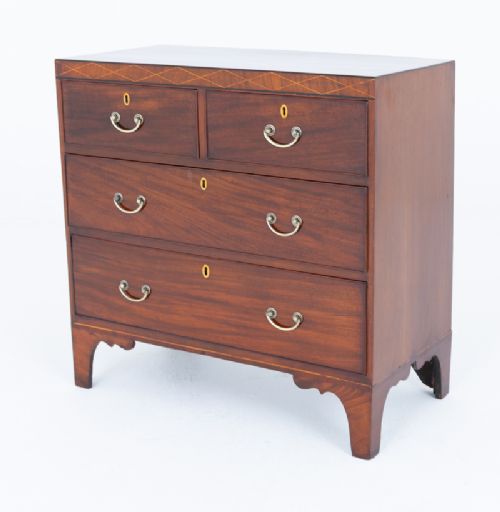
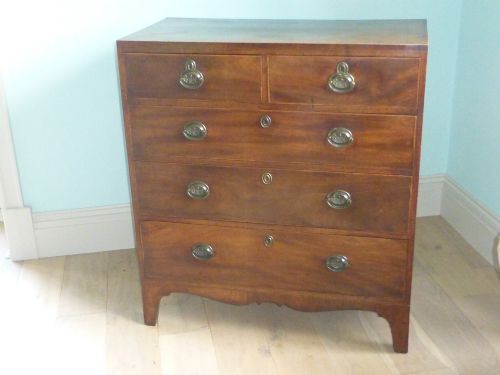
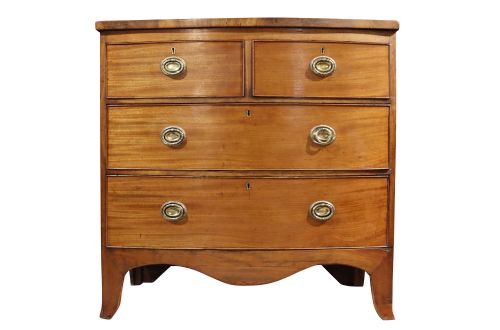
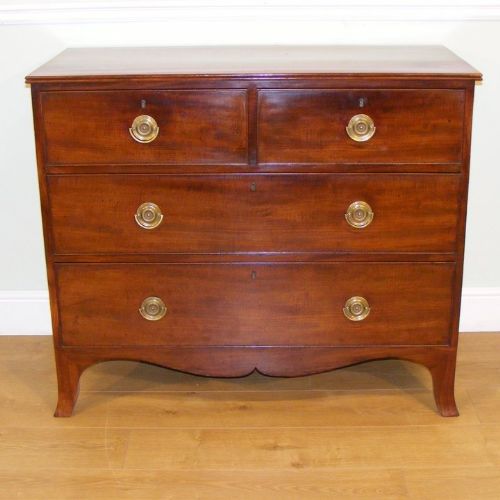
A regency style mahogany commode typically appears as a chest of drawers or small cabinet, originating predominantly from the nineteenth century alongside Edwardian and later interpretations. These pieces frequently take the form of bow front chests, compact bedside cabinets, and two door side cabinets designed for domestic utility.
The aesthetic draws heavily from Georgian and Scottish Regency traditions, often showcasing inlaid details and robust drawer configurations. Buyers encountering this selection will find examples ranging from small nineteenth century chests to narrow four drawer formats.
Makers such as Gillows contributed notable signed or attributed pieces to this tradition, elevating standard storage furniture into refined decorative objects. Pieces span various decades, including William IV and Victorian eras, demonstrating enduring craftsmanship.
Materials and construction
Cabinet makers utilised solid mahogany and rich flame mahogany veneer applied over stable secondary timbers such as oak, creating dense and durable carcases. The application of decorative veneers required considerable skill to align grain patterns across drawer fronts.
Metalwork played a defining role in the construction, incorporating brass handles, escutcheons, and occasionally ormolu mounts to accent the timber. Ebonised wood details and bone inlay further embellished specific surfaces, while paw feet provided substantial support to larger chests.
Periods represented span the Georgian, Regency, Victorian, and Edwardian eras.
Factors of quality
Quality rests upon the selection of timber, where striking flame mahogany veneers and carefully matched grain patterns distinguish superior examples from plain builds. The crispness of inlaid stringing and the integration of brass hardware also signal higher workshop standards.
Structural integrity reveals itself in the dovetail joints of the drawers and the smooth operation of the timber runners. Pieces bearing documented maker attributions, such as Gillows, naturally command greater interest due to their verified provenance.
Gillows
The Regency Style Mahogany Commode Glossary
- Flame mahogany
- A veneer cut from timber where the branch meets the trunk, producing a distinctive, fiery rippled pattern. This figure was highly prized for principal drawer fronts.
- Bow front
- A convex curved cabinet or chest front that swells outward in the centre. This shape softens the profile of rigid storage furniture.
- Ormolu
- Gilded bronze ornamentation applied to furniture for decorative contrast. It reflects high status and continental influence.
- Escutcheon
- A protective brass plate surrounding a keyhole. It prevents the timber surrounding the lock from wearing down through daily use.
- Dovetail
- A traditional interlocking joint used in drawer construction. Its interlocking wedge shape provides immense tensile strength without metal fasteners.
Regency Style Mahogany Commode: Frequently Asked Questions
How do I identify a genuine period piece?
Examine the secondary timbers inside the drawers, such as oak or pine, and look for hand cut dovetailing rather than modern mechanical fixings. Age shows in the natural oxidation of the wood and subtle wear along drawer runners.
Compare the proportions and hardware against documented examples from the same era. Cabinet makers of the nineteenth century utilised specific construction methods that resist exact modern replication.
Where should I place a commode at home?
These storage pieces fit naturally in a bedroom as a chest of drawers or serve as a striking side cabinet in a hallway or drawing room. Their compact footprints allow them to occupy awkward wall spaces without dominating the interior.
Keep them away from direct sunlight and strong heat sources to protect the mahogany veneer from drying out or splitting over time. A stable indoor climate preserves the finish.
How do I care for mahogany surfaces?
Dust the timber regularly with a soft, dry cloth and apply a quality beeswax periodically to nourish the grain. Avoid silicone based polishes that build up a hazy residue and attract dust.
Lift objects rather than sliding them across the top surface to prevent scratching the polished finish. Proper handling maintains the deep lustre of the wood.
What is the difference between Georgian and Regency styles?
Georgian furniture often emphasises architectural symmetry, restrained carving, and classical proportions derived from Palladian ideals. It establishes a sturdy and balanced presence in a room.
Regency design introduces bolder classical motifs influenced by ancient Rome and Greece, featuring more dramatic veneers and brass accents. The lines become sharper, often incorporating bolder curves like the bow front.