
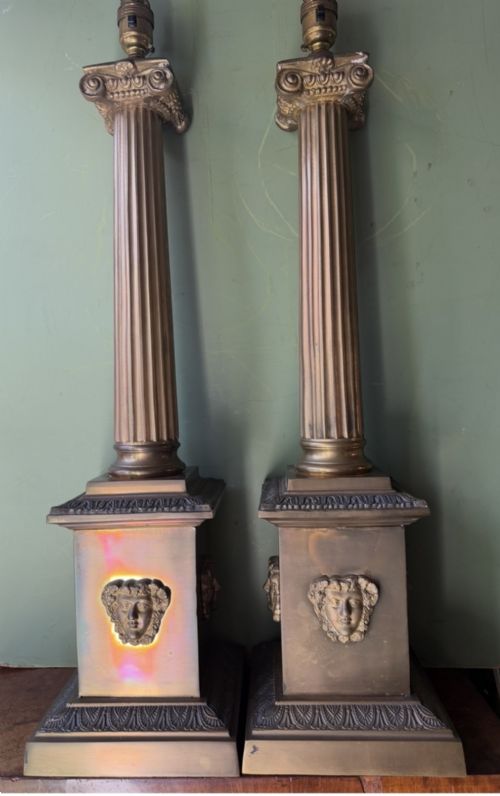


Regency Style Column Light
Regency style column light fixtures bring neoclassical dignity and height to a room, combining classical pillar forms with rich patinated metals.
Regency Style Column Light
When you search for regency style column light, you encounter tall pillar forms designed to illuminate interiors through table lamps and standard floor lamps. These pieces draw upon classical architecture, translating stone columns into portable lighting fixtures.
The items found here span the nineteenth century alongside later twentieth-century interpretations, including pieces from 1890, 1910, 1920, and 1930. Table lamps and standard lamps dominate the selection, offering varied heights for different domestic settings.
Neoclassical, William IV, Grand Regency, Empire, and Chinoiserie stylistic influences appear across the inventory. Buyers most frequently meet brass and bronze examples, often paired with ormolu mounts, fabric shades, or painted surfaces.
Materials and construction methods
Makers utilised cast and patinated metals, forming columns from brass, bronze, and gilt bronze. Ormolu accents provided contrasting golden highlights against darker patinated bronze bodies.
Secondary materials included glass, paint, and mahogany to build up composite pillars and bases. Fabric elements completed the lamps, while faux lapis lazuli surfaces added decorative depth to specific nineteenth-century columns.
Factors determining quality
The standard of metalwork distinguishes superior examples from simpler ones. Crisp chasing on ormolu mounts and finely articulated Corinthian capitals reveal the hand of a skilled bronze worker.
Proportion and material weight also divide the range. Solid brass and heavy bronze castings provide stability and presence, whereas lighter construction shifts the balance towards decorative utility rather than architectural gravitas.
The Regency Style Column Light Glossary
- Ormolu
- Gilded bronze used for decorative mounts and decorative details on nineteenth-century light fittings. This technique involves applying a gold amalgam to bronze.
- Corinthian column
- A classical architectural pillar type featuring an ornate capital decorated with acanthus leaves. Lamps styled in this manner adapt ancient temple architecture for the domestic interior.
- Patinated brass
- Metal treated to produce a darkened or aged surface finish rather than a bright polished look. This finish is common on nineteenth-century standard lamps.
- Standard lamp
- A tall floor-standing lighting fixture designed to illuminate a room from standing height. These pieces often feature substantial column shafts and heavy weighted bases.
Regency Style Column Light: Frequently Asked Questions
What is a regency style column light?
These pieces are table and floor lamps shaped like classical architectural columns, inspired by the Regency and neoclassical periods. They bring structural elegance and period character to interior spaces.
They utilise metals such as brass, bronze, and gilt bronze, often incorporating fabric shades or painted details to diffuse light across a room.
How were these column lamps used historically?
Originally designed to hold candles or oil before being adapted for electricity, these tall fixtures provided focused task lighting and ambient illumination in grand interiors.
Placed on tables, sideboards, or directly on the floor as standard lamps, they acted as functional architectural accents within sitting rooms and libraries.
How do I live with a column lamp?
These lamps suit both traditional and contemporary interiors, serving as vertical focal points on side tables or in dark corners of a room. Their slim profiles allow them to fit easily beside seating.
Pair them with simple fabric shades to let the patinated bronze or brass column remain the primary visual feature of the piece.
How do I tell periods apart?
Nineteenth-century examples often display heavier bronze and ormolu castings with deep patination, reflecting strict neoclassical or William IV design canons. Later twentieth-century pieces from the 1920s or 1930s sometimes introduce simpler brass or lacquered finishes.
Examining the weight of the metal and the crispness of the column capitals helps separate early pieces from later revivals.