
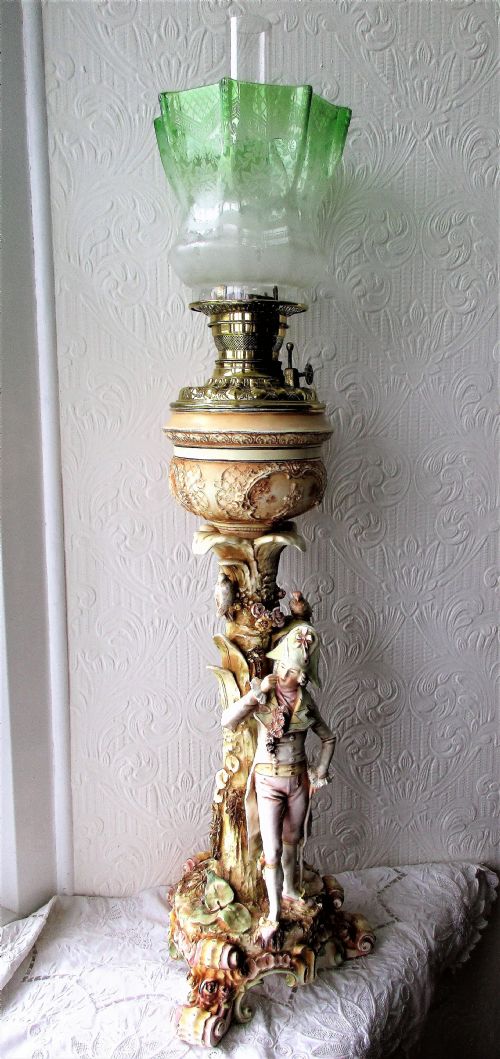


Decorative Brass Lamp Stand
These decorative brass lamp stand examples bring period illumination and height to a room, ranging from slender telescopic designs to heavy column forms.
Decorative Brass Lamp Stand
A decorative brass lamp stand takes several distinct forms across the nineteenth and twentieth centuries, functioning primarily as floor standards, table lamps, and converted oil lamps. Buyers searching for a decorative brass lamp stand will frequently encounter Victorian and Edwardian examples alongside pieces from the nineteen-hundreds and nineteen-thirties.
The selection encompasses tall standard lamps designed for ambient room lighting alongside compact table versions and occasional furniture pieces that incorporate lamp stands. Stylistic influences span Art Nouveau, Neoclassical, Amsterdam School, and French Louis XVI Revival, showing the diverse aesthetic approaches applied to brass metalwork over the decades.
Floor-standing variants often feature telescopic adjustment mechanisms or fluted columns, while smaller iterations integrate fabric, glass, copper, paint, and porcelain elements. Surviving pieces demonstrate how domestic lighting evolved from burning oil to electricity while retaining decorative metal bases and stems.
How they were made
Makers utilised brass as the principal structural and decorative metal, often combining it with copper, gilt bronze, and toleware to achieve contrasting surface textures and tones. Cast brass components were turned, chased, and polished, while telescopic standard lamps relied on precision-fitted inner tubes for height adjustment.
Secondary materials such as marble, porcelain, and glass provide weight, colour, and contrast within the stands and bases. Fabric and thread appear primarily in associated shades, whereas paint and applied finishes enhance specific decorative sections of the metalwork.
Listings feature brass combined with marble, glass, and painted porcelain across Victorian and Edwardian periods.
What varies in quality
Quality rests upon the weight of the cast brass, the crispness of chased or moulded detail, and the mechanical reliability of telescopic adjustment columns. Heavier gauges of metal and solid construction differentiate superior standard lamps from lighter, mass-produced alternatives.
The integration of mixed media, such as fitted marble bases or hand-painted porcelain sections, indicates a higher grade of manufacture. Original components, including weighted iron sub-bases and maker signatures, separate standard utility lighting from distinguished examples.
Messenger
The Decorative Brass Lamp Stand Glossary
- Standard lamp
- A tall floor lamp designed to stand directly on the floor rather than on furniture. These pieces often incorporate heavy bases for stability.
- Telescopic
- A shaft construction allowing the height of the lamp stand to be adjusted up and down. This mechanism uses concentric metal tubes held by a central key or screw.
- Toleware
- Painted or lacquered sheet metal, frequently red in colour, used to accent lamp bases and bodies. It adds vibrant contrast to the polished brass surface.
- Amsterdam School
- An early twentieth-century architectural and design style known for expressive brickwork, organic forms, and rich texturing. Pieces in this idiom often feature robust geometric brass elements.
- Gilt bronze
- Copper alloy treated with a gold-coloured finish or mercury gilding to impart a rich, reflective surface. It appears on finer revival-style standards.
Decorative Brass Lamp Stand: Frequently Asked Questions
How do I date a brass lamp stand?
Dating relies on examining the manufacturing techniques, wiring channels, switch types, and stylistic motifs present in the brasswork. Victorian and Edwardian examples often display heavier castings and manual assembly methods compared to later twentieth-century production.
Stylistic cues such as organic Art Nouveau whiplash curves, Neoclassical fluting, or Amsterdam School geometry provide clear chronological markers. Base construction and weight also reflect the prevailing standards of each decade.
Were these lamps originally electric?
Many surviving pieces started life as oil lamps or paraffin burners before being converted to electricity during the twentieth century. Conversion often involved running internal wiring through the original burner mechanism or central column.
Converted oil lamps retain their original brass reservoirs, galleries, and sometimes glass chimneys or shades. This dual history adds character and depth to period lighting.
How do I care for antique brass?
Antique brass requires minimal intervention, generally needing only gentle dusting with a soft, dry cloth to prevent grime accumulation. Aggressive metal polishes strip away aged patination and can damage delicate chased or gilt surfaces.
Keeping brass items away from damp environments prevents corrosion and Verdigris formation on the metal. Natural handling creates a warm patina that collectors prefer over bright, chemically stripped finishes.