
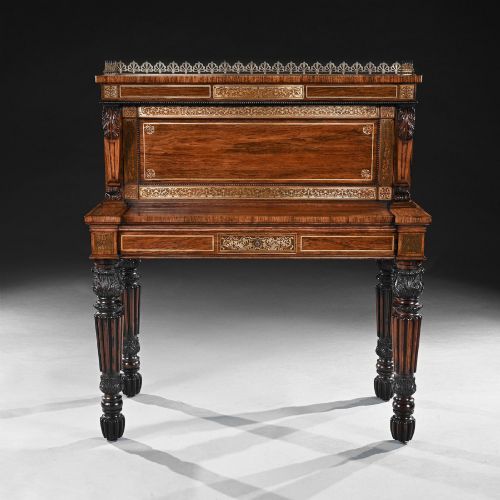
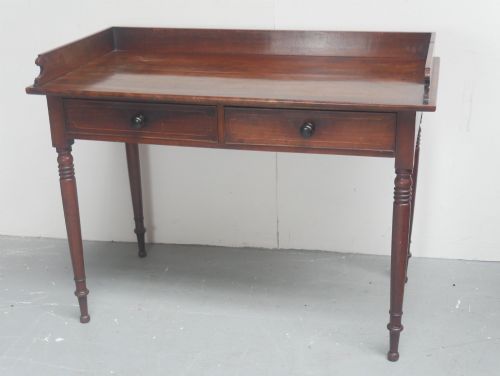
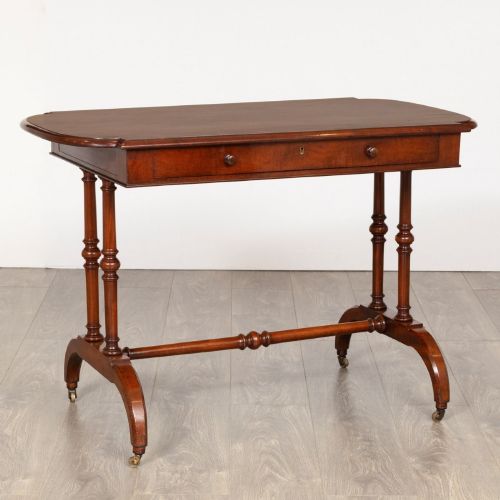
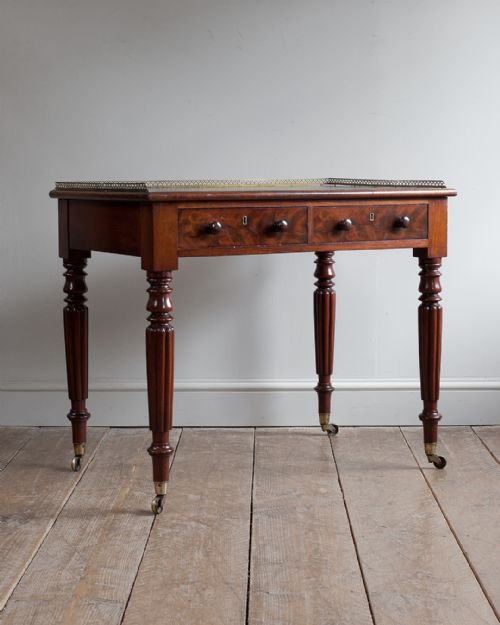

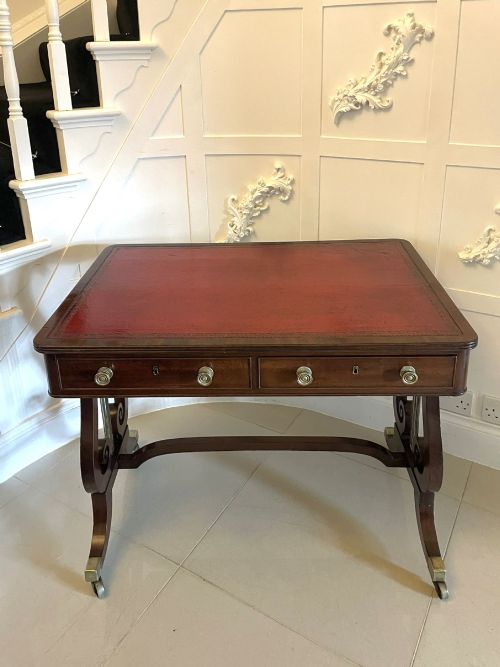
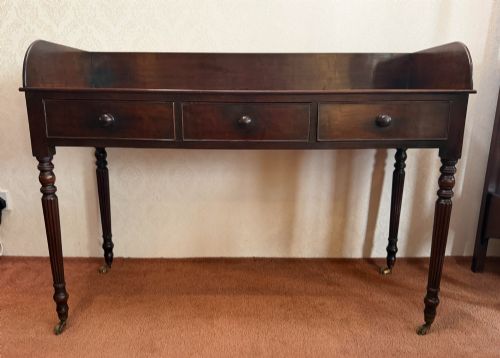
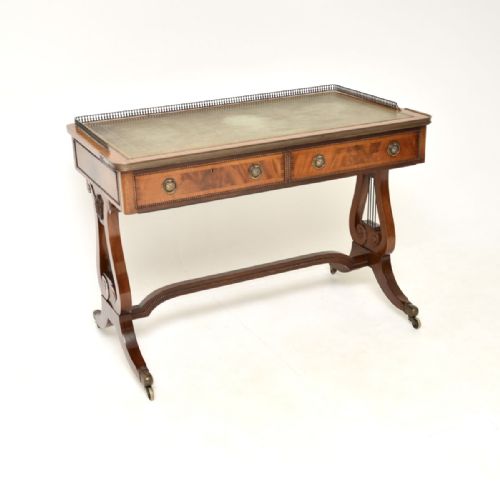
Regency Study Table
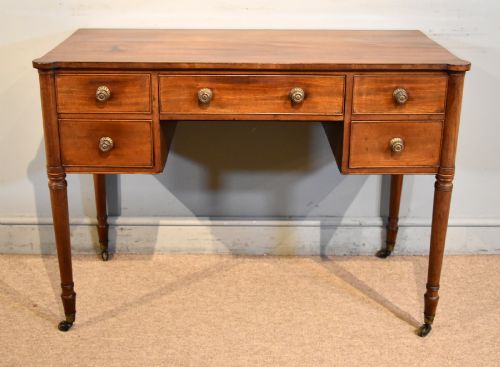
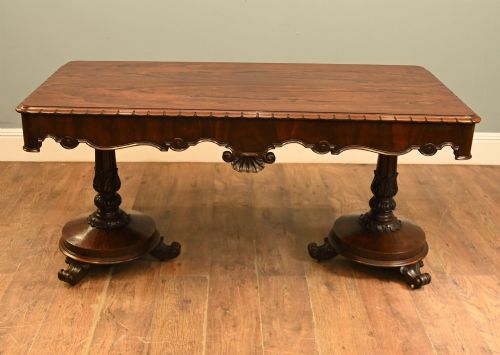
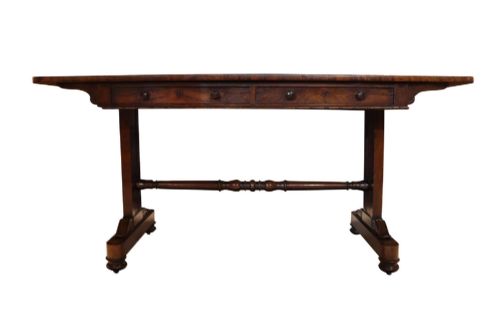
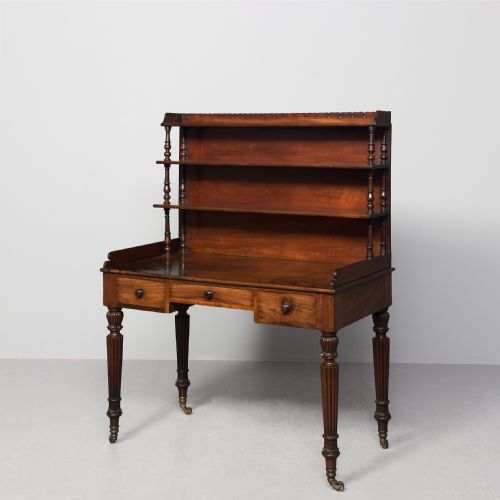
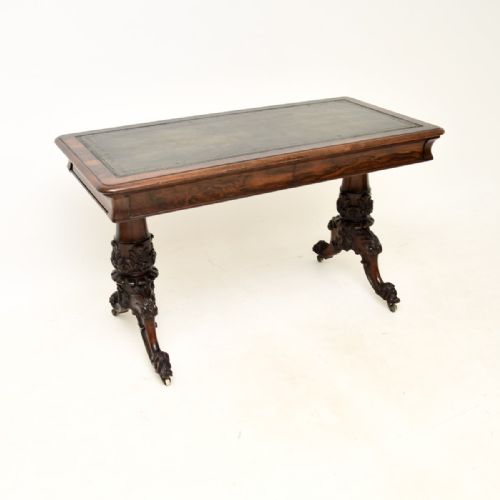
A regency study table brings architectural proportion and figured timber to a room, designed as a freestanding piece meant to command the centre of a library.
Regency Study Table
When searching for a regency study table, buyers encounter freestanding library tables, writing desks, and cylinder desks originating predominantly from the nineteenth century, including Georgian, William IV, and later revival periods.
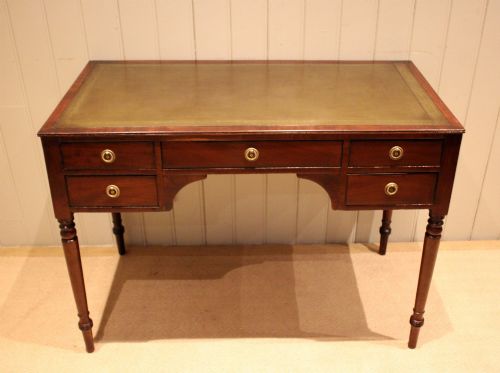
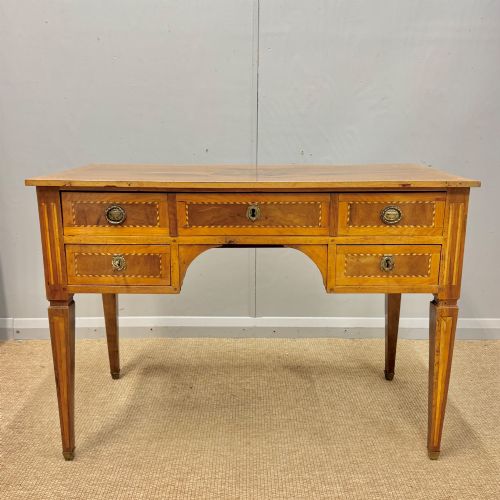
The form is defined by a finished back and sides, allowing the table to sit away from the wall rather than tucking against it, frequently fitted with drawers or leather-lined writing surfaces.
Mahogany and rosewood dominate the surviving examples, though pieces executed in burr oak, pollard oak, walnut, and satinwood appear alongside occasional metal or sculptural works associated with the period.
How they were made
Cabinet makers utilised dense native and imported timbers, notably figured mahogany and rich rosewood, often contrasting the dark grain with lighter inlay such as brass, ebony, or satinwood.
Surfaces frequently incorporated tooled leather writing panels, while structural joints relied on traditional cabinet-making methods paired with turned supports, carved pedestals, or lion's paw feet.
Mahogany and rosewood represent the primary timbers across nineteenth-century listings.
What varies in quality
The selection of timber grain largely dictates the stature of a piece, with heavily figured rosewood or burr oak sitting above plainer stock.
Refinement in carving, such as detailed paw feet or crisp brass inlay, separates standard cabinet work from exceptional workshop production.
Gillows Oxford Street Workshop·James Mein of Kelso
The Regency Study Table Glossary
- Freestanding
- Finished on all four sides so the piece can stand in the middle of a room without backing against a wall. This treatment indicates a desk designed for central placement in a library or study.
- Library table
- A large sturdy table utilised for reading and sorting papers rather than intensive daily correspondence. These pieces often feature spacious tops and substantial timber frames.
- Cylinder top
- A desk featuring a rolling curved wooden shutter that conceals internal pigeon holes and small drawers. When closed, the mechanism protects the writing surface and correspondence.
- Gonçalo Alves
- A dense exotic hardwood with striking contrasting dark brown and light brown figuring, occasionally utilised in high-status nineteenth-century cabinet work.
Regency Study Table: Frequently Asked Questions
Where should a study table sit?
These tables are designed to sit away from walls, with finished backs intended to face into the room.
Positioning them centrally allows access to drawers from multiple sides or displays the grain of the timber properly.
How do I maintain leather tops?
Leather writing surfaces require occasional light conditioning to prevent the material from drying out under normal room conditions.
Avoid excessive moisture and direct sunlight to preserve the gilt tooling and the supple texture of the hide.
Were these tables used for writing?
Many examples incorporate tooled leather inserts and fitted drawer interiors specifically designed for correspondence and document storage.
Larger library variants were equally intended for consulting large volumes and holding reference materials.
How do I spot a later copy?
Examine the secondary timbers inside the drawer boxes and the construction methods used for the frame joints.
Nineteenth-century pieces display period-appropriate timber shrinkage and hand-cut joinery distinct from twentieth-century reproductions.