



Regency Sorcerer Mirror
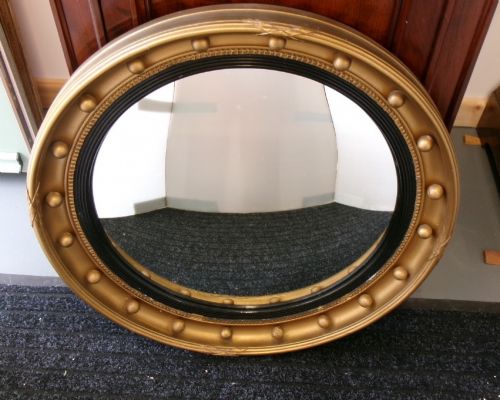
A regency sorcerer mirror brings a dark, curving optical focal point to a room, bending the light across a rounded convex glass plate.
Regency Sorcerer Mirror
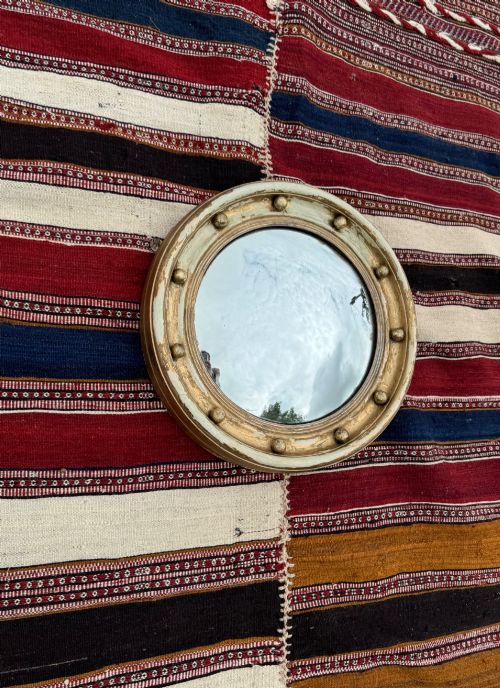
When you search for a regency sorcerer mirror, you encounter convex wall mirrors designed to shrink and capture an entire room in a single circular reflection. The examples available here span the Victorian era, the nineteenth century, and later revivals, offering the classic porthole or butler's mirror form.
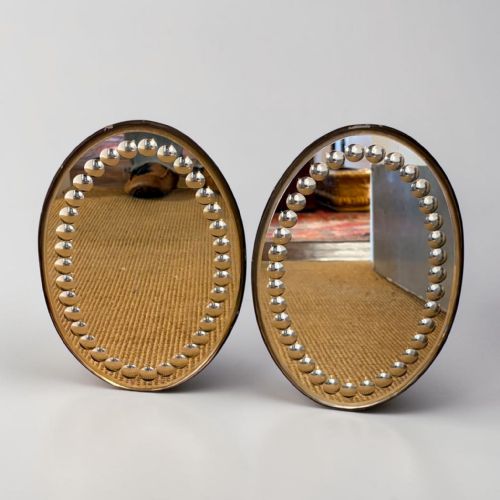
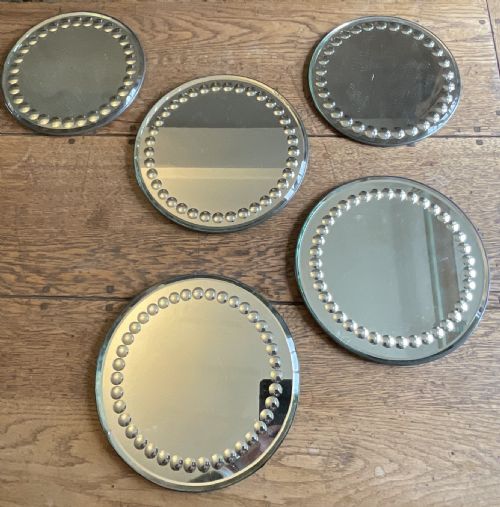
These items primarily function as decorative wall mirrors and occasionally plateau mirrors, echoing the Regency style through their curved plates and circular frames. You are most likely to meet pieces dated from eighteen-eighty to nineteen-hundred, showing how nineteenth-century makers reinterpreted earlier designs.
How they were made
The construction relies on wood and ebonised wood or mahogany frames, often finished with gesso and giltwood to create a reflective metallic border around the glass. Artisans shaped these circular mounts to hold heavy, curved glass plates securely within deep mouldings.
The silvered glass itself provides the distinctive convex distortion, capturing light through specialised blowing and silvering techniques typical of the period. Gilt wood and painted surfaces receive layered treatments that define the visual weight of each piece.
Listings feature items spanning from eighteen-eighty through the Victorian era and into nineteen-hundred, incorporating mahogany, ebonised wood, and giltwood.
What varies in quality
Quality rests upon the crispness of the gesso mouldings and the depth of the gilding or ebonisation applied to the wood frame. Finer examples display precise joinery and well-preserved surface finishes that retain their original sheen without heavy restoration.
The clarity and integrity of the silvered glass plate also distinguish finer pieces, as older convex glass develops subtle Foxing or silvering loss that alters the reflection. The weight and proportion of the frame relative to the circular glass dictate the overall presence of the mirror.
The Regency Sorcerer Mirror Glossary
- Convex glass
- Curved glass that bows outward, creating a wide-angle reflection that encompasses the entire surrounding space. This optical distortion is the defining feature of the form.
- Giltwood
- Wood that has been coated with a thin layer of gold leaf or gilt paint over a prepared gesso ground. It provides a bright, reflective surface around the mirror plate.
- Ebonised wood
- Timber treated with a dark finish to imitate expensive ebony. This dark treatment offers a sharp contrast to the gilt details typically found on the frame.
- Plateau mirror
- A mirrored tray or wall piece originally placed on dining tables or walls to reflect candlelight and objects. These items share the circular format and reflective quality of wall mirrors.
- Gesso
- A plaster-like mixture applied to wooden frames and carved to create raised ornamental details. It forms the base for subsequent gilding or painting.
Regency Sorcerer Mirror: Frequently Asked Questions
What is a regency sorcerer mirror?
A convex mirror designed to bend light and reflect a wide-angle view of an entire room within a circular frame.
These objects draw on nineteenth-century designs, often featuring giltwood, ebonised wood, or mahogany construction.
How were these mirrors used?
They served as decorative wall ornaments intended to brighten spaces by capturing and scattering ambient light from windows and candles.
Butler's mirrors and porthole variants were traditionally placed in reception rooms or hallways to monitor activity.
Where should I hang one?
Position the piece at eye level on a clear wall where its wide field of view can gather light from across the room.
Ensure the wall fixings support the considerable weight of the wooden frame and heavy glass plate.
How do I date these mirrors?
Examine the materials, backboards, and construction methods to distinguish nineteenth-century originals from later revival pieces.
Stylistic cues in the gesso work and the condition of the silvered glass help determine the period of manufacture.