

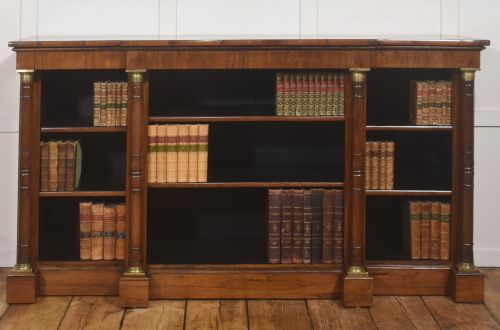
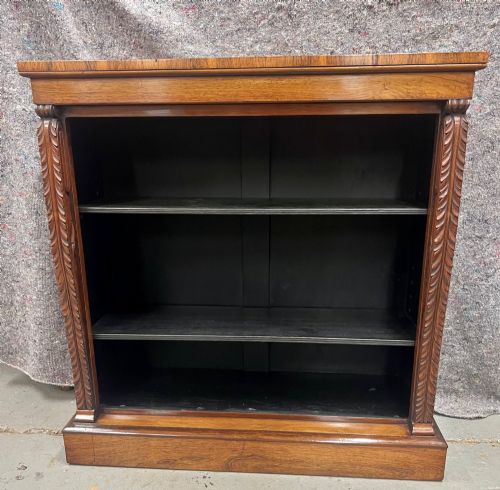

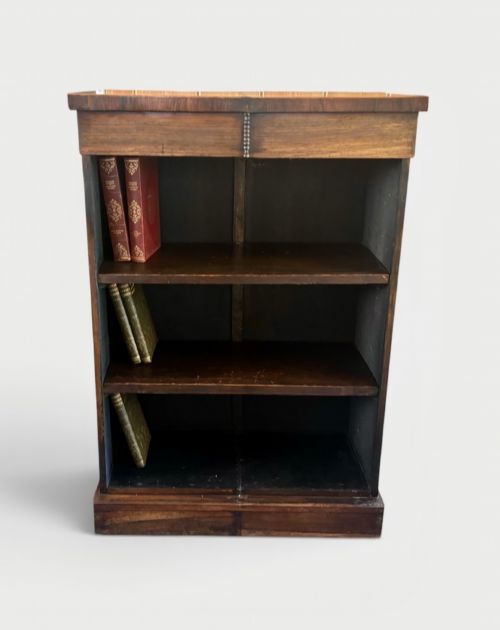
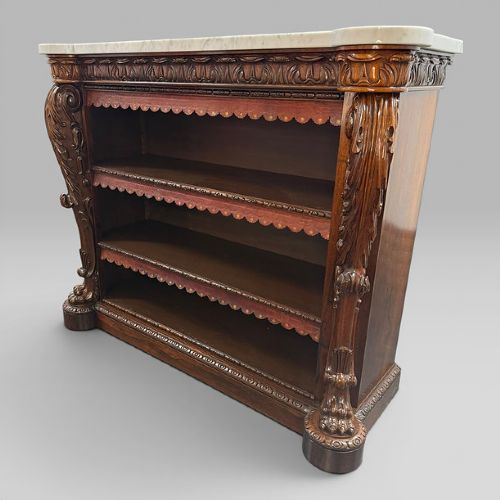


Regency Rosewood Open Bookcase
A regency rosewood open bookcase combines rich dark timber with architectural lines, offering an elegant display surface for libraries.
Regency Rosewood Open Bookcase
A regency rosewood open bookcase typically presents adjustable shelves flanked by pilasters or columns, often built low to the ground for domestic use. The pieces on this page span several decades, featuring compact dwarf proportions alongside grander breakfront designs.
Beyond standard shelving units, the selection includes whatnots with multiple graduated tiers, waterfall configurations, and hybrid chiffonier cabinets incorporating lower doors. Many examples originate from the early nineteenth century during the Regency and William IV periods, though later revivals also appear.
Buyers will encounter both solid timber construction and veneered surfaces, occasionally paired with marble tops or mirrored backs. Pairs of matching bookcases and double-sided variations further expand the choices available for architectural interiors.
Materials and construction
Cabinet makers utilised dense rosewood timber, frequently applied as fine veneers over secondary woods to create striking grain patterns across flat surfaces. Workshops enhanced these dark grains with contrasting brass inlay, delicate parcel gilt highlights, and bronze mounts.
Interiors often incorporated adjustable wooden shelving supported by peg systems, while select pieces integrated inset leather panels or pink marble slabs onto the upper surface. Simulated paint and grained finishes also emerge as period techniques used to mimic exotic timbers.
Regency Rosewood Open Bookcase Retail Price Guide 2026
Typical asking prices for regency rosewood open bookcase among the pieces listed under this phrase on Sellingantiques today, from the lower quarter to the upper quarter. They describe what is for sale here now, not the wider market.
Several bookcases come equipped with leather dummy books designed to conceal actual storage compartments or awkward architectural gaps.
Distinctions in execution
Superior examples display crisp brass marquetry and finely carved gilt details that integrate harmoniously with the architectural proportions of the carcase. The handling of the rosewood grain, particularly on breakfront or inverted breakfront facades, determines visual balance.
Attribution to prominent makers such as Gillows elevates certain pieces through superior joinery, substantial marble tops, and refined secondary woods. Original surface patination and retention of adjustable shelf mechanisms distinguish high-grade items from later revival interpretations.
Gillows
The Regency Rosewood Open Bookcase Glossary
- Breakfront
- A cabinet design where the central section projects forward from the flanking outer sections. This configuration adds architectural depth to larger library furniture.
- Waterfall bookcase
- A tiered shelving unit where each successive shelf steps back from the one below, typically decreasing in depth toward the top.
- Chiffonier
- A low sideboard or cabinet featuring shelves or a superstructure on top for display. These pieces often combine enclosed lower storage with open upper tiers.
- Graining
- A decorative painting technique applied to common woods to imitate exotic timbers like rosewood. This method provided fashionable aesthetics at a lower cost.
- Whatnot
- A piece of freestanding furniture consisting of several open shelves tiered above one another. They were designed for displaying ornaments, books, and small objects.
Regency Rosewood Open Bookcase: Frequently Asked Questions
How do I identify a Regency period piece?
Regency furniture typically dates from the early nineteenth century, showcasing classical proportions, restrained carving, and dark exotic veneers.
Details such as brass inlay, gilt mounts, and architectural pilasters help distinguish authentic pieces from later nineteenth-century revivals.
Where should I place a low bookcase?
Low bookcases work well beneath windows or along living room walls where standard tall shelving would block natural light and sightlines.
The flat top surface also provides an ideal display area for sculptures, lamps, or decorative objects.
What are simulated rosewood finishes?
Simulated rosewood involves painting common timber bases with pigmented glazes to replicate the dark grain patterns of imported rosewood.
Cabinet makers utilised this technique during periods of timber restriction or to achieve uniform decorative schemes economically.