



Regency Reeded Mahogany Chairs
Regency reeded mahogany chairs combine crisp linear woodwork with dense timber, offering sturdy seats for dining rooms and libraries.
Regency Reeded Mahogany Chairs
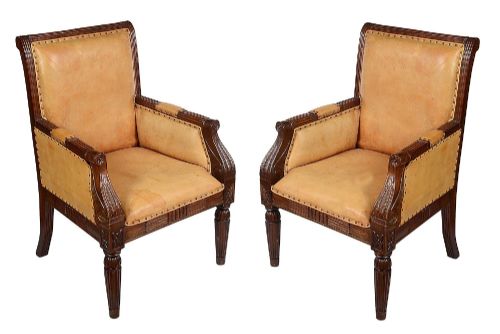
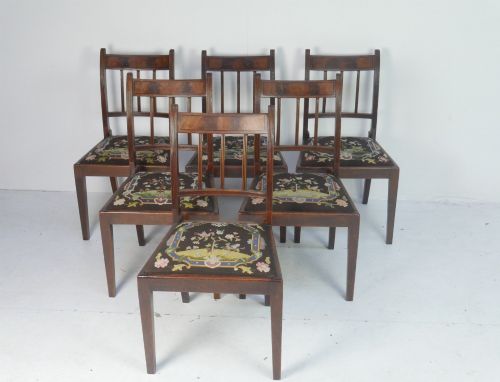
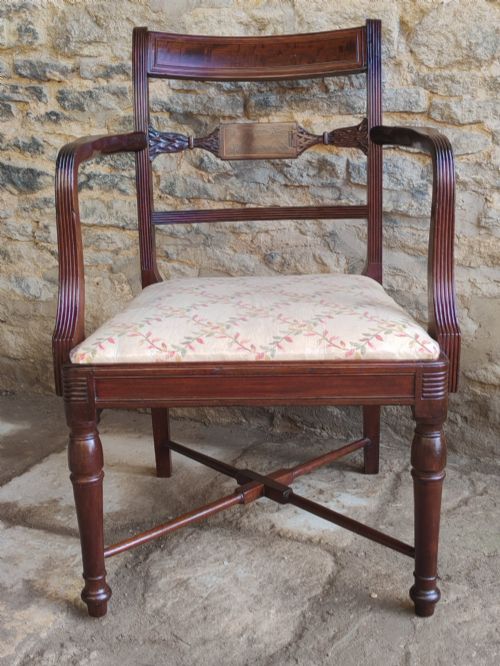
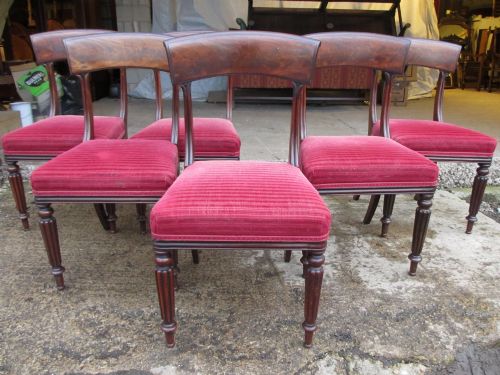
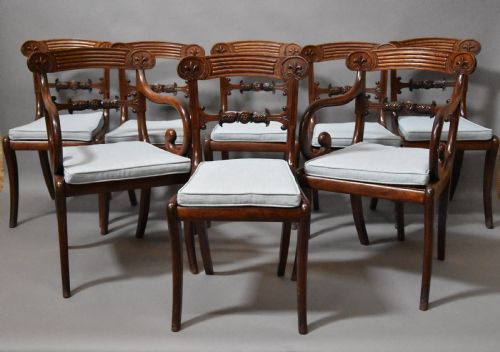
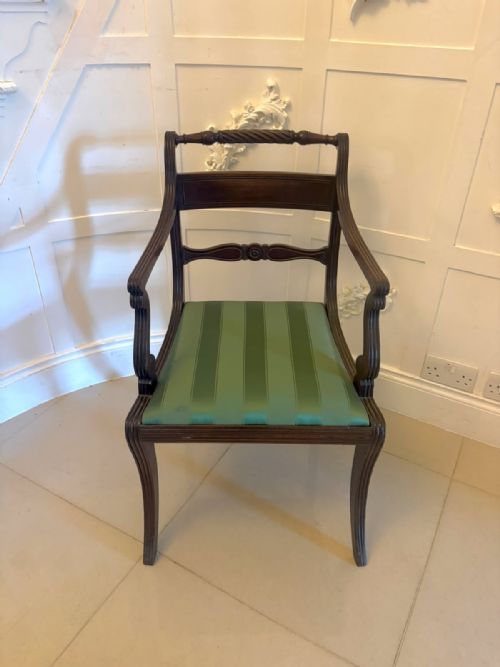
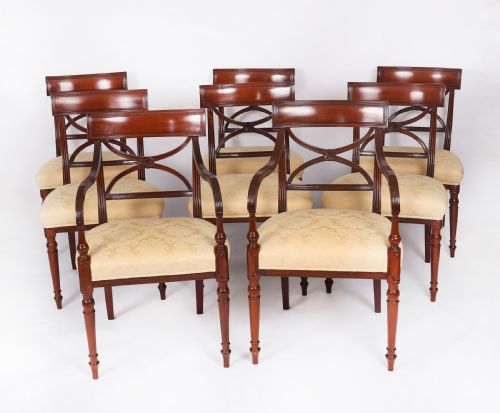
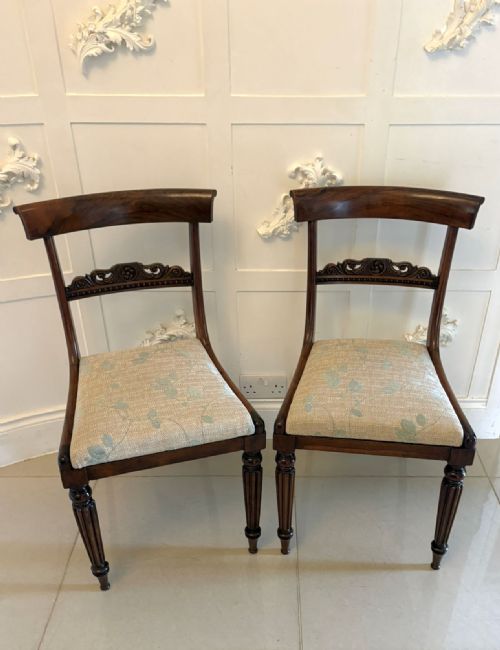
When you search for regency reeded mahogany chairs, you encounter seating built during the early nineteenth century and later revival periods, spanning the Georgian, Regency, and William IV eras. The forms vary from single dining chairs and carvers to library armchairs, desk chairs, and hall chairs.
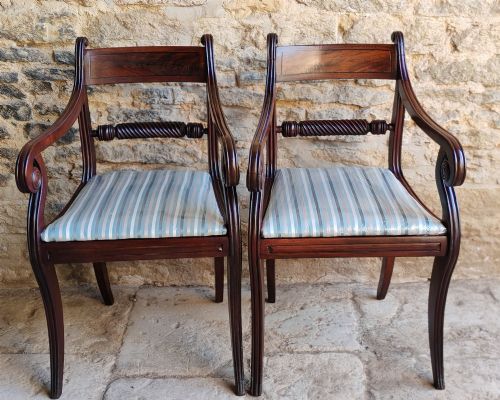
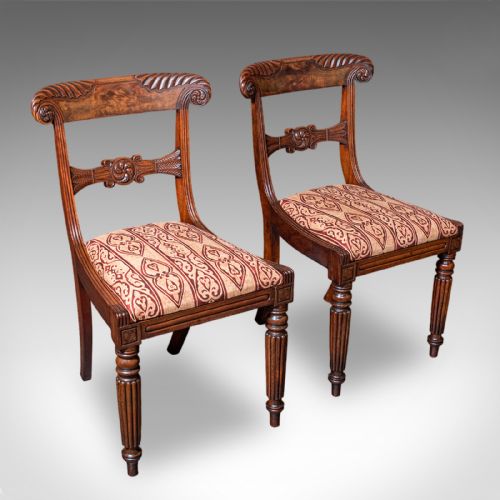
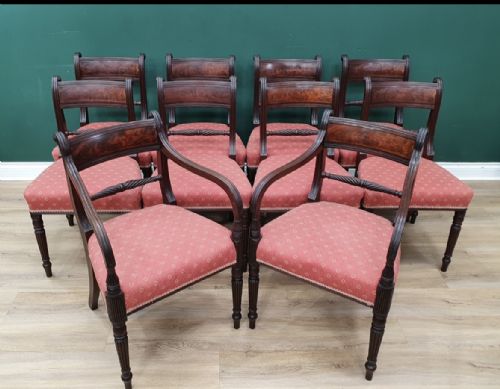
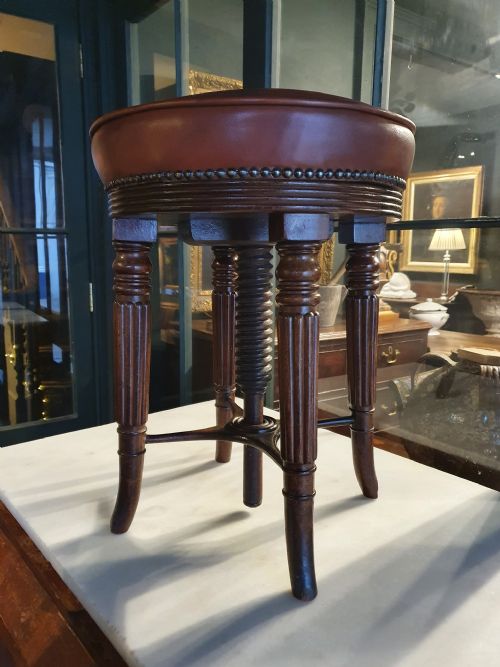
Most examples appearing here belong to matched sets or pairs intended for formal rooms, featuring characteristic turned or carved linear mouldings along the legs and rails. Dining chairs and armchairs dominate the selection, alongside occasional piano stools and bergères.
Makers and workshops of the period drew upon classical design sources, producing open armchairs, bar back forms, and lattice back variations. Pieces range from modest single side chairs to extensive sets designed for large dining tables.
Materials and construction
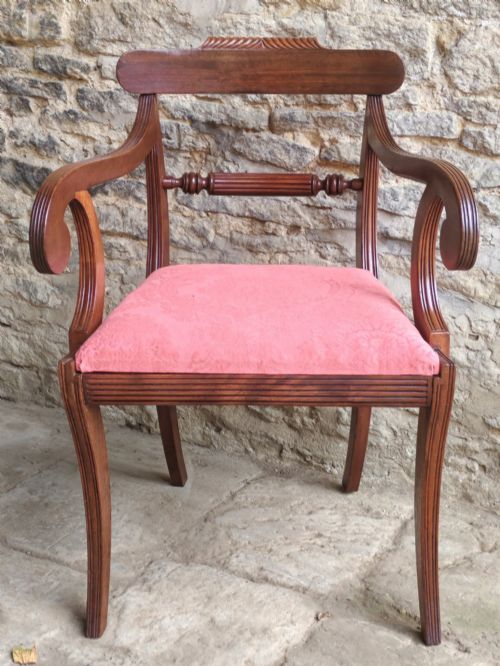
Craftsmen built these seats primarily using solid mahogany, paired with secondary timbers for internal framing. Surfaces frequently display linear reeding carved directly into the solid wood of the legs or frame.
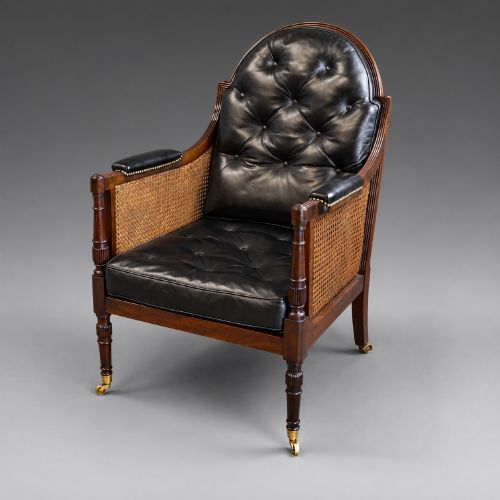
Seats incorporate drop-in pads, cane panels, or fixed squabs upholstered in fabric, leather, or velvet, often secured with brass studs. Joinery relies on traditional mortise and tenon construction to maintain stability under daily use.
Regency Reeded Mahogany Chairs Retail Price Guide 2026
Typical asking prices for regency reeded mahogany chairs among the pieces listed under this phrase on Sellingantiques today, from the lower quarter to the upper quarter. They describe what is for sale here now, not the wider market.
Listings feature mahogany, cane, leather, and velvet across chairs from the Georgian, Regency, and Victorian periods.
Evaluating quality and proportion
Quality separates pieces by the crispness of the timber carving and the weight of the mahogany stock selected by the cabinetmaker. Subtleties in the turning of reeded legs and the balanced proportions of the backrest distinguish workshop output.
The integrity of the frame construction and the survival of original surface patination dictate the standing of individual chairs. Complete sets matching original proportions hold distinct structural coherence compared to assembled groupings.
Gillows
The Regency Reeded Mahogany Chairs Glossary
- Reeded
- Parallel convex mouldings carved into timber, resembling clustered plant stems. This decorative detail frequently appears on the legs and uprights of nineteenth-century seating.
- Bergère
- An enclosed upholstered armchair featuring cane or fabric sides. These seats often include loose squab cushions for comfort.
- Carver
- An armchair designed to match a set of single dining chairs, traditionally placed at the head of a table. They feature open arms suited to formal dining.
- Bar back
- A horizontal top rail shaped like a narrow bar, often curved to fit the back of the sitter. This backrest style is common on dining chairs from the Regency period.
- Sabre leg
- A concave curving leg that tapers toward the foot, inspired by classical furniture forms. This profile provides stability and visual lightness.
Regency Reeded Mahogany Chairs: Frequently Asked Questions
How do I identify a Regency dining chair?
Look for classical proportions, mahogany timber, and characteristic details such as reeded legs or bar backs. Construction methods from the early nineteenth century support the period attribution.
Compare the stretcher placement and joint construction with documented examples from the same decades to confirm authenticity.
Were these chairs used only for dining?
While many examples served around dining tables, forms also include library armchairs, desk chairs, and hall chairs intended for reception spaces. Each room type required specific structural adjustments.
Library chairs featured wider proportions and upholstered arms, whereas hall chairs utilised rigid wooden seats for occasional use.
How should I care for mahogany furniture?
Keep mahogany seating away from direct heat sources and strong sunlight to prevent the timber and upholstery from drying out. Consistent indoor humidity protects the original wood finish.
Apply traditional wax polish sparingly to maintain the surface sheen without building up excessive layers over the carved reeding.
Can I mix different sets of chairs?
Mixing chairs requires careful attention to seat height, timber colour, and overall scale to maintain visual harmony around a table. Matching sets offer uniform proportions.
Pairs or single armchairs often integrate successfully with existing dining arrangements when the wood tones align closely.