




Regency Period Storage Cabinet
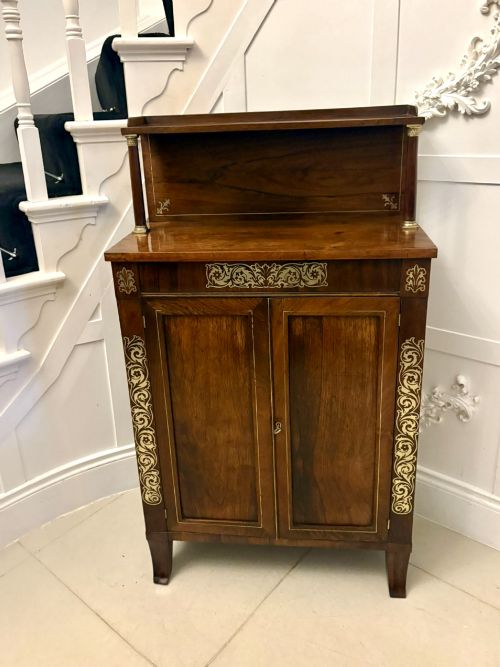
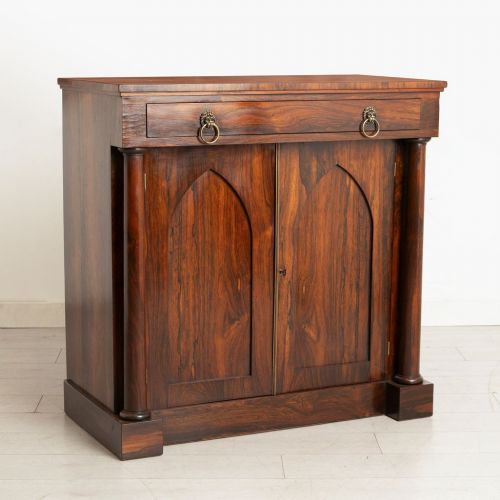
A regency period storage cabinet anchors a room with dense rosewood, rich mahogany, and precise brass details.
Regency Period Storage Cabinet
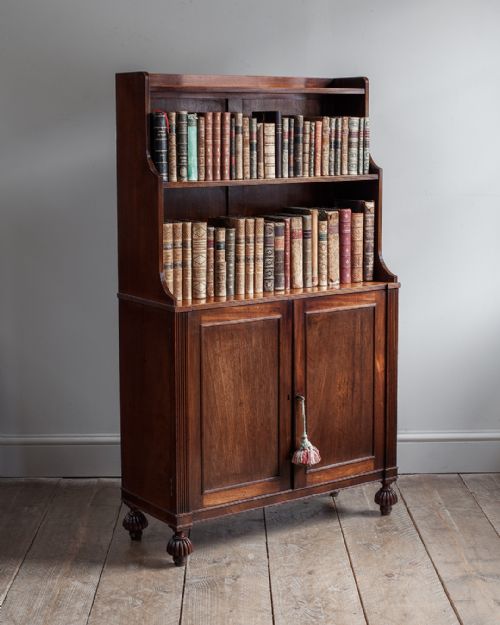
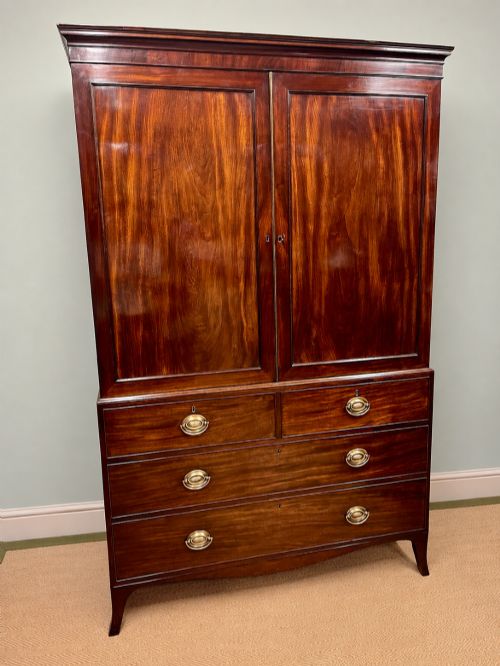
A regency period storage cabinet encompasses low cupboards, chiffoniers, side cabinets, and linen presses produced during the early nineteenth century and the Georgian, William IV, or Victorian eras. These items serve to store linens, books, and household goods while displaying decorative surfaces in principal rooms.
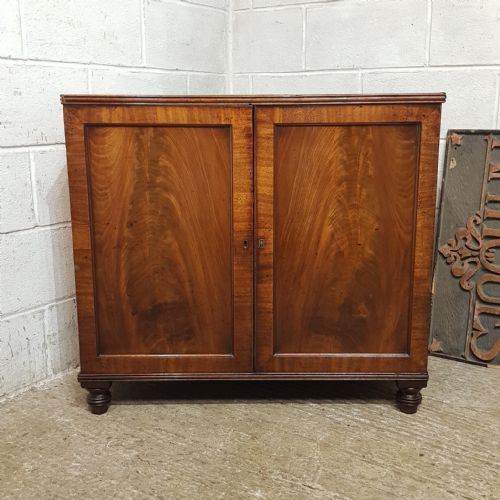
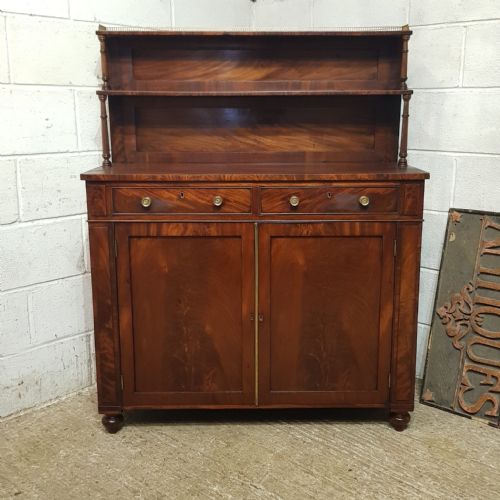
Mahogany and rosewood dominate the selection, appearing alongside amber-toned amboyna, burr elm, and plum pudding mahogany. Buyers frequently encounter low side cabinets and chiffoniers fitted with doors, drawers, and open shelving.
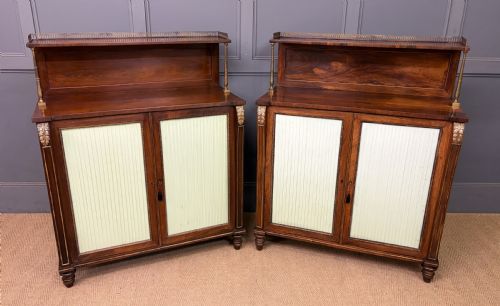
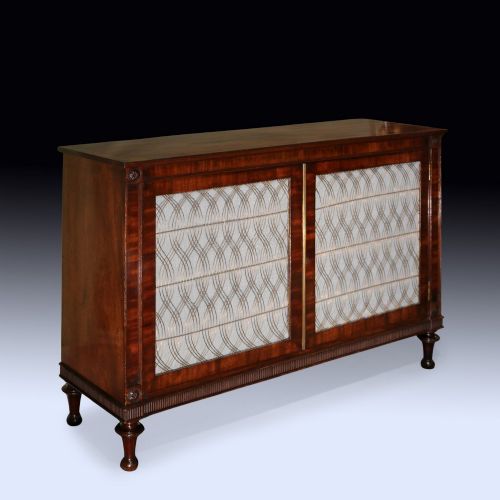
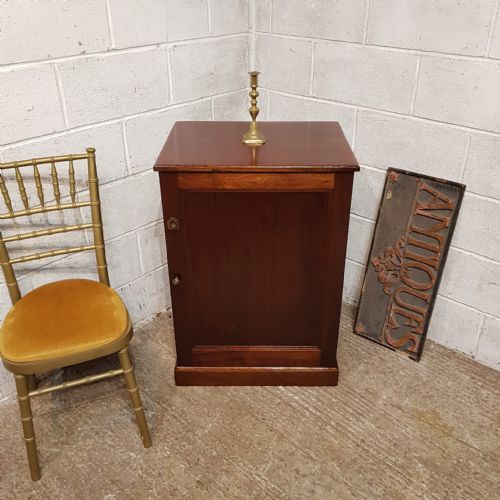
The form stretches from compact desktop collector cases and corner cupboards up to grand sideboards and tall linen presses. Many pieces combine utility with display, incorporating glass doors, brass grilles, or pleated silk panels.
Materials and construction
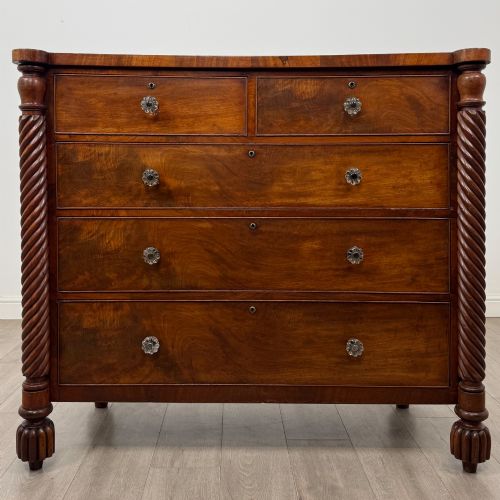
Cabinet makers utilised dense tropical hardwoods, selecting figured, flame, and plum pudding mahogany alongside deeply grained rosewood, amboyna, and burr elm. These timbers were worked into solid structures and decorative veneers that highlight natural grain patterns.
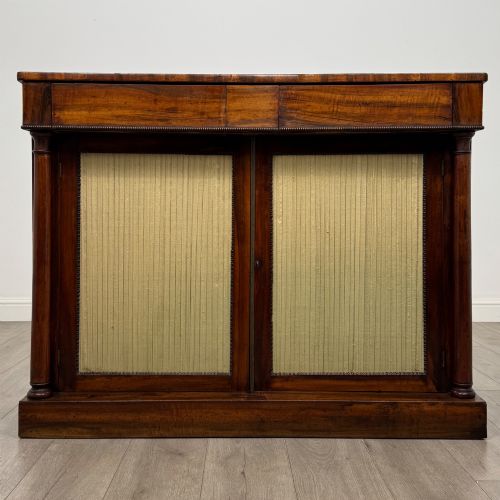
Brass formed an essential component, appearing as fine inlay, perforated door grilles, and structural mounts. Silk fabric and pleated chiffon panels were integrated into door frames to soften the dense timber facades.
Regency Period Storage Cabinet Retail Price Guide 2026
Typical asking prices for regency period storage cabinet among the pieces listed under this phrase on Sellingantiques today, from the lower quarter to the upper quarter. They describe what is for sale here now, not the wider market.
Some cabinets hide leather dummy books behind their doors, keeping the illusion of a library while storing mundane household items.
Assessing the craftsmanship
Quality rests upon the selection and matching of wood veneers, where symmetrical flame mahogany or richly figured rosewood elevates a simple carcass into a striking centrepiece. The crispness of brass inlay and the fineness of cabinet joinery distinguish master workshops from standard production.
Proportion and utility dictate distinction, with neat-sized cabinets and pieces retaining original brass grilles or pleated silk panels commanding greater architectural presence than plain utility cupboards.
The Regency Period Storage Cabinet Glossary
- Chiffonier
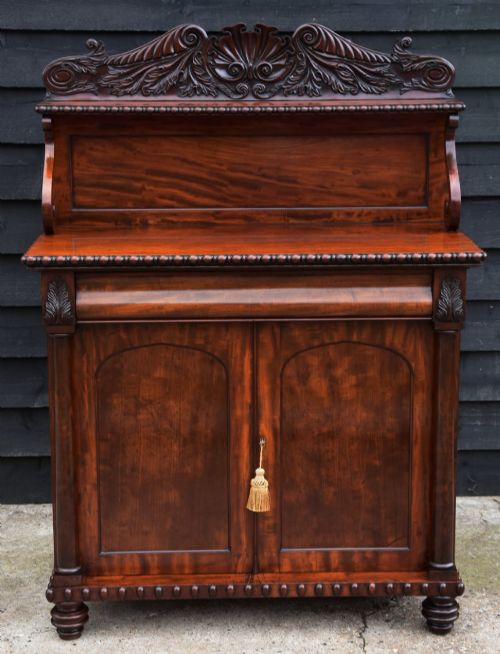
- A low cabinet featuring shelving or a raised superstructure above enclosed storage cupboards. This form became a staple of the Regency interior for holding books and china.
- Linen Press
- A tall vertical storage cabinet designed with upper sliding trays for textiles and lower drawers for bulkier garments. These pieces often showcase figured mahogany veneers.
- Brass Grille
- A decorative metal mesh fitted into cabinet doors to allow ventilation while keeping contents secure. It frequently replaces plain timber panels in library and display cabinets.
Regency Period Storage Cabinet: Frequently Asked Questions
What is a Regency chiffonier?
A Regency chiffonier is a low storage cabinet typically enclosed by two doors below a tier of shelves or a flat top surface. These units were designed for living spaces to hold books, glassware, and household accessories.
They often incorporate rosewood or mahogany veneers, sometimes enhanced with brass inlay or silk-backed door grilles. The form bridges the gap between a side table and a full sideboard.
How do I identify a Regency cabinet?
Look for classical proportions, dense timber selections like mahogany or rosewood, and characteristic brass details such as grille work or stringing. The styling frequently draws on neoclassical or Egyptian revival motifs.
Construction traits from this era include solid secondary timbers and hand-cut dovetails on internal drawer boxes. Dates generally cluster around the early nineteenth century up to the William IV period.
Where were these cabinets placed?
These storage pieces stood against dining room walls, in libraries, or within formal drawing rooms to manage household clutter and display ornaments. Low cabinets functioned well beneath windows or portrait paintings.
Specialised variants like corner cupboards and desktop collector cases maximised awkward angles and provided secure storage for small specimens.
Are all these cabinets made of solid wood?
Most Regency storage furniture uses a combination of solid framing and decorative wood veneers applied over stable secondary timbers. This technique permitted the display of highly figured grains like flame mahogany and rosewood without warping.
Solid construction remains standard for structural elements, legs, and mouldings, while expansive door panels and tabletops rely on expertly laid veneers.