
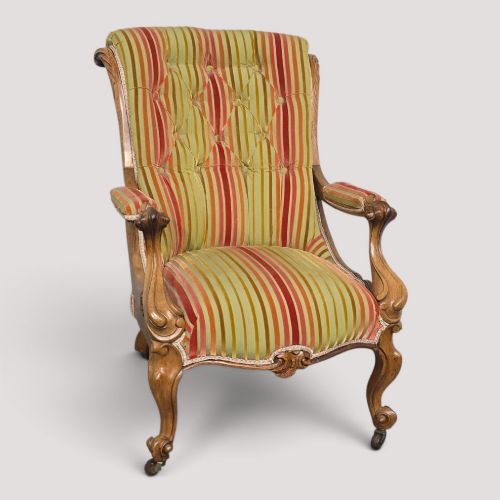
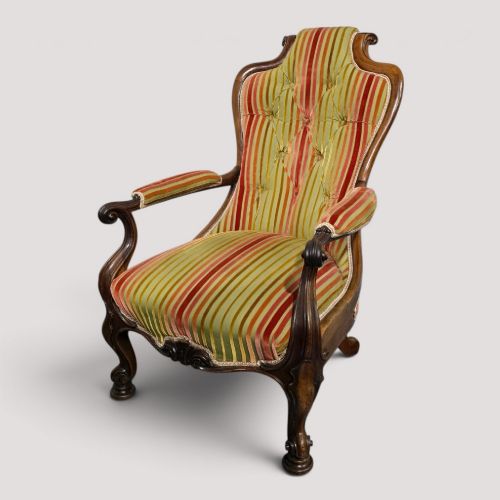
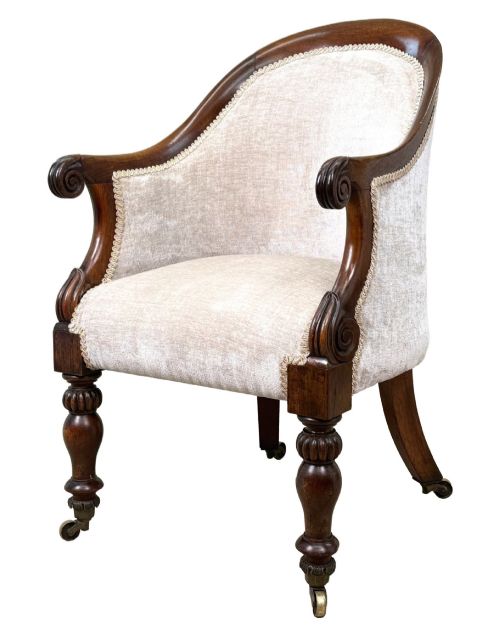
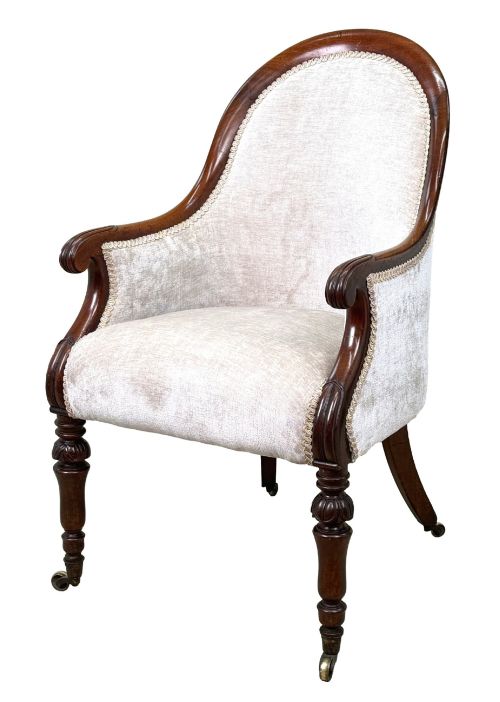
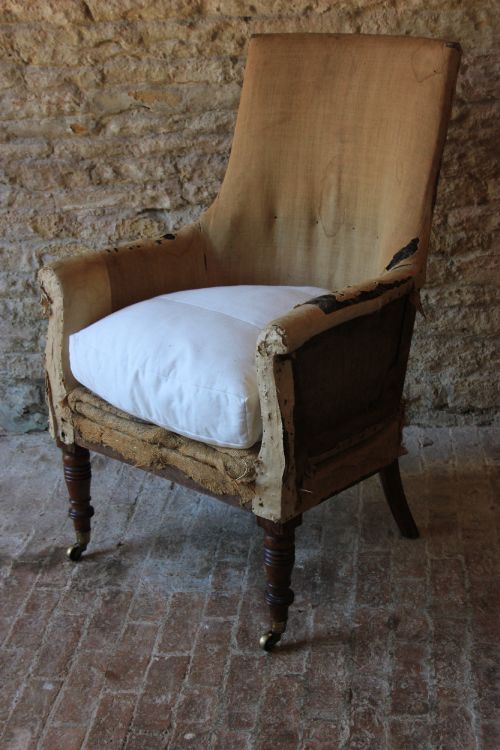

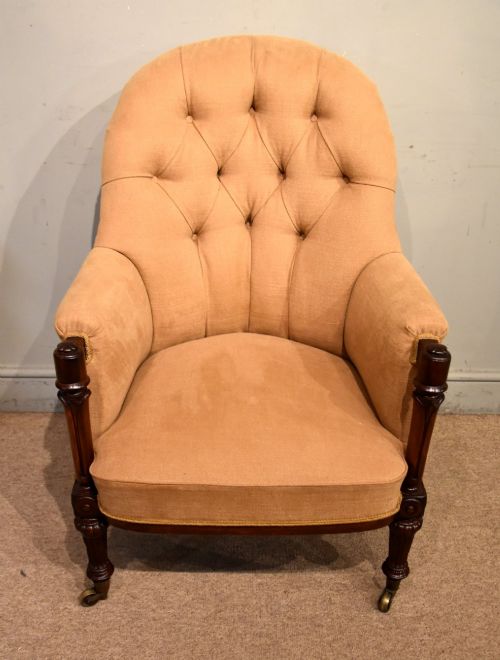

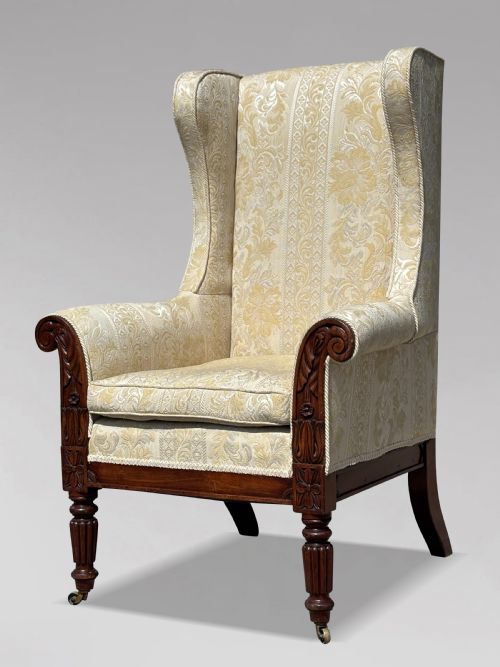


Regency Period Reading Chair
A regency period reading chair is a library or armchair designed for comfort, built from mahogany or rosewood during the early nineteenth century.
Regency Period Reading Chair
When you search for a regency period reading chair, you find library chairs and armchairs spanning the Regency, William IV, George IV, and broader nineteenth century periods. These seating pieces served scholars and readers in private libraries, drawing rooms, and studies.
The versions most commonly met on this page are mahogany and rosewood library armchairs and bergere chairs. They appear alongside cane, leather, and velvet upholstered forms, including sliding, reclining, and metamorphic library step variants.
How they were made
Cabinetmakers constructed these frames primarily in dense timbers like mahogany and rosewood, occasionally utilising simulated satinwood with decoration and gilding. Turned and carved woodwork formed the structural frames, often featuring open arms and generous proportions.
Seating surfaces incorporated materials such as cane, leather, textile, and velvet upholstery. Brass fittings appeared on specialised pieces like sliding and reclining library chairs.
Listings feature mahogany, rosewood, and simulated satinwood alongside leather, cane, and velvet materials.
What varies in quality
The distinction between standard and superior pieces rests on the carving detail and the execution of the timber frame. Well-drawn proportions and specialised mechanisms, such as sliding seats or metamorphic steps, set certain examples apart.
The choice of primary wood and secondary materials influences the overall character. Rosewood and simulated satinwood finishes demonstrate greater elaboration compared to simpler mahogany frames.
The Regency Period Reading Chair Glossary
- Bergere
- An enclosed upholstered armchair with cane or upholstered sides. This form provides substantial seating comfort.
- Tub chair
- An armchair with a continuous curved back and arms forming a single rounded unit. It envelops the sitter.
- Metamorphic
- Describing furniture designed to transform into another object, such as a chair converting into library steps. These clever pieces save space.
- Simulated satinwood
- Painted or stained timber finished to mimic the appearance of genuine satinwood. It creates a bright decorative surface.
- Cane
- Woven rattan material used for chair seats and backs. It offers lightweight flexibility.
Regency Period Reading Chair: Frequently Asked Questions
How do I use a library chair?
Library chairs provide seating for reading and writing desks in studies and libraries. Some versions include sliding mechanisms or reclining actions for adjustable comfort.
Metamorphic variants also convert into steps to reach high bookshelves.
How do I live with antique armchairs?
Antique armchairs integrate into contemporary and traditional rooms as functional seating or decorative accents. Placement in libraries, studies, or living spaces highlights their timber frames and upholstery.
Care involves protecting leather, cane, and fabric surfaces from direct sunlight.
How can I tell the period apart?
Dating relies on timber choices, carving styles, and structural forms associated with the Regency, William IV, and George IV eras. Rosewood and mahogany frame construction combined with specific upholstery types indicate early nineteenth-century work.
Patent designs and specific cabinetmaker influences further help identify the exact period.