

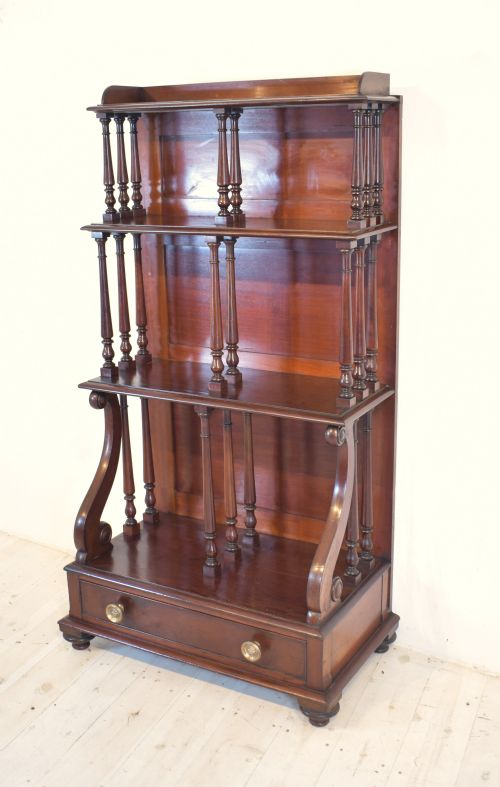


Regency Period Open Bookcase
A regency period open bookcase brings effortless architectural elegance to a room, offering accessible shelving dressed in rich timbers.
Regency Period Open Bookcase
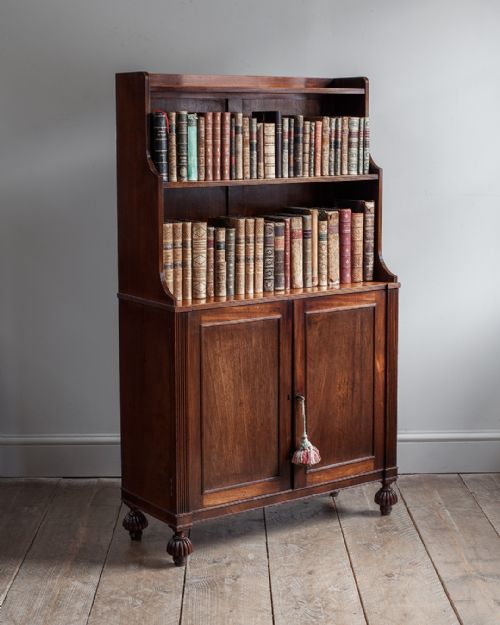
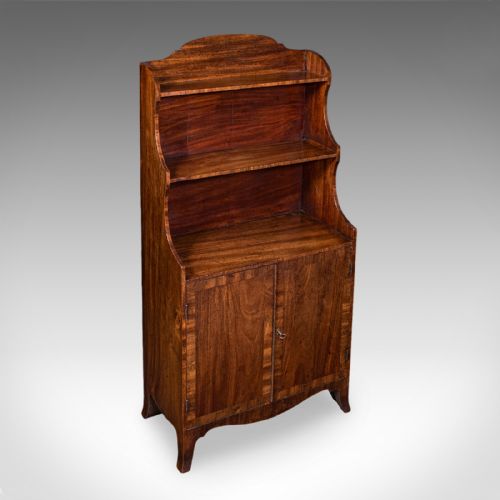
A regency period open bookcase is a low or tall furnishing designed for book storage and display, appearing frequently across the Regency, Georgian, and William IV eras.
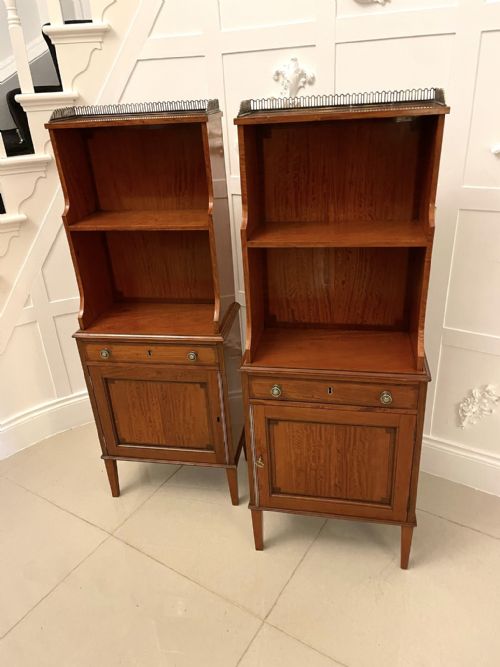
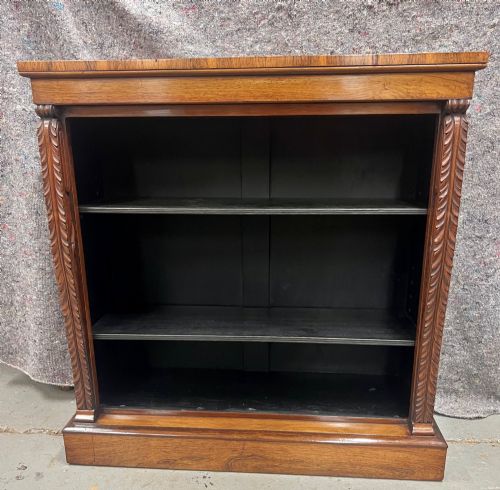
The pieces on this page span several forms including waterfall bookcases, dwarf bookcases, and breakfront bookcases, alongside related side cabinets and chiffoniers.
Mahogany and rosewood dominate the selection, often accompanied by finer timbers such as satinwood, flame mahogany, and striking Gonçalo Alves.
How they were made
Cabinet makers utilised solid and veneered timbers, selecting mahogany and rosewood for their deep grain and durability.
Decoration relied on brass inlay, parcel gilt details, and leather trim rather than heavy carving, maintaining clean architectural lines.
Some items come equipped with leather dummy books to hide the mundane reality of what lay behind the cupboard doors.
What varies in quality
The selection of timber grain, from standard mahogany to figured rosewood and flame mahogany, sets the visual standard of a piece.
The delicacy of proportions and the integration of brass inlay or gilt mounts distinguish standard examples from finer commissions.
Gillows
The Regency Period Open Bookcase Glossary
- Waterfall bookcase
- A tiered shelving unit where each successive shelf steps back from the one below it, creating a cascading profile.
- Breakfront
- A cabinet or bookcase design where the central section projects forward from the flanking wings.
- Dwarf bookcase
- A low open bookcase designed to sit beneath dado height, keeping the wall space above unobstructed.
- Gonçalo Alves
- A dense exotic hardwood prized for its striking contrasting grain patterns, sometimes called zebrawood.
Regency Period Open Bookcase: Frequently Asked Questions
How were these bookcases used?
These open bookcases provided immediate access to personal libraries in formal sitting rooms and libraries, while also displaying decorative objects.
The lower sections sometimes incorporated cupboards or dummy books to conceal storage behind open-facing shelves.
How do I live with one?
An open bookcase anchors a room by introducing warm wood tones and providing accessible display space for books and objects.
Position them against interior walls away from direct sunlight and sudden temperature changes to protect the polished timber surfaces.
How do I tell periods apart?
Regency and Georgian pieces generally show restraint with classical lines, whereas William IV examples often feature heavier proportions and bolder classical revival motifs.
Timber choices also shift, with rich figured rosewood and exotic woods becoming prominent alongside traditional mahogany.