
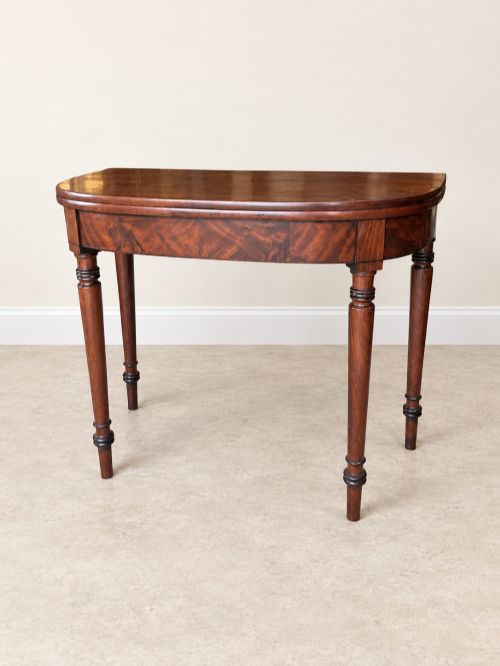
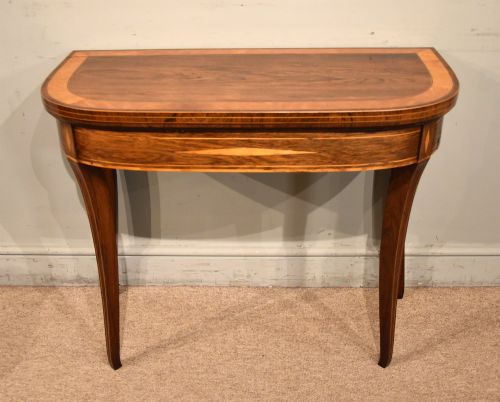
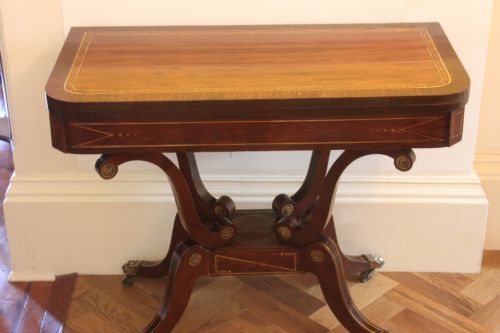
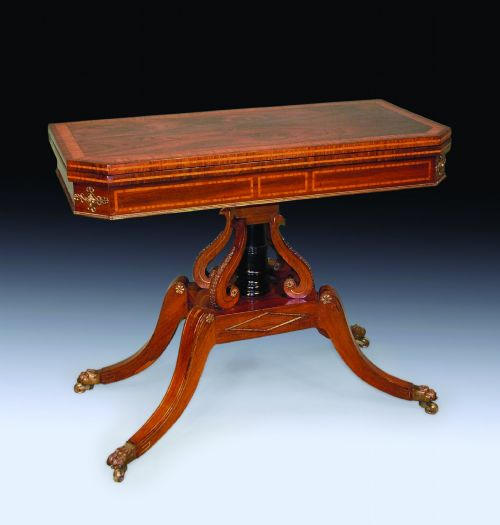


Regency Period Card Table
A regency period card table brings classic proportion and clever fold-over utility into a room, offering a versatile surface for games or tea.

Defining the Regency Period Card Table
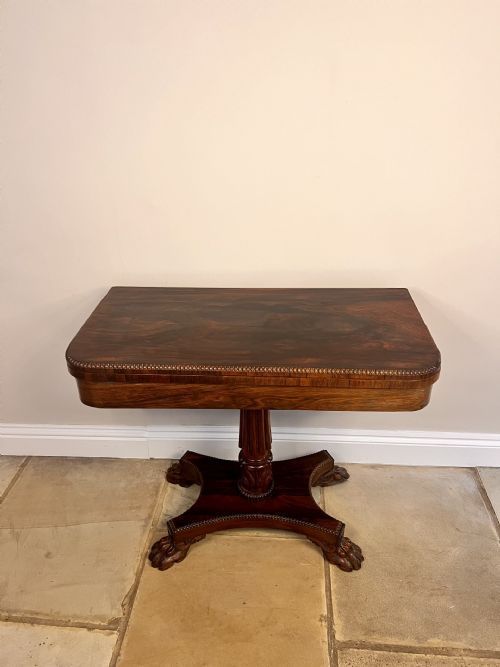
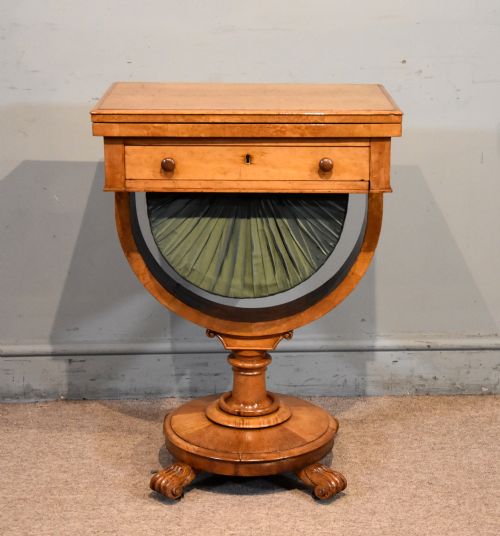
A regency period card table is a foldable piece of furniture designed for parlour games and social gatherings, spanning the late eighteenth and early nineteenth centuries. These tables surface primarily in forms designated as card tables, tea tables, and games tables.
The prevailing examples on this page date to the nineteenth century, including pieces attributed to the Regency and George IV periods. Makers utilised rich timbers to create folding tops that swivel or lift to reveal baize-lined playing surfaces.
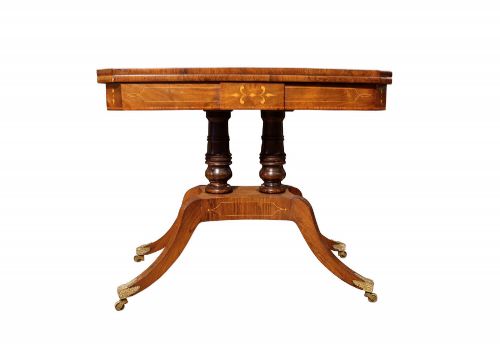
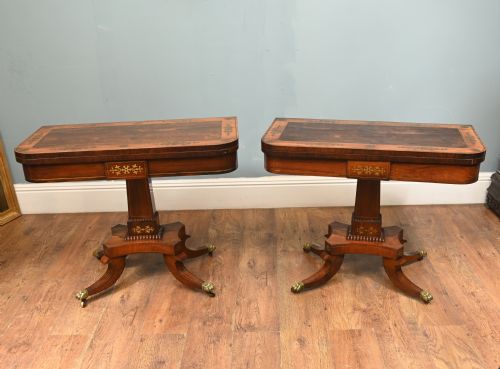
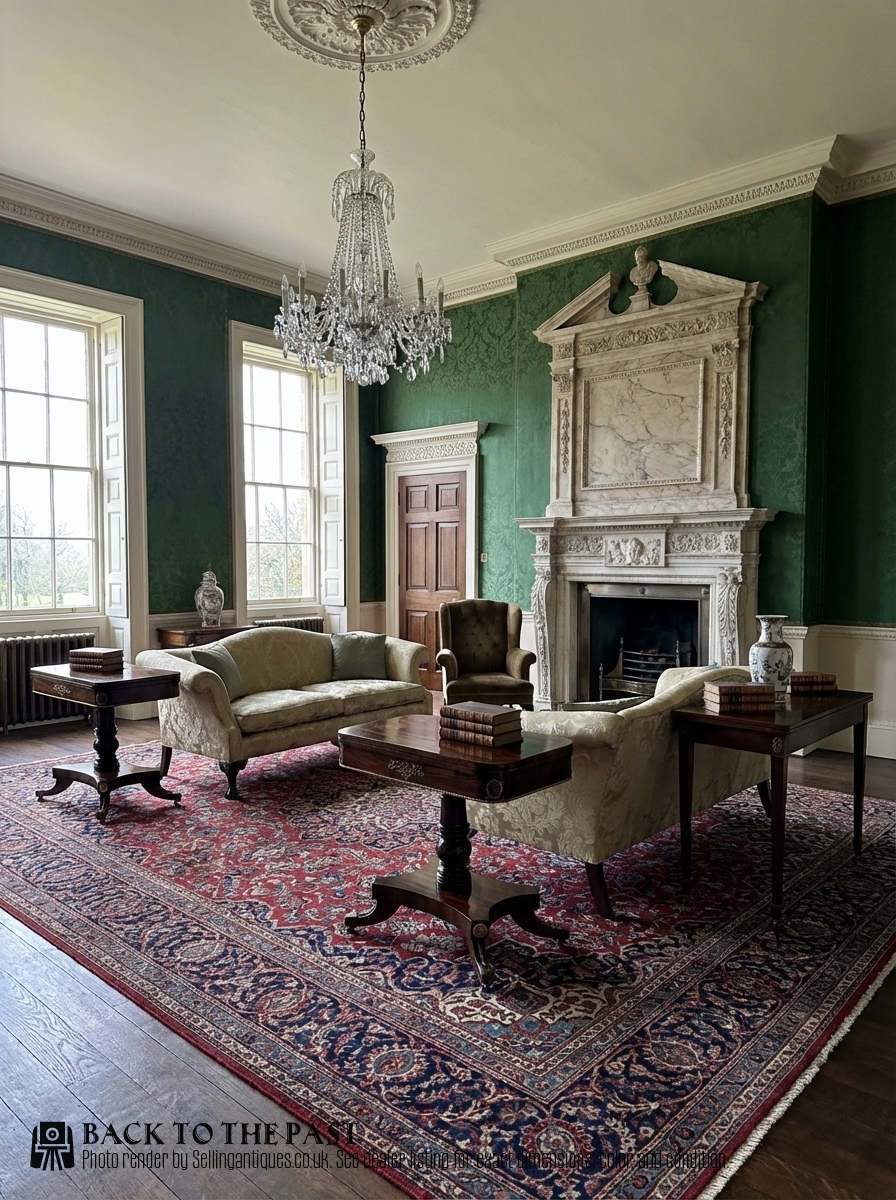
Buyers encounter variations shaped as D-shaped tops, serpentine silhouettes, and pedestal bases supported by scroll feet or pillar columns. Both single pieces and matched pairs appear across the listings.
Materials and Construction
Cabinetmakers constructed these tables using a foundation of solid timber faced with highly figured veneers including rosewood, mahogany, satinwood, burr elm, and coromandel. Secondary woods like oak provide structural stability beneath the decorative outer surfaces.
Surface enrichment often involves meticulous wood inlay, brass stringing, and ebony banding to define the edges and geometric panels. Pedestal columns frequently rest upon platform bases fitted with castors for mobility.
Retail Price Guide 2026
Typical UK retail prices for regency period card table, calculated from the Sellingantiques database of over a million retail prices indexed since 2003. This retail price guide relies exclusively on Sellingantiques data; no external sources or auction records are used, so the figures do not describe the wider market.
Some tables hide secret compartments beneath their swivelling tops where players once stored counters and decks of cards.
Distinctions in Quality
The calibre of a regency period card table depends upon the selection of timber veneers and the precision of the cabinetwork. Grain matching across the fold-over top and crispness in carved scrollwork distinguish superior workshops from standard production.
Hardware integration, such as brass inlay flush with the timber surface and robust pivot mechanisms for the folding top, marks the difference between basic utilitarian pieces and finely resolved examples.
Gillow
The Regency Period Card Table Glossary
- Fold-over top
- A hinged table surface that opens to double its area for card playing or dining. This mechanism conceals a timber well or remains slim when closed.
- Pedestal base
- A central pillar support rising from a plinth or footed platform rather than four corner legs. This construction allows greater legroom for seated players.
- Cross-banded
- A border of veneer laid with the grain running perpendicular to the main panel. It provides a neat contrasting frame around the tabletop edge.
- String-inlay
- A narrow thread of contrasting wood or metal set flush into a channel on the surface. It creates delicate linear patterns across the timber.
Frequently Asked Questions
What is a regency period card table?
A regency period card table is a fold-over wooden table created during the early nineteenth century to accommodate evening games and social gatherings.
These pieces feature hinged tops that open to reveal a baize-lined playing surface, supported by pillar pedestals or traditional legs.
How were they used historically?
These tables served primarily as multi-functional furniture in drawing rooms and parlours for card games, chess, and social conversation.
When not in use for gaming, the tops folded closed to sit flat against a wall or serve as a side table for decorative objects.
How do I identify a George IV table?
George IV pieces share stylistic traits with earlier Regency furniture but often exhibit heavier proportions, bolder carved details, and dense mahogany or rosewood.
Makers working in this era continued to use pedestal supports, brass inlay, and scroll feet established in previous decades.
Which woods are most common?
Mahogany and rosewood appear most frequently in the construction of these tables, supplemented by satinwood, burr elm, and exotic calamander.
Cabinetmakers paired these primary timbers with contrasting string-inlay, brass embellishments, and oak internal framing.