
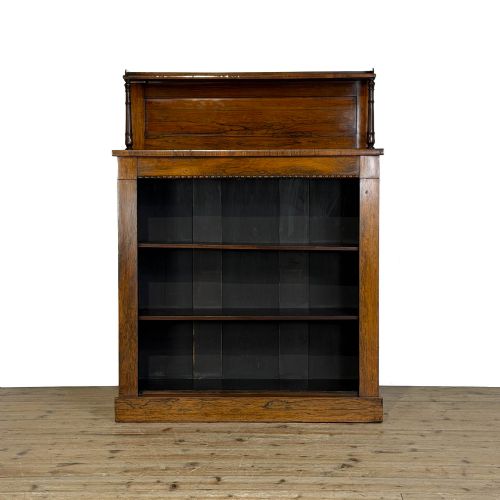
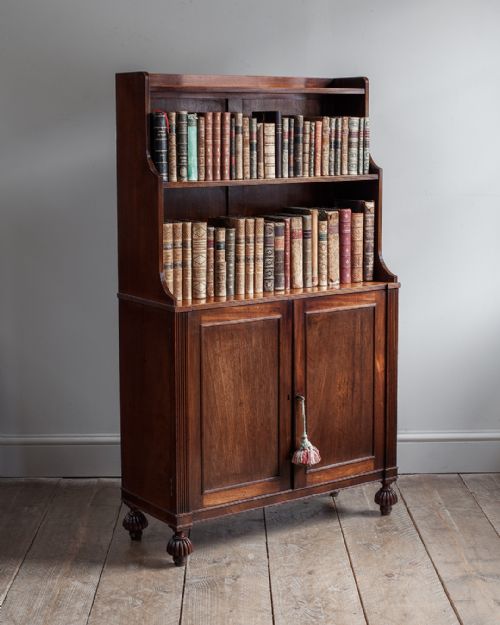
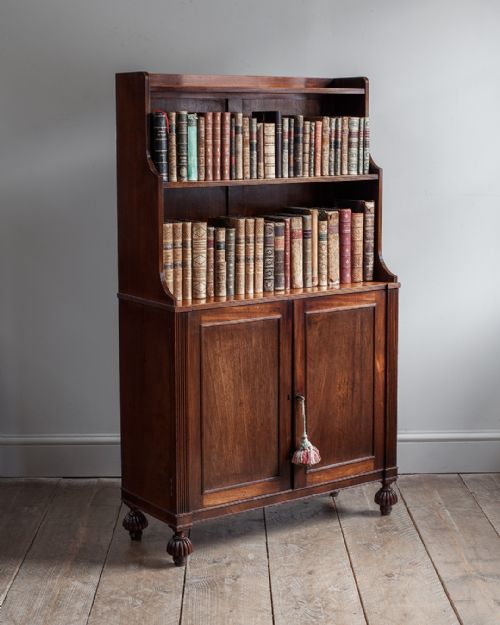
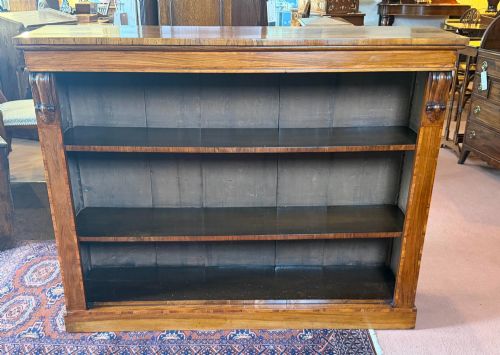
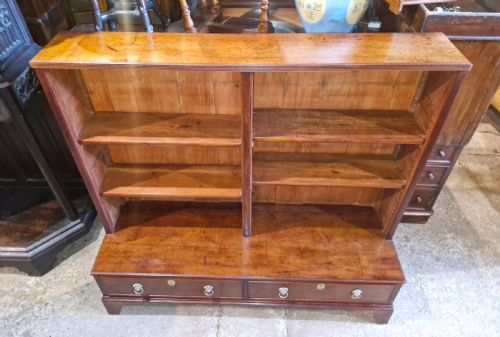
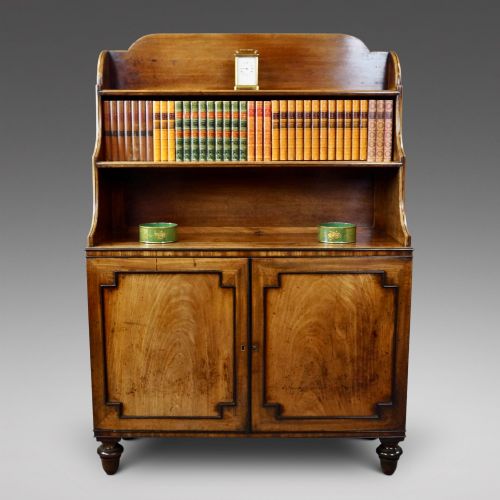
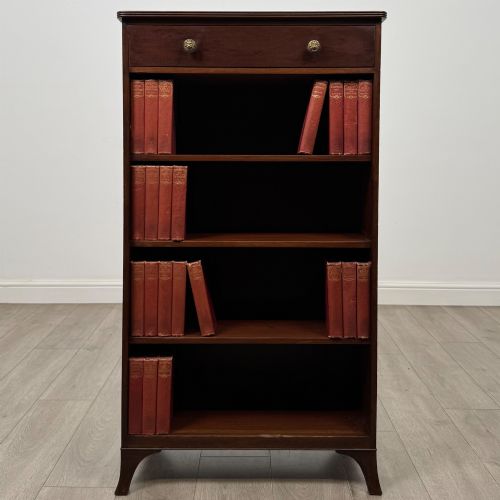
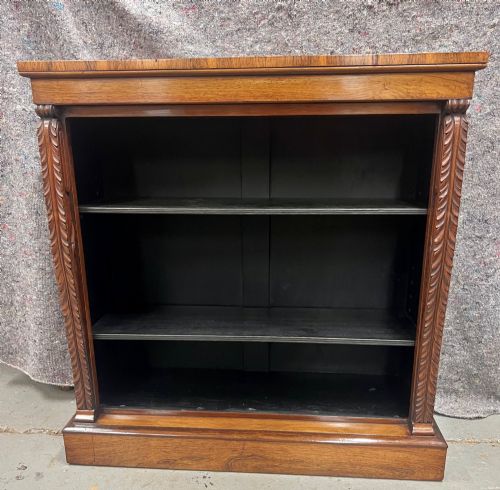
Regency Open Bookcase Cabinet
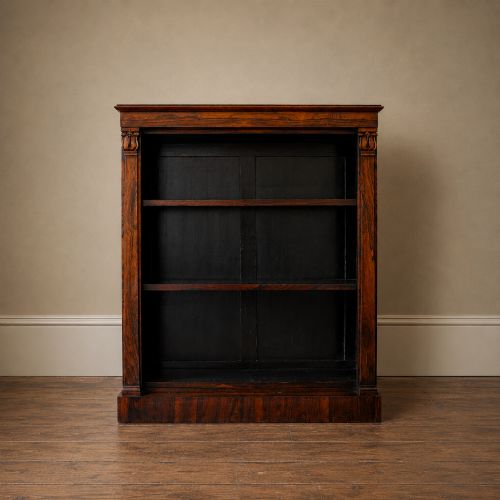
A regency open bookcase cabinet holds volumes within an accessible shelved framework, offering both display space and architectural presence for a room.
Regency Open Bookcase Cabinet
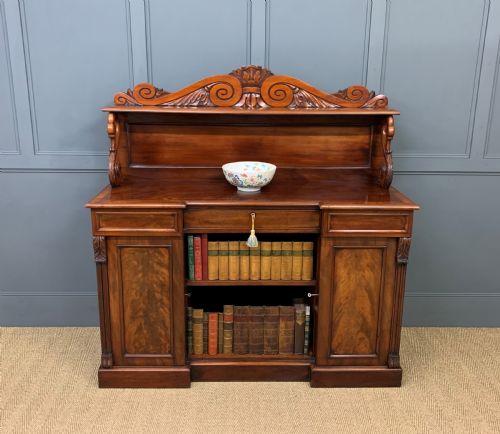
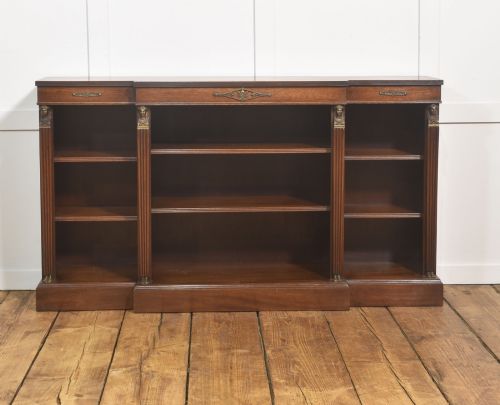
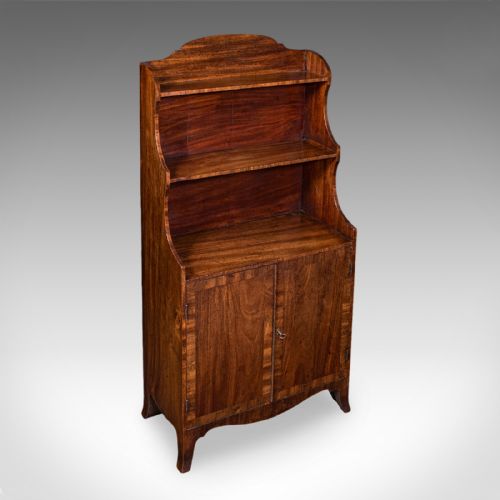
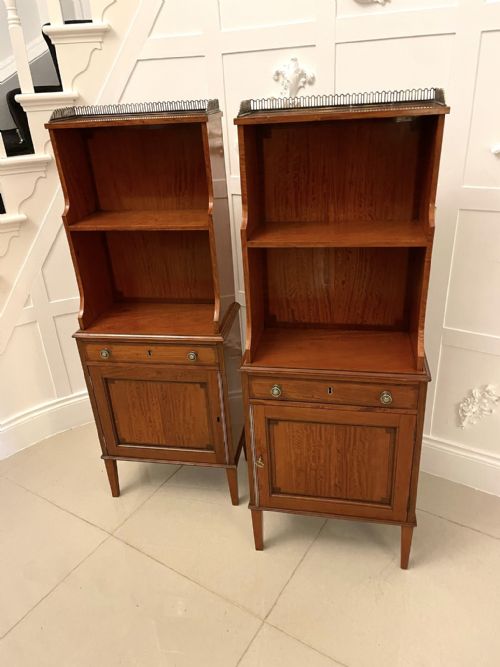
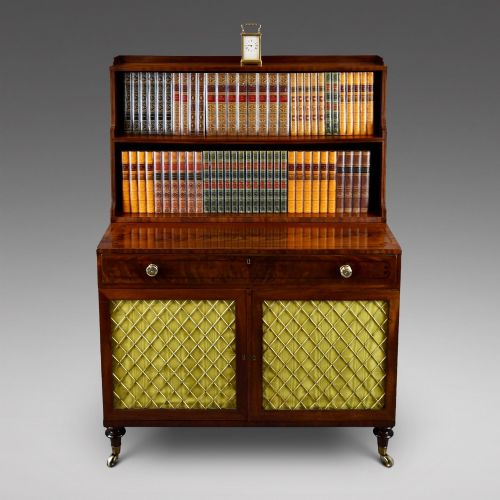
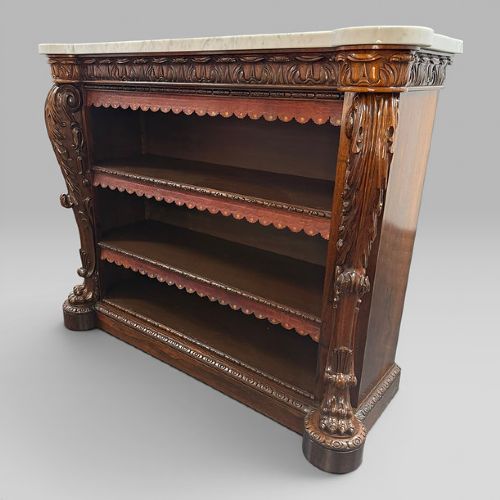
The pieces appearing on this page span the Regency, Georgian, and William IV periods, alongside later Victorian and 20th-century revivals. Mahogany and rosewood form the core of the selection, often arranged in breakfront or waterfall configurations.
You will encounter dwarf bookcases, petite chiffoniers, and library shelving units among the listings. Many examples incorporate adjustable shelves, cupboards, or marble tops to accommodate varying storage needs.
Materials and construction methods
Cabinet makers utilised dense hardwoods such as mahogany and rosewood, frequently applying flame mahogany veneer to achieve rich surface figures. Satinwood and walnut also appear, bringing lighter tones and varied grain patterns to the construction.
Brass inlay and gilded details often highlight the structural lines of the cabinetry. Marble tops provide durable surfaces on specific pieces, while adjustable shelf mechanisms allow for custom internal storage.
Listings feature 19th-century mahogany and rosewood alongside 20th-century Regency style breakfront designs.
Distinctions in quality and execution
The refinement of timber selection dictates much of the visual distinction across these cabinets. Richly figured flame mahogany veneer and carefully matched rosewood sections separate standard production from exceptional examples.
The subtlety of brass inlay work and the precision of joinery in breakfront configurations reveal the maker's hand. Proportion and the neatness of dimensions also determine how successfully a cabinet sits within an interior space.
Gillows
The Regency Open Bookcase Cabinet Glossary
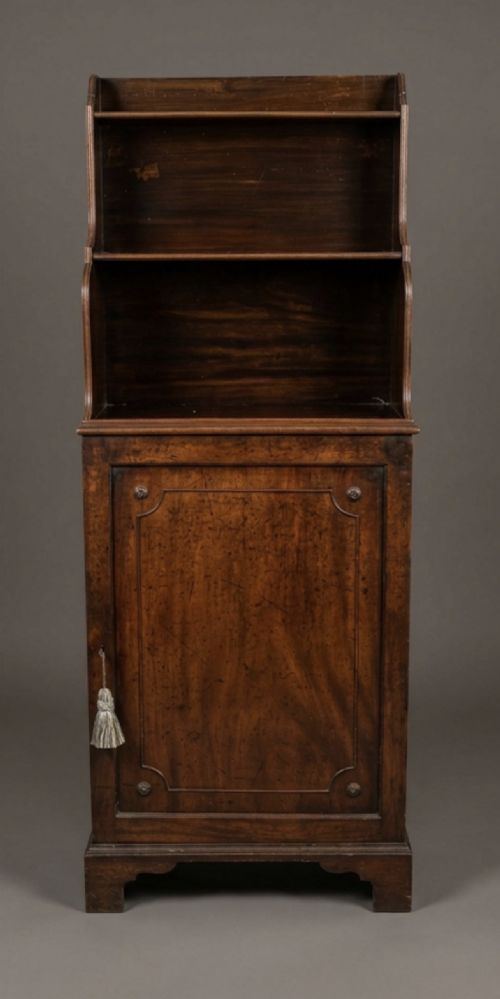
- Waterfall bookcase
- A tiered shelving unit where each successive shelf steps back from the one below it. This form creates a cascading silhouette often seen in smaller reading rooms.
- Breakfront
- A cabinet design featuring a central section that projects forward from the flanking wings. This configuration adds architectural depth to large library bookcases.
- Dwarf bookcase
- A low-standing bookcase designed to sit beneath dado height. These pieces keep books within easy reach while leaving wall space above clear.
- Chiffonier
- A low sideboard or cabinet often fitted with shelves or a cupboard beneath. They serve multipurpose storage roles in sitting rooms and libraries.
Regency Open Bookcase Cabinet: Frequently Asked Questions
How do I use a waterfall bookcase?
A waterfall bookcase provides stepped open shelving suited for smaller volumes and displayed objects. Its compact tiers allow you to organise books while maintaining a light visual footprint in a room.
Position the piece against a library or study wall where frequently read texts remain accessible. The graduated shelves also accommodate decorative items alongside your reading collection.
Where should I place a breakfront cabinet?
A breakfront cabinet requires a substantial wall space to showcase its projecting central section properly. Placing it in a principal reception room or study allows the architectural proportions to anchor the interior scheme.
Ensure adequate clearance around the piece so the extended breakfront lines remain visible. The flat top surfaces and open shelves provide ample room for balanced displays of books and objects.
Are shelves adjustable in these cabinets?
Many period bookcases feature adjustable shelving systems to accommodate varying book heights. This adaptability lets you configure the interior space according to your specific collection.
Examine the interior uprights for traditional peg and hole supports or rack systems. These mechanisms indicate thoughtful manufacturing designed for practical library use.
What is the difference between mahogany and rosewood cabinets?
Mahogany offers a reddish-brown tone with straight grain or striking flame figuring. Rosewood provides a heavier, darker aesthetic with contrasting dark grain streaks that suit formal library settings.
Both timbers were favoured during the Regency and Victorian eras for their durability. Your choice depends upon the existing wood tones and decorative style of your room.