

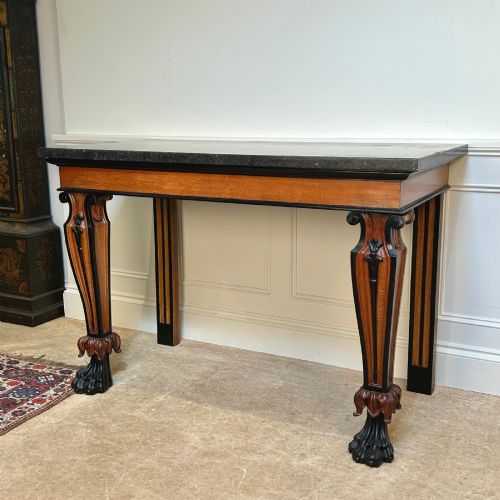
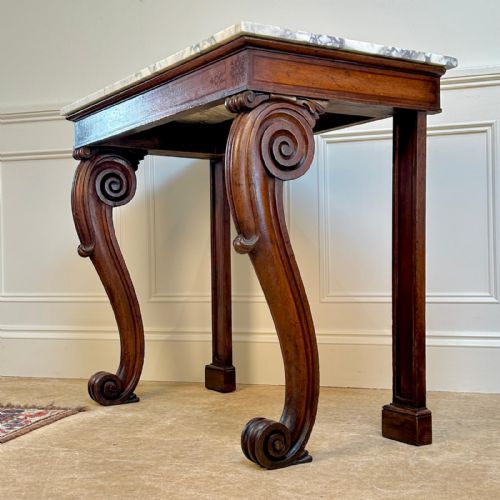
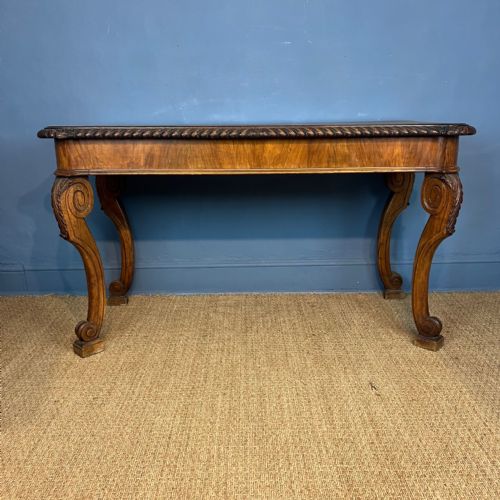


Regency Oak Console Table
These regency oak console table examples combine robust timber with refined architectural details, offering serious presence for any hallway or reception room.
Regency Oak Console Table
A regency oak console table stands against a wall, often featuring substantial proportions, figured timbers, and occasional marble tops. The selection includes serving tables, writing desks, and centre tables alongside traditional wall-fixed console forms.
Makers and cabinet makers of the period utilised various native and exotic woods, pairing oak and pollard oak with brass, giltwood, and ebonised details. Styles range across the Regency, George IV, and William IV periods into the broader nineteenth century.
How they were made
Cabinet makers selected dense oak, burr oak, and figured pollard oak for striking grain patterns, frequently combining them with contrasting timbers such as walnut and mahogany. Surfaces often incorporated premium insertions like Siena marble tops and giltwood accents.
Construction techniques relied on solid framing, robust end supports, and meticulous joinery to handle substantial proportions. Metalwork components, including brass fittings and brass-lined elements, added functional durability and visual contrast.
Regency Oak Console Table Retail Price Guide 2026
Typical asking prices for regency oak console table among the pieces listed under this phrase on Sellingantiques today, from the lower quarter to the upper quarter. They describe what is for sale here now, not the wider market.
The furniture forms span console tables, writing desks, library tables, and card tables, demonstrating the versatility of nineteenth-century timber framing.
What varies in quality
Quality rests upon the selection and matching of timber veneers, particularly the choice between plain oak and highly figured pollard or burr oak. Pieces featuring integrated marble inserts, giltwood highlights, or distinct architectural end supports sit at the upper end of the scale.
Attribution to documented workshops, such as Williams and Gibton or William Trotter, elevates a piece significantly above standard anonymous production. The integration of secondary woods, such as oak drawer linings in mahogany or inlaid carcases, demonstrates higher execution standards.
William Trotter·Williams and Gibton
The Regency Oak Console Table Glossary
- Pollard oak
- Timber taken from trees that have been pollarded, producing tightly clustered, decorative knots and a highly figured grain pattern. It appears frequently on high-status Regency furniture.
- Giltwood
- Wood that has been coated with gold leaf or gilt composition to provide bright decorative highlights. This material frequently trims the borders and legs of grander console tables.
- Siena marble
- A yellow-hued Italian marble with deep grey or purple veining, prized for luxury tabletop surfaces. It signals a higher tier of decorative ambition.
- End support
- A structural furniture configuration where vertical pedestals or framed supports sustain the ends of a table rather than four distinct corner legs. This form dominates heavy centre and library tables.
- Ebonised wood
- Timber treated with a dark stain or finish to imitate ebony. Cabinet makers used this technique to create sharp contrasting borders and decorative stringing.
Regency Oak Console Table: Frequently Asked Questions
Where should I place a console table?
These tables find a natural home against a hallway or reception room wall, where their architectural lines create an immediate focal point. They provide a stable surface for lamps, decorative objects, or correspondence.
Because many examples feature finished backs or substantial end supports, they also function effectively as freestanding centre tables in larger spaces.
How do I identify Regency pieces?
Look for classical proportions, architectural symmetry, and specific decorative motifs such as giltwood accents, bold timber figuring, and robust end supports. The presence of pollard oak or Siena marble often points directly to this era.
Construction details, including oak linings and traditional joinery methods associated with early nineteenth-century workshops, help confirm the period.
Can these tables be used for writing?
Certain examples within this group are specifically designated as writing tables or library tables, featuring appropriate working heights and drawer space. They combine decorative presence with practical functionality.
Other console and serving variants are built primarily for display and wall placement rather than active daily writing.