

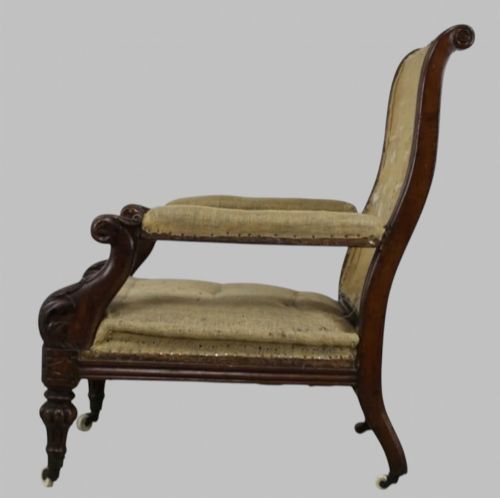
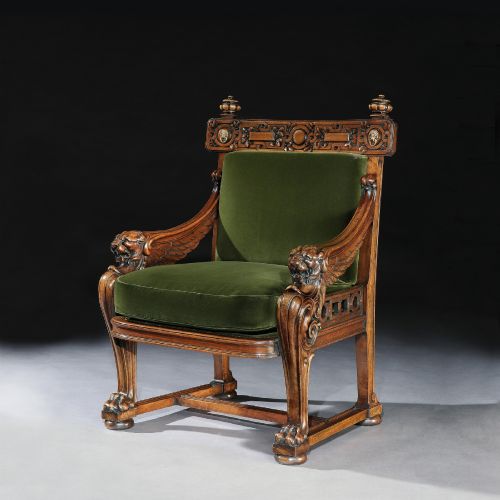


Regency Oak Chairs
Regency oak chairs bring together sturdy regional timbers and refined classical lines, offering robust daily seats with distinct period character.
Regency Oak Chairs
When searching for regency oak chairs, buyers encounter a diverse range of seating encompassing formal dining sets, robust library armchairs, and austere hall chairs. These pieces span the Regency period and the wider nineteenth century, drawing heavily on Georgian country traditions as well as more ambitious neoclassical designs.
The versions most commonly met on this page include country wood seat kitchen dining chairs alongside pairs of hall chairs and substantial sets with pollard oak and elm. Makers and makers' workshops produced these in regional centres such as East Anglia and Scotland, utilising local timbers to supply rectories, reception rooms, and dining spaces.
Forms vary from simple bar back elbow chairs and dish seat armchairs to complex metamorphic library armchair steps. Whether styled as English country vernacular, William IV, or Regency revival, each category retains the dense grain and substantial weight characteristic of period oak.
What varies in quality
Quality separates through the selection and figure of the timber, where dense pollard oak and well-matched elm boards distinguish finer library and dining seats from utilitarian kitchen chairs. The precision of the joinery and the sharpness of hand-carved details, such as bar backs or arm terminals, signal the ambition of the original workshop.
Proportion and integrity also divide standard utilitarian examples from pieces commissioned for specific architectural settings, such as Scottish reception rooms or English rectories. Original upholstery materials and unaltered structural timber preserve historical authenticity more effectively than heavily restored or replaced elements.
Regency Oak Chairs Retail Price Guide 2026
Typical asking prices for regency oak chairs among the pieces listed under this phrase on Sellingantiques today, from the lower quarter to the upper quarter. They describe what is for sale here now, not the wider market.
Some library armchairs double as wooden steps, letting studious owners reach top shelves without dropping their books.
Gillows of Lancaster·Thomas Hope·Richard Hicks Bridgens
The Regency Oak Chairs Glossary
- Pollard oak
- Oak timber obtained from trees that were cut back at a height above livestock reach, producing a dense grain with intricate knot formations. This figured wood was highly prized for decorative veneers on Regency furniture.
- Monopodia
- A single-footed support derived from classical Roman design, often taking the form of an animal leg and paw. These motifs appeared on ambitious Regency armchairs influenced by designers like Thomas Hope.
- Bar back
- A chair design featuring a horizontal wooden slat or rail across the upper backrest, frequently curved for lumbar support. This form dominated many country dining and kitchen chairs of the period.
- Prie-dieu
- A devotional chair designed for private prayer, featuring a low seat and a padded upper shelf to rest arms or books. Regency examples often served ecclesiastical or domestic rectorial functions.
- Metamorphic
- Furniture engineered to transform into an alternative form, such as an armchair converting into library steps. These clever mechanical pieces demonstrate inventive nineteenth-century carpentry.
Regency Oak Chairs: Frequently Asked Questions
What defines a regency oak chair?
These chairs combine the robust domestic timbers typical of British country furniture with the classical proportions and decorative motifs of the Regency era. They encompass everything from austere hall seats to figured pollard oak dining sets.
Craftsmen built them to serve practical daily functions in dining rooms, libraries, and hallways, utilising local hardwoods like oak and elm to ensure lasting durability.
How do I identify a library armchair?
Library armchairs typically feature wider proportions, upholstered leather panels, and sturdy armrests designed for extended periods of reading or study. Some specialist examples include metamorphic designs that unfold into library steps.
These pieces often incorporate higher-grade materials such as pollard oak or brass mounts, reflecting their placement in formal home libraries rather than kitchens.
Were these chairs made in sets?
Many dining chairs survive in matched sets or larger groupings, ranging from four to fourteen pieces, though single armchairs and pairs of hall chairs also appear frequently. Country dining sets often utilised locally sourced elm and oak for everyday household use.
Assembled sets or matched gatherings reflect the practical needs of nineteenth-century dining spaces and rectories where uniform seating was required for guests.
How do I care for antique oak furniture?
Antique oak benefits from stable indoor humidity and protection from direct sunlight to prevent the timber from drying out or splitting. Gentle dusting with a dry cloth maintains the finish without introducing moisture or harsh chemicals.
Leather elements on library seats and dining chairs require occasional suitable conditioning to keep the hide supple and prevent cracking across the surface.