



Regency Needlework Basket
A regency needlework basket brings refined utility to a room, offering clever compartments for threads alongside elegant surfaces for daily tasks.
Regency Needlework Basket
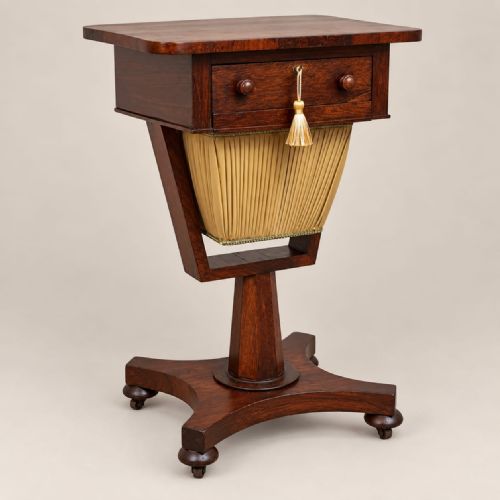
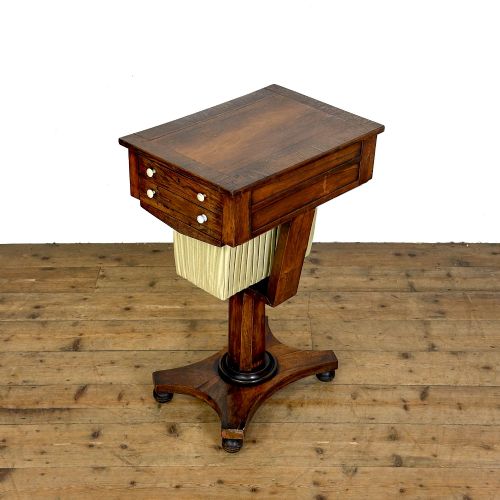
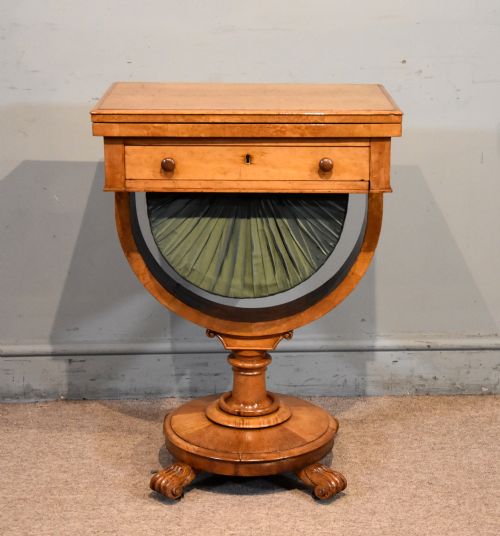
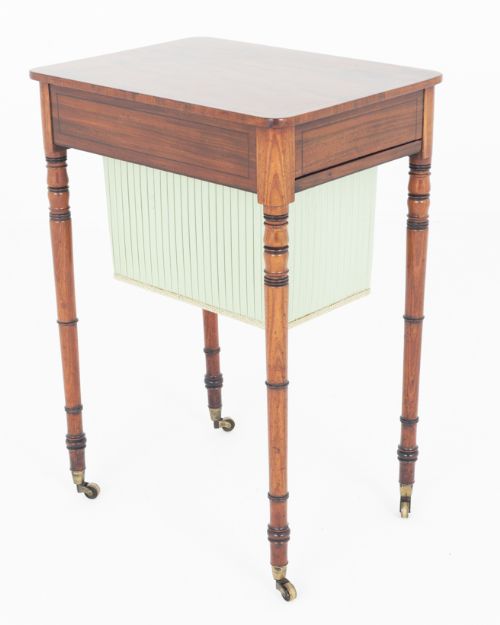
When you search for a regency needlework basket, you encounter versatile occasional tables and sewing stands primarily from the nineteenth century. These pieces combine fitted internal compartments with drop-leaf tops or suspended fabric bags designed for needlework and small crafts.
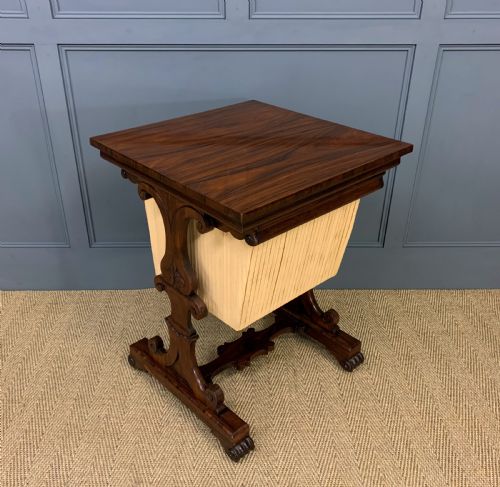
The most common examples on this page are mahogany and rosewood work tables built during the Regency, William IV, and George IV periods. They frequently double as writing desks or games tables, reflecting the multi-purpose room furniture favoured in English country houses.
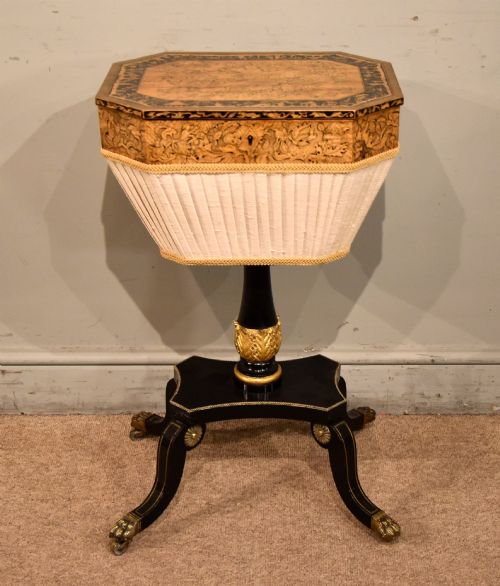
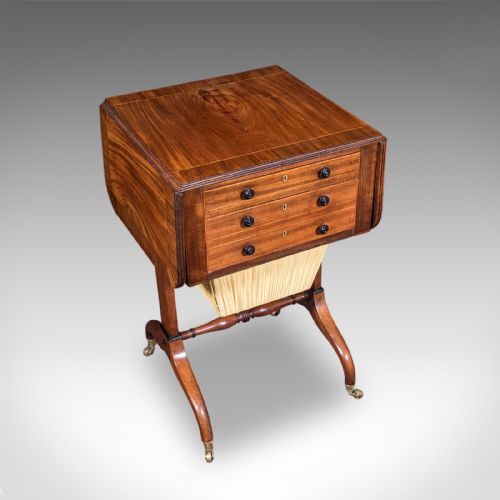
Makers often shaped these tables with lyre ends, pedestal bases, or slender tapering legs to keep the profile light and portable. Interiors typically contain partitioned trays and small boxes intended to keep sewing implements organised.
Materials and construction
Cabinetmakers relied on dense imported timbers like rosewood and figured mahogany, often accentuating the grain with boxwood stringing or brass inlay. Secondary woods provided structural stability for the internal framing and sliding compartments.
Silk and other fine fabrics lined the hanging work bags suspended beneath the drawers, while specialised penwork decorated lighter occasional boxes. Drop-leaf mechanisms and clever pivoting joints allowed small surfaces to expand for active sewing or writing.
Regency Needlework Basket Retail Price Guide 2026
Typical asking prices for regency needlework basket among the pieces listed under this phrase on Sellingantiques today, from the lower quarter to the upper quarter. They describe what is for sale here now, not the wider market.
Intricate penwork surfaces transformed simple wooden boxes into portable writing desks adorned with delicate ink-drawn landscapes.
Judging quality and craftsmanship
Superior pieces distinguish themselves through the choice of timber figures, such as highly figured rosewood or rich pollard oak, rather than plain stock. The precision of inlaid boxwood lines and brass detailing indicates the skill of the original workshop.
Construction integrity in the drawers, pivoting frames, and drop-leaf supports separates standard production from exceptional cabinet work. Original silk linings and well-preserved internal compartmentalisation add considerable merit to a surviving piece.
The Regency Needlework Basket Glossary
- Drop Leaf
- A table top with hinged flaps that fold down when not in use. This mechanism allows the furniture to save space in smaller parlours.
- Penwork
- A decorative technique using fine ink lines to draw intricate patterns on wood surfaces. It creates detailed monochrome ornamentation without carving.
- Lyre-Ended
- A furniture base shaped in the form of an ancient Greek lyre. This support style appears frequently on nineteenth-century tables and stands.
- Pollard Oak
- Timber taken from trees that were cut back to encourage dense branching, producing a heavily knotted grain. Cabinetmakers prized this wood for its distinctive mottled pattern.
Regency Needlework Basket: Frequently Asked Questions
What is a regency needlework basket used for?
These pieces served as dedicated work stations for ladies undertaking needlework, embroidery, and small writing tasks in the parlour. The internal compartments kept threads, needles, and small tools organised within easy reach.
The drop-leaf surfaces and attached fabric bags provided practical space for holding active projects. Many examples also incorporated games boards or writing slopes for general leisure.
How do I tell Regency pieces from later Victorian ones?
Regency and early nineteenth-century pieces typically exhibit restrained classical proportions, elegant brass inlays, and crisp architectural details. Woods like rosewood and figured mahogany dominate this earlier phase.
Later Victorian adaptations often feature heavier carving, darker ebonised finishes, and busier decorative motifs. Examining the secondary woods and construction methods helps confirm the correct period.
Can I use these tables for modern sewing?
The internal compartments remain ideally sized for modern threads, buttons, and small crafting accessories. Their compact footprint allows them to function efficiently in contemporary living spaces.
Care should be taken to protect delicate historical surfaces and original silk linings from heavy daily wear. Using clean, dry storage keeps the internal woodwork in good condition.
What woods were used for these sewing tables?
Makers predominantly selected rich hardwoods like mahogany and rosewood for their durability and attractive grain patterns. Pollard oak and maple also appear in select tables to create striking visual contrast.
Boxwood provided pale stringing for linear inlay work, while ebonised wood offered a dark, formal finish. Secondary timbers such as pine or oak were typically reserved for interior framing.