





Antique English Workbox
These antique English workbox pieces are fitted receptacles for needlework and small treasures, offering both utilitarian design and decorative cabinet-making skill.
Antique English Workbox
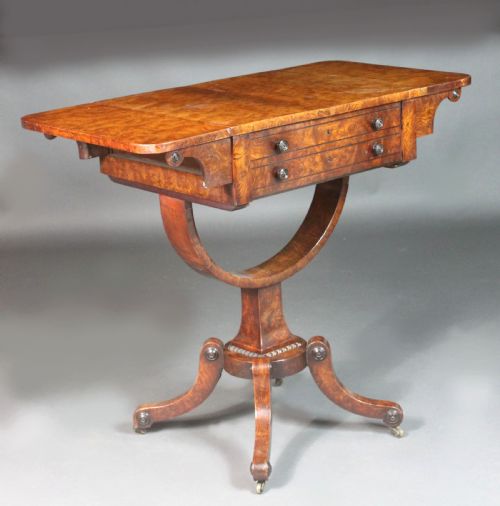
An antique English workbox serves as a designated container for sewing implements, threads, and personal letters. The selection ranges from portable caskets and table-top boxes to larger freestanding sewing stands with drop leaves.
Examples on this page span the Georgian, Regency, and Victorian periods up to Edwardian times. Forms vary widely from compact table-top boxes finished in lacquer or penwork to substantial side tables equipped with internal compartments.
Materials and construction
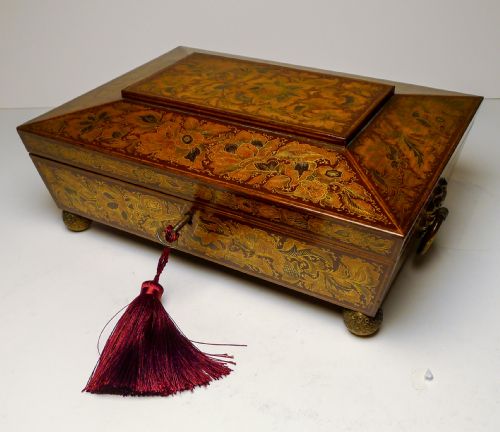
Cabinet-makers utilised dense hardwoods including mahogany, rosewood, oak, and burr ash to build the primary carcass. Decorative treatments incorporate brass mounts, applied lacquer, and intricate Tunbridge Ware or penwork detailing.
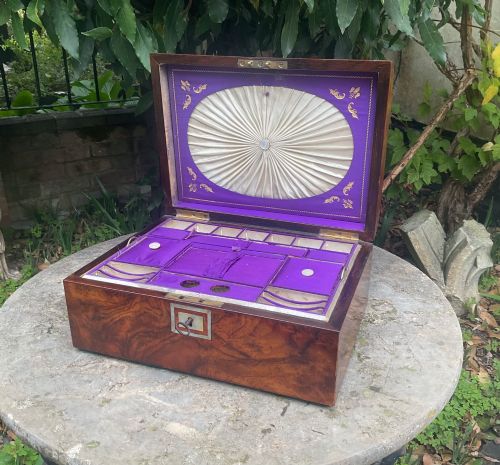
Internal layouts often feature fitted trays, compartments, and fabric linings designed to organise needles, threads, and small tools. Drop leaves and folding lids demonstrate the clever space-saving engineering typical of period sewing furniture.
Antique English Workbox Retail Price Guide 2026
Typical asking prices for english workbox among the pieces listed under this phrase on Sellingantiques today, from the lower quarter to the upper quarter. They describe what is for sale here now, not the wider market.
Several boxes double as games boards, proving that needlework occasionally needed a competitive distraction.
Distinctions in quality
Quality rests primarily in the choice of timber veneer, the precision of the cabinet joints, and the complexity of surface decoration such as penwork or lacquer. Finely figured grains and intact original internal fittings elevate a piece significantly above simpler utility boxes.
The sophistication of the mechanism and hardware, from brass hinges to locking escutcheons, indicates the original grade of manufacture. Pieces retaining their delicate internal trays and original fabric linings demonstrate superior preservation.
The Antique English Workbox Glossary
- Workbox
- A portable box or stationary chest designed to hold sewing equipment, threads, and needlework tools.
- Tunbridge Ware
- A type of decorative woodwork characteristic of Kent, featuring intricate mosaics made from many tiny pieces of naturally coloured woods to form pictorial or geometric motifs.
- Penwork
- A surface decoration technique utilising ink drawn directly onto a prepared wooden ground, frequently seen on Regency and early nineteenth-century boxes.
- Drop Leaf
- A hinged flap on a table or stand that can be raised to extend the surface area or lowered when space is restricted.
Antique English Workbox: Frequently Asked Questions
How were workboxes used originally?
They kept needles, thread, scissors, and ongoing needlework organised in one portable or bedside location.
Many double as writing desks or games boxes, demonstrating multiple uses within a domestic interior.
What materials are typical?
Cabinet-makers relied on native and exotic timbers such as mahogany, rosewood, oak, and burr ash.
Surfaces are frequently enhanced with brass hardware, lacquer, penwork, or mosaic woodwork.
How do I identify the period?
Stylistic clues such as Regency brass inlay, Georgian lacquer work, or Victorian Tunbridge Ware help date the object.
Construction methods and internal layouts also correspond to the prevailing design tastes of their era.