
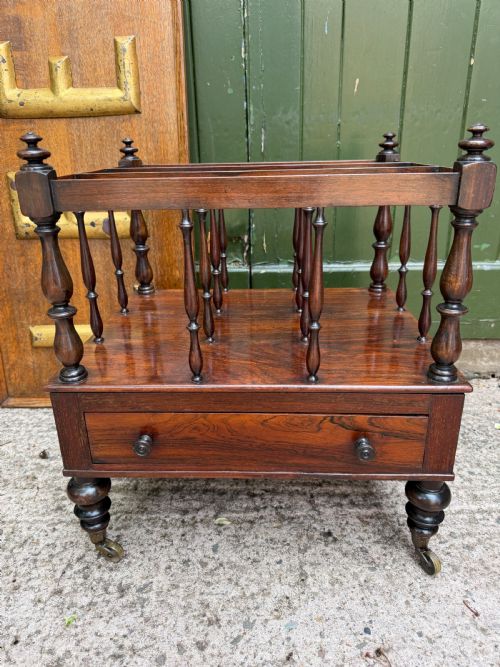


Regency Music Holder
A regency music holder provides an elegant solution for keeping sheet music and folios orderly in the drawing room.
Regency Music Holder
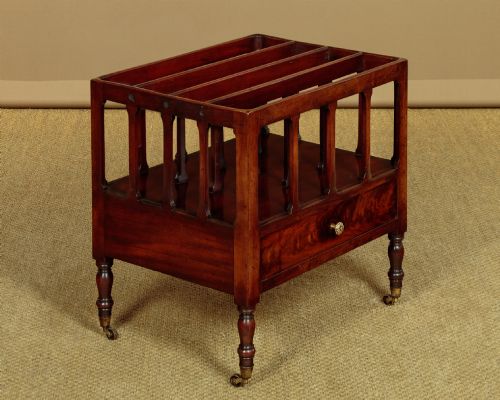
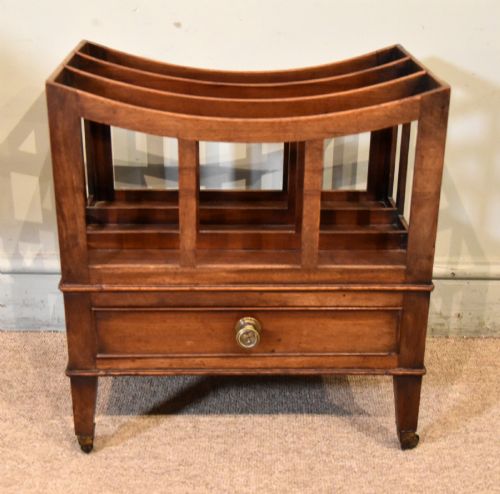
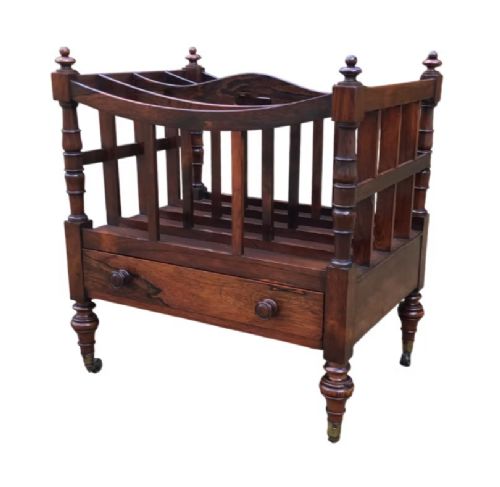
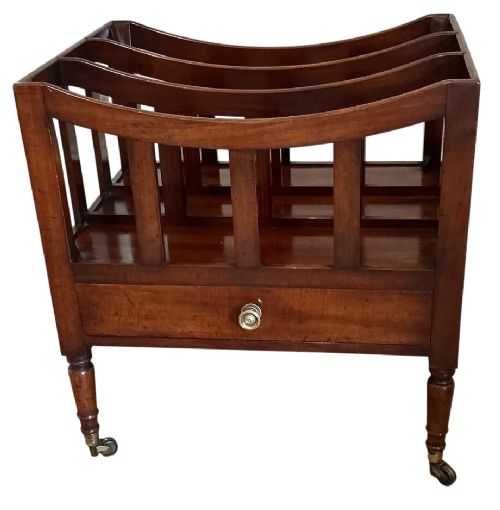
When searching for a regency music holder, buyers encounter pieces designed primarily as canterburys, magazine racks, or freestanding music stands. These items originate predominantly from the Regency, Georgian, and William IV periods, spanning into the nineteenth century.
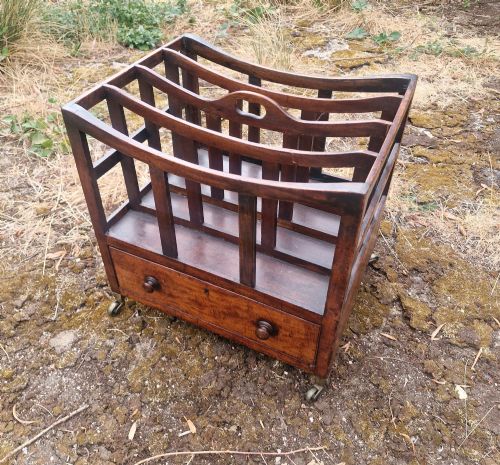
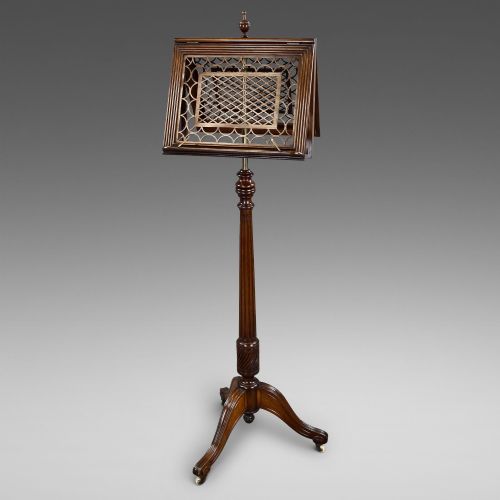
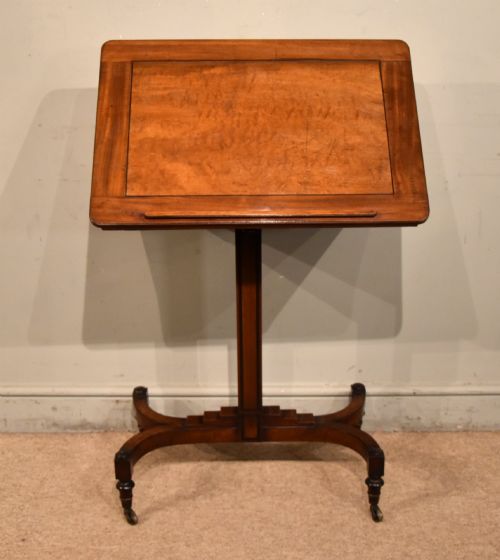
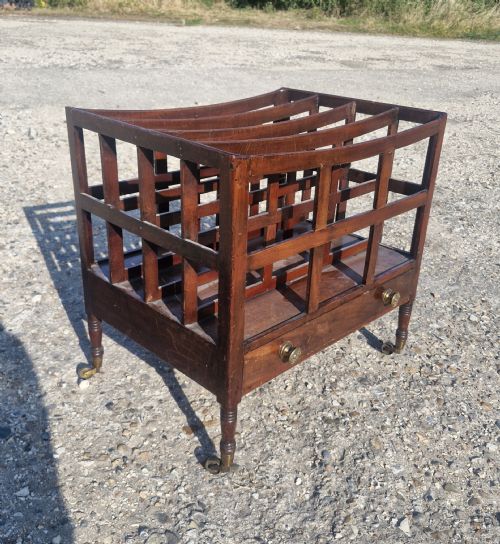
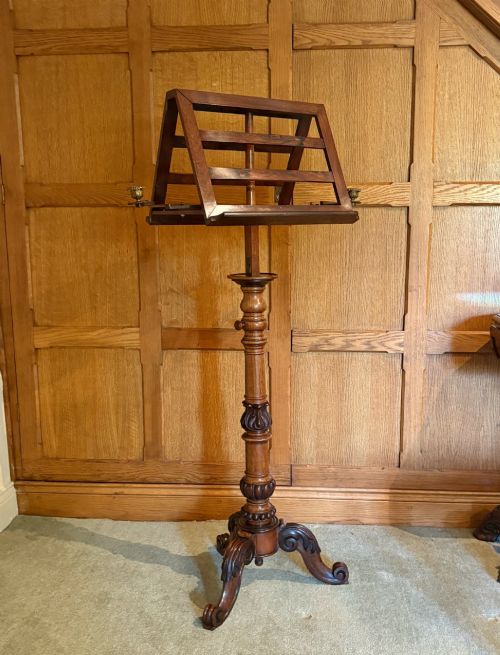
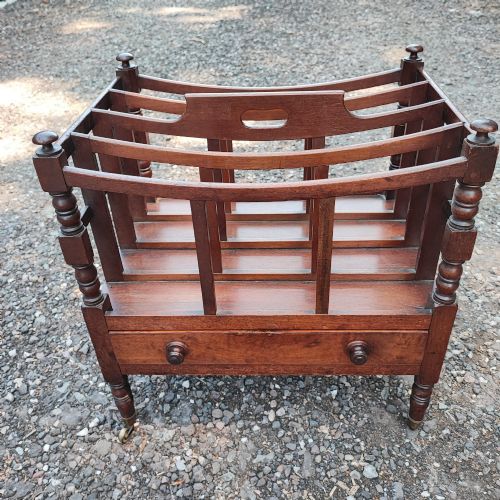
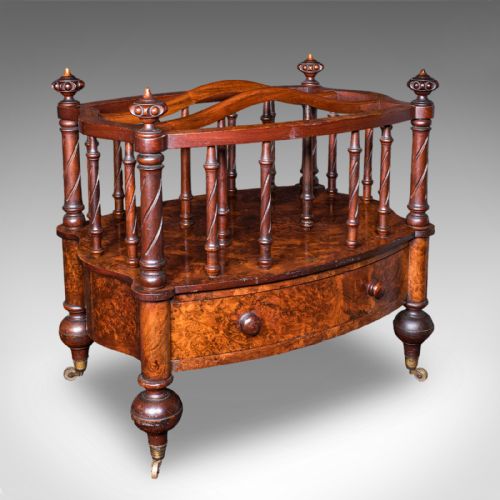
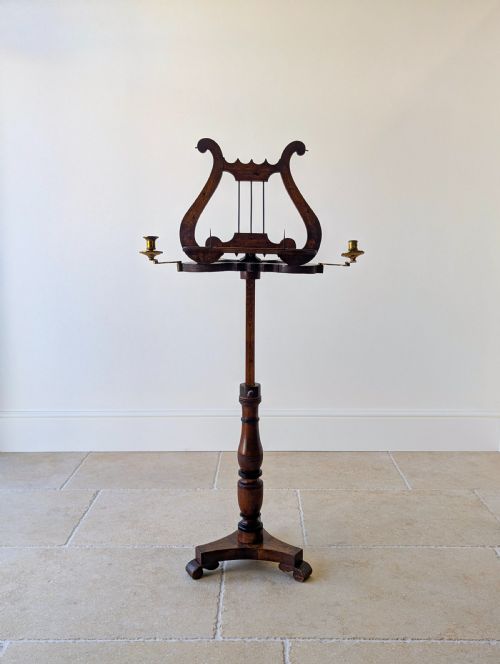
The form typically manifests as a divisioned rack for holding scores, newspapers, or folios, often featuring a low drawer beneath the slatted compartments. Alternatively, freestanding duet music stands and reading tables appear, designed with adjustable tiers and lyre-shaped supports.
Mahogany and rosewood dominate the material selection, alongside burr walnut, satinwood inlay, and brass details. These pieces reflect the formal entertaining habits of period domestic interiors, combining utility with refined cabinetmaking.
How they were made
Cabinetmakers utilised dense timbers such as Cuban mahogany and rosewood to construct the structural divisions and slender uprights of a music holder. Selected pieces incorporate burr walnut veneers and contrasting satinwood inlay to provide decorative warmth.
Brass fittings, including castors and adjustable ratchets on music stands, demonstrate the mechanical ingenuity applied to these functional items. Turned legs and carved details such as prince of wales feathers or lyre motifs complete the construction.
Listings demonstrate that mahogany and rosewood are the primary timbers used for crafting these nineteenth-century music holders.
What varies in quality
The refinement of the timber grain and the precision of the joinery set finer examples apart from standard domestic pieces. Richly figured rosewood or Cuban mahogany indicates superior selection by the original maker.
Proportion and decorative restraint dictate the grade of a piece, with cleaner lines and integrated brass castors showing higher craftsmanship. Subtle details such as fretted woodwork and well-turned legs elevate the overall execution.
GILLOWS DUET MUSIC STAND
The Regency Music Holder Glossary
- Canterbury
- A low stand with partitioned sections for holding sheet music, folios, or newspapers, often fitted with a drawer at the base.
- Duet stand
- A freestanding music stand designed to hold two open scores side by side for shared performance.
- Lyre form
- A decorative motif shaped like an ancient musical instrument, frequently incorporated into the central support of music stands.
- Inlay
- A technique where contrasting woods or materials are inserted into the primary timber surface to create decorative patterns.
Regency Music Holder: Frequently Asked Questions
What is a regency music holder used for?
These pieces served as dedicated furniture for storing loose sheet music, scores, and periodicals near a piano or music room. The partitioned sections kept folios upright and organised for daily practice.
Over time, many owners adapted them into magazine racks or newspaper tidies for the drawing room, maintaining their utility in domestic spaces.
Which woods are most common?
Mahogany and rosewood predominate across surviving examples, often selected for their deep grain and durability. Walnut, burr walnut, and satinwood inlay also appear on finer decorative pieces from the period.
Brass hardware frequently supplements these timbers on castors and adjustable reading mechanisms.
Are these pieces adjustable?
Freestanding music stands often include mechanical ratchets or sliding columns to alter the height and angle of the reading desk. Canterburys remain fixed in structure, prioritising compartment storage over mechanical adjustment.
Brass thumbscrews and sliding wooden brackets indicate the adjustable capability on reading tables and duet stands.