

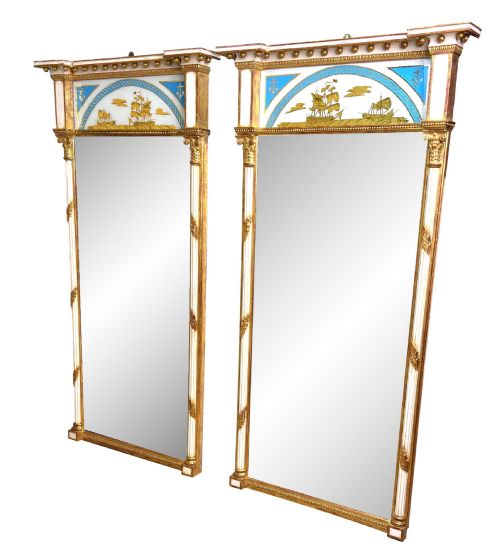
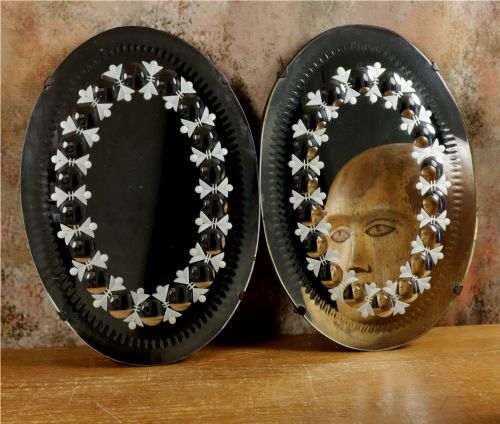
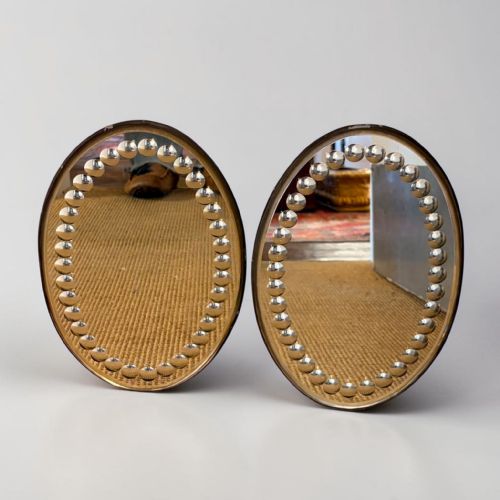

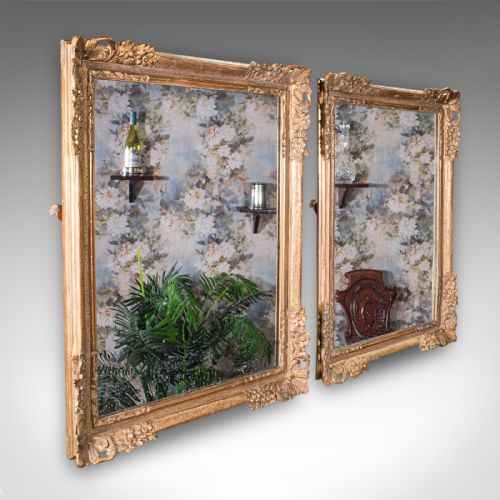


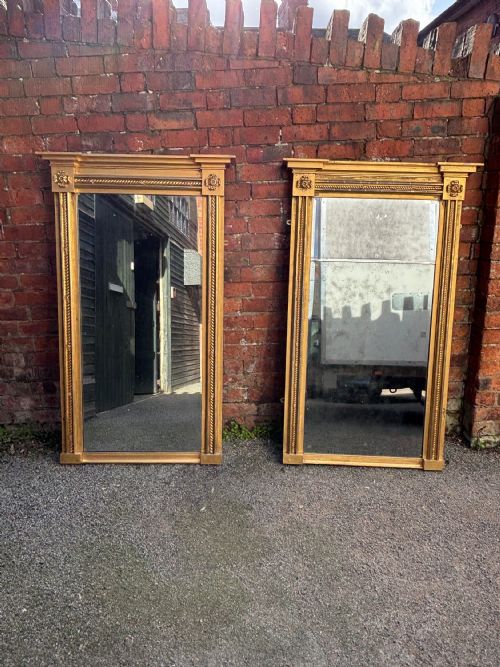


Regency Mirror Pair
These regency mirror pair items offer symmetrical grace for your walls, bringing period charm and reflected light directly into your living space.
Regency Mirror Pair
A regency mirror pair brings balanced elegance to an interior, often taking the form of wall mirrors, pier mirrors, or girandole mirrors. These symmetrical sets reflect both daylight and candle glow across a room, a principal function during their original period of popularity.
Most examples found here span the Regency era proper as well as the broader nineteenth century, alongside later revival pieces. Alongside standard wall-hanging formats, variants include convex mirrors, small oval frames with hand-carved decoration, and sorcerer mirrors.
Makers and origins range from English workshops to nineteenth-century Irish examples and French Regency interpretations. Buyers will also encounter related furnishings such as console tables, wall shelves, and cabinets that incorporate mirrored glass.
Materials and construction
Construction relies heavily on traditional timber and carved ornamentation, utilising giltwood, gesso, rosewood, mahogany, yew wood, and brass. Carved gilt wood frames display intricate detailing, while secondary timbers provide sturdy carcases for larger items.
Mirrored glass is set within these frames, sometimes incorporating convex surfaces or specialised plates designed to catch the light. Hand-carved decoration frequently adorns the wooden or gesso mouldings of the period.
Regency Mirror Pair Retail Price Guide 2026
Typical asking prices for regency mirror pair among the pieces listed under this phrase on Sellingantiques today, from the lower quarter to the upper quarter. They describe what is for sale here now, not the wider market.
Convex mirrors are historically known as sorcerer mirrors because their curved glass resembles mystical scrying spheres used for divination.
Distinctions in quality
Quality reveals itself in the crispness of the hand-carved wooden or gesso decoration and the depth of the gilding. Superior examples maintain original mirror plates and cohesive frames that show considered proportion.
The choice of primary timber, such as figured rosewood or rich mahogany, elevates certain pieces above standard production. Documentation, such as original cabinetmaker labels, further distinguishes notable pieces from standard decorative items.
Strahan of Dublin·Town and Emanuel
The Regency Mirror Pair Glossary
- Giltwood
- Wood that has been coated with gold leaf or a gold-coloured finish. This technique creates a bright, reflective surface popular in formal nineteenth-century interiors.
- Girandole
- A wall mirror featuring attached candle sconces. The candleholders multiply the reflected light within a room.
- Pier mirror
- A tall mirror designed to hang on the wall space between windows. They often sat above console tables or pier tables.
- Gesso
- A plaster-like material applied to wood surfaces and carved before gilding. It allows for intricate relief ornamentation on frames.
- Convex mirror
- A round mirror with a bulging glass surface that provides a wide-angle reflection of the interior. These are sometimes referred to as sorcerer mirrors.
Regency Mirror Pair: Frequently Asked Questions
Where should I place a pair of mirrors?
Placing matching mirrors symmetrically on either side of a fireplace, doorway, or window creates a balanced architectural focal point. This arrangement doubles the perceived light and space in a room.
They also work effectively when hung above matching console tables or small side cabinets.
What is a convex mirror used for?
Convex mirrors were traditionally utilised to monitor activity across a large room from a single vantage point. Their curved glass creates a distorted panoramic reflection.
During the nineteenth century, they served primarily as decorative objects that added depth and unusual optical effects to formal interiors.
How do I clean antique mirror glass?
Clean the glass gently using a soft, dry microfibre cloth to remove dust without scratching the silvering. Avoid spraying liquid directly onto the glass, as moisture can seep behind the plate and damage the backing.
If cleaning fluid is necessary, apply a small amount to the cloth rather than the mirror itself.