





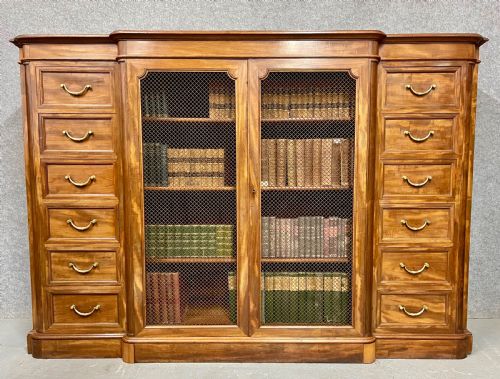

Regency Mesh Bookcase
A regency mesh bookcase is a refined library piece defined by fine timber and delicate metal grilles, bringing architectural elegance to any room.
Regency Mesh Bookcase
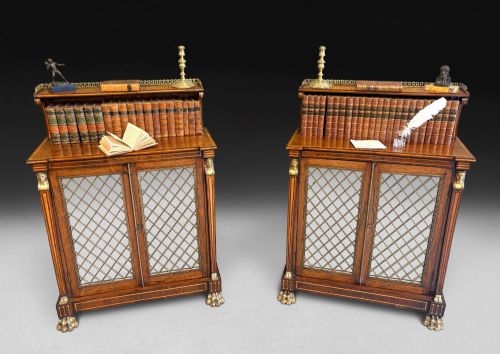
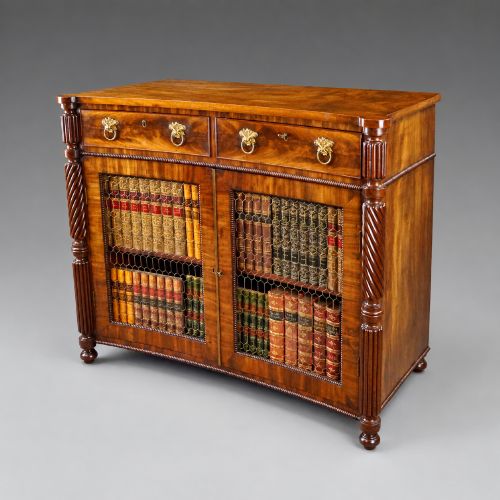
When you search for a regency mesh bookcase, you are looking at sophisticated enclosed shelving designed to protect valuable volumes while keeping titles visible through fine metal grilles. These pieces span formal architectural forms and library furniture from the nineteenth century through later revival periods.
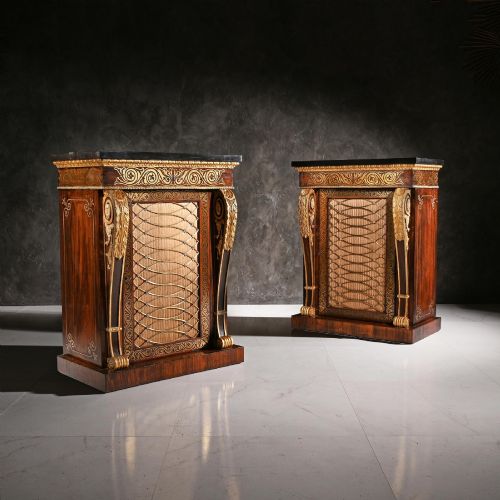
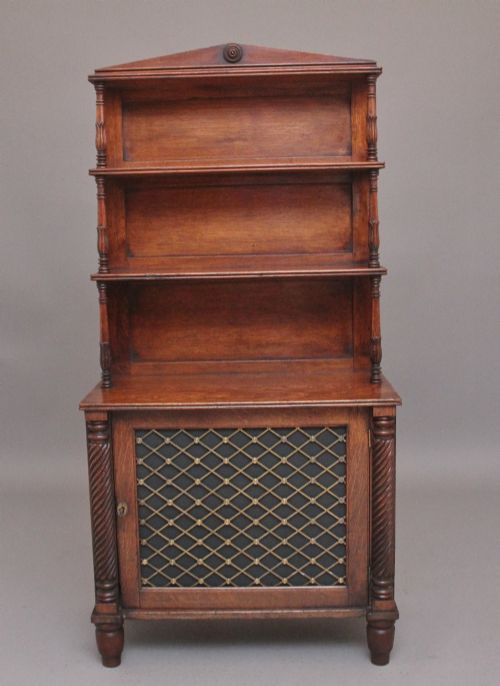
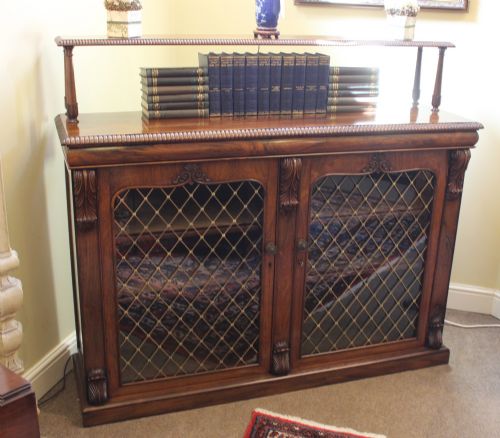
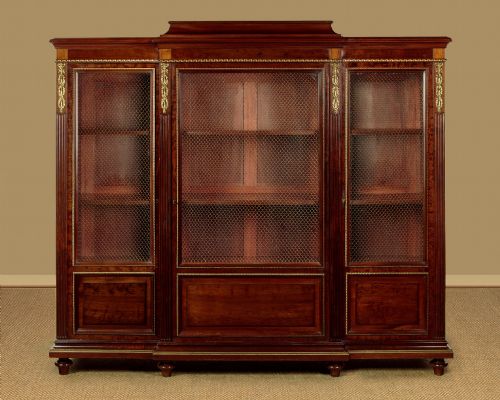
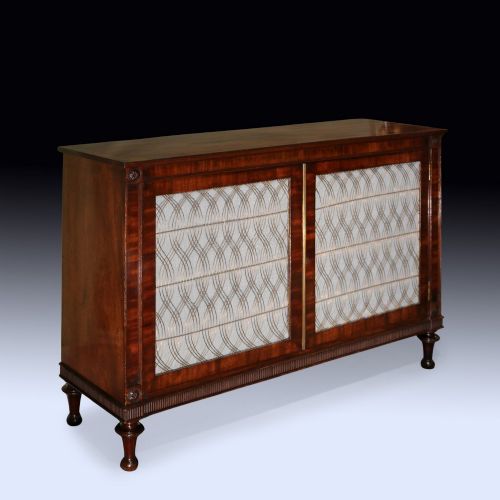
The versions you are most likely to meet on this page include mahogany and rosewood side cabinets, breakfront bookcases, and chiffoniers. They range from compact two-door cabinets to substantial library pieces and matched pairs originating in England and Scotland.
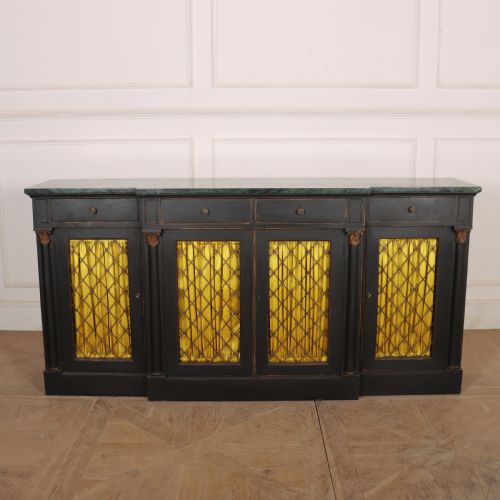
Beyond standard bookcases, the selection encompasses related library furniture such as sideboards, credenzas, and dresser bases. These items share the characteristic low profile and glazed or wired door panels typical of the period.
Materials and construction
Cabinet makers utilised dense imported hardwoods like mahogany, rosewood, walnut, and pollard oak, often accented with ebony stringing, satinwood, or exotic gonçalo alves veneers. These timbers were selected for their rich grain patterns and stability over large surface areas.
Brass featured prominently in the construction, appearing as mounted gallery rails, inlaid stringing, and delicate wire mesh fitted into door frames to protect books while allowing ventilation. Glass panels and fabric linings also appeared depending on the specific cabinet type and date of manufacture.
Regency Mesh Bookcase Retail Price Guide 2026
Typical asking prices for regency mesh bookcase among the pieces listed under this phrase on Sellingantiques today, from the lower quarter to the upper quarter. They describe what is for sale here now, not the wider market.
Listings span the nineteenth century through the early twentieth century, featuring mahogany, rosewood, walnut, and oak alongside brass wire mesh.
Factors of quality
The distinction between standard examples and superior pieces rests upon the choice of timber figure, the precision of brass mountings, and the finesse of the wire mesh integration. Finer cabinets display meticulously matched veneers and harmonious proportions across breakfront or concave forms.
Originality of components, such as functional adjustable shelving and intact period hardware, elevates a piece significantly. Construction methods, including secondary timbers used in internal framing, also indicate the level of craftsmanship invested by the maker.
The Regency Mesh Bookcase Glossary
- Breakfront
- A cabinet design where the central section projects forward from the flanking wings, creating a pronounced architectural façade. This layout was frequently utilised on larger library bookcases.
- Chiffonier
- A compact sideboard or cabinet featuring enclosed lower cupboards, often topped with a shelf or a raised back. They emerged during the regency period as versatile storage for parlours and dining rooms.
- Pollard oak
- Timber taken from trees that have been pollarded, producing a densely knotted and highly decorative grain. It was prized for luxury cabinet work.
- Gonçalo alves
- A dense exotic hardwood with striking contrasting grain patterns, sometimes called zebrawood. It was used on high-status regency and nineteenth-century furniture.
- Grille
- A lattice of metal wire fitted into cabinet doors in place of glass. It provided ventilation and security for book collections while maintaining visual lightness.
Regency Mesh Bookcase: Frequently Asked Questions
What is a regency mesh bookcase?
A regency mesh bookcase is a low cabinet or shelving unit featuring wire grilles on the doors, designed primarily for housing books and papers in a library or parlour.
These pieces combine decorative timber veneers with protective metal mesh panels, offering a clear view of book spines while safeguarding the contents.
How do I identify the period?
Period identification relies on observing timber choices, hardware styles, and overall architectural proportions. Regency and William IV pieces often display classical motifs, rich rosewood or mahogany, and precise brass inlays.
Later Victorian and Edwardian examples may show heavier mouldings or alternative timbers like walnut while retaining the foundational forms of the earlier designs.
Are the shelves adjustable?
Many library bookcases and side cabinets incorporate adjustable shelving systems using rack-and-pinion mechanisms or traditional wooden support strips.
This feature allowed owners to alter shelf heights to accommodate varying octavo and folio book volumes.