
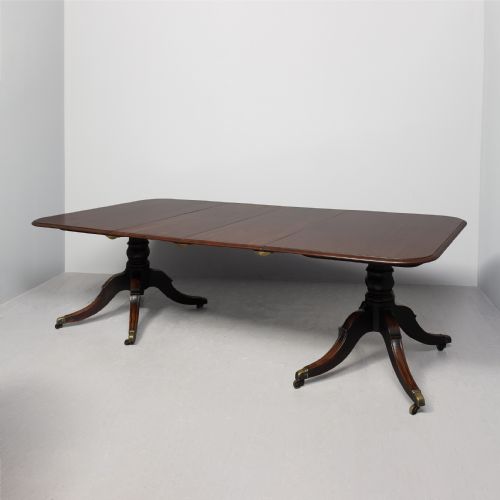
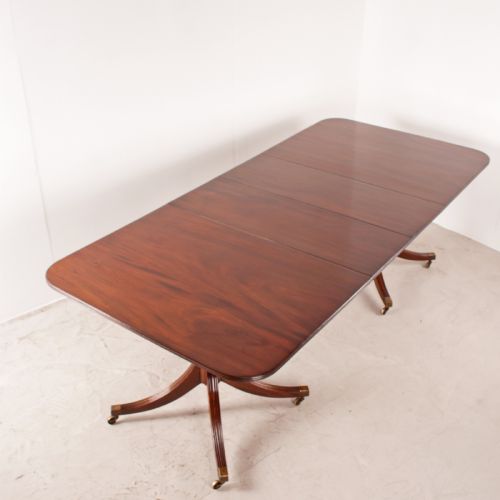
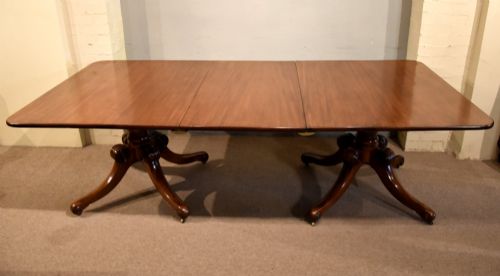
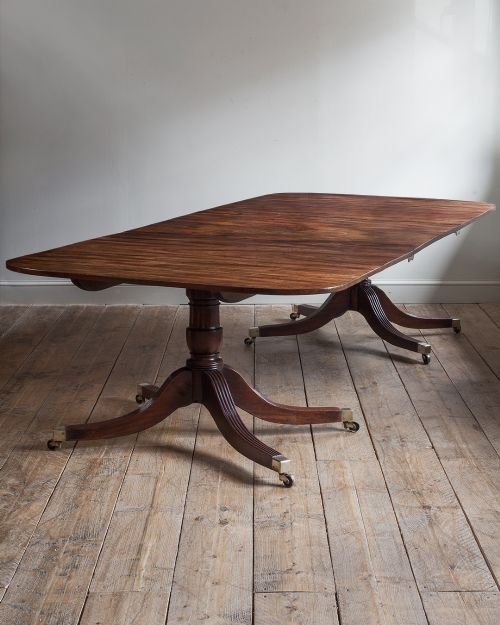

Regency Mahogany Twin Pedestal
Regency mahogany twin pedestal tables offer robust elegance and versatile extension for serious dining.
Regency Mahogany Twin Pedestal
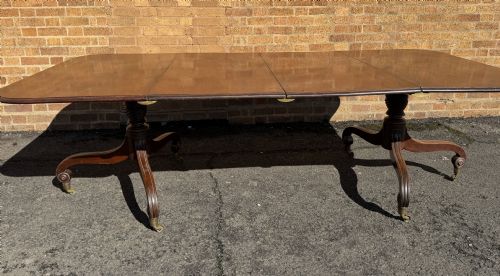
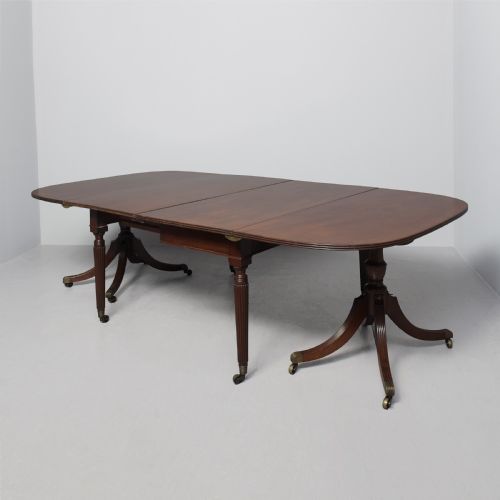
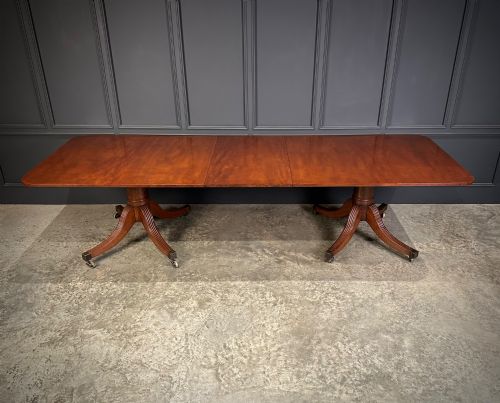
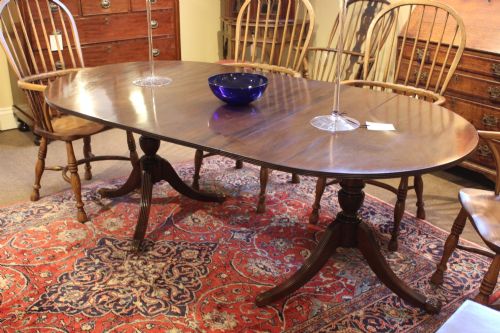
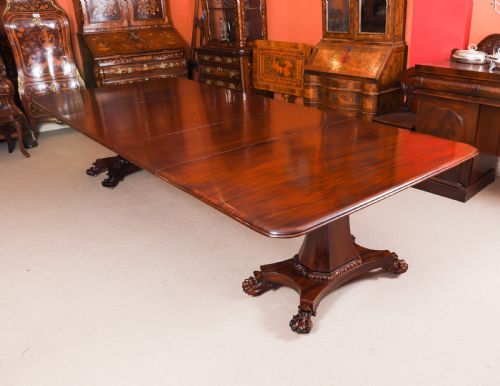
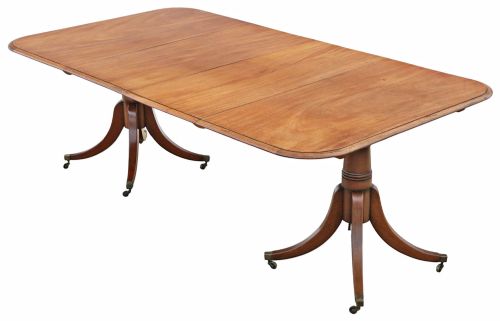
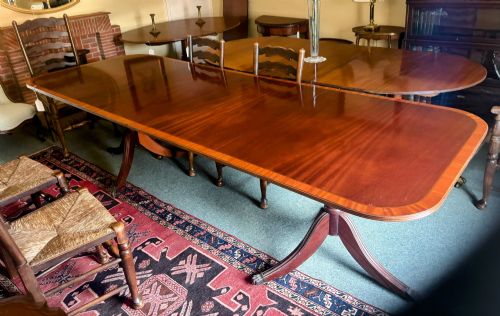
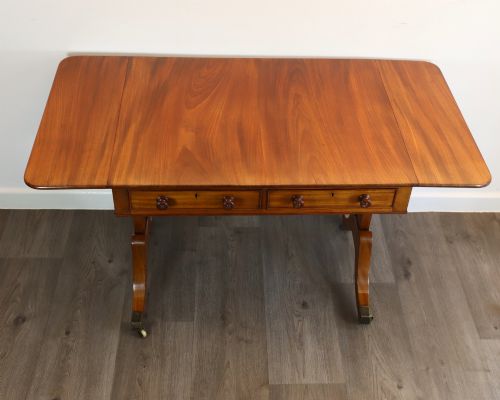
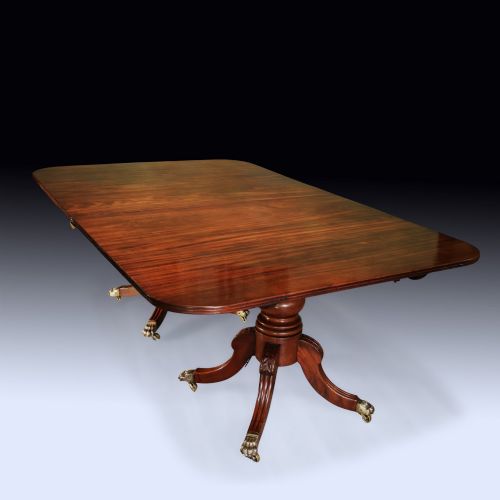
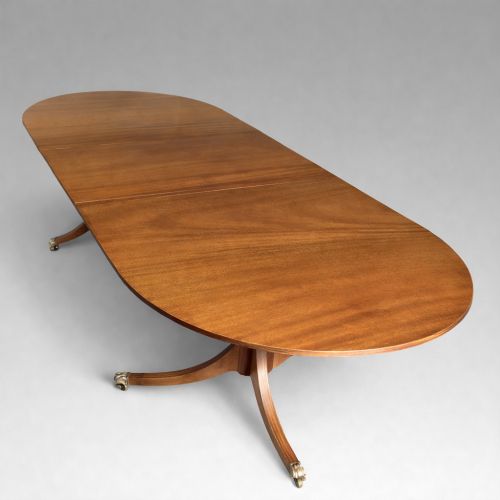
When you search for regency mahogany twin pedestal, you are looking at substantial dining tables built with two distinct vertical pillars supporting a long timber top. The version you are most likely to meet on this page is the extending dining table, often equipped with removable leaves to alter the length.
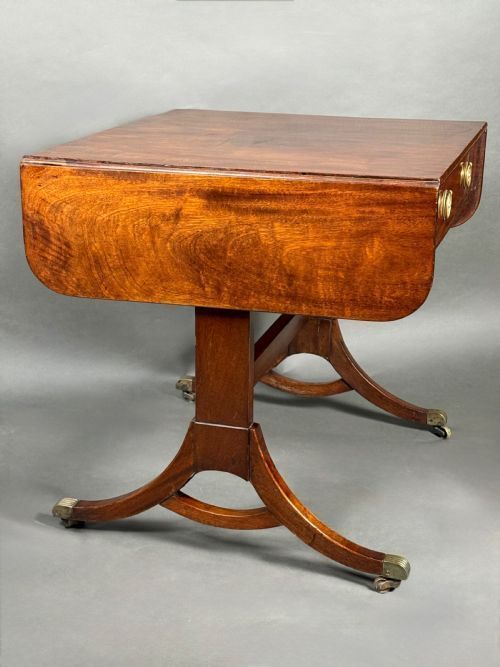
The evidence shows these forms appearing across several periods, most notably the original Regency and Georgian eras, alongside later revivals from the twentieth century. Alongside dining tables, the listings include occasional sofa tables and library tables utilising the same dual pillar arrangement.
How They Were Made
Cabinet makers constructed these pieces primarily from solid and veneered mahogany, frequently selecting figured flame mahogany for the primary surfaces to display rich grain patterns. Secondary timbers and structural elements often incorporated contrasting veneers like satinwood or boxwood inlay.
The twin pedestals typically terminate in brass castors that allow the heavy timber frames to move smoothly across flooring. Extension mechanisms rely on internal runners and drop-in leaves that permit the table to expand safely.
Object types span dining tables, sofa tables, library tables, sideboards, desks, and side tables.
What Varies in Quality
Quality rests upon the selection of the mahogany timber and the crispness of the carving on the pedestal bases and legs. Superior examples display symmetrical flame patterns across the top and robust brass fittings that show no signs of cheap casting.
The engineering of the extending mechanism also dictates the grade of the piece, where smoother runner movement and tight leaf alignment separate standard revival pieces from finer period items.
Gillows of Lancaster
The Regency Mahogany Twin Pedestal Glossary
- Twin Pedestal
- A table design supported by two central columns rather than four corner legs. This configuration allows more room for chairs and diners along the sides.
- Flame Mahogany
- A veneer cut from the fork of the mahogany tree where the branches join the trunk. It creates a distinctive, fiery ripple pattern across the wood.
- D End
- A table end shaped in the semi-circular form of the letter D. These sections can often be detached or separated when the table is shortened.
- Sofa Table
- A low rectangular table traditionally placed in front of a sofa with drop leaves on either side. Many examples feature pedestal bases.
- Gun Barrel
- A turned column support shaped like the barrel of a firearm. It tapers smoothly towards the collar and base.
Regency Mahogany Twin Pedestal: Frequently Asked Questions
How do I seat guests comfortably?
Utilise the removable leaves recorded in many of these listings to expand the surface area for large gatherings. The twin pedestal layout ensures diners' legs avoid corner legs.
Position chairs along the long flanks where the central pillars permit ample knee clearance.
Are these tables suitable for daily use?
These pieces were built for active dining rooms and libraries, utilising dense timbers designed to endure heavy service. Regular polishing helps protect the mahogany surface from moisture.
Ensure you lift rather than drag the pedestals when rearranging furniture.
How do I identify a revival piece?
Twentieth-century revivals often feature standardised timber milling and modern fixings hidden beneath the extending mechanism. Examine the interior runners and block construction for clues to the era.
Original period pieces display hand-cut joinery and mature patina accumulated over centuries.
What is the purpose of extra leaves?
Extra leaves allow the dining table to adapt its length between compact daily use and extended banquet setups. They store separately when the table contracts.
Matching grain patterns across the inserted leaves indicate careful initial manufacture.