


Regency Mahogany Music Stand
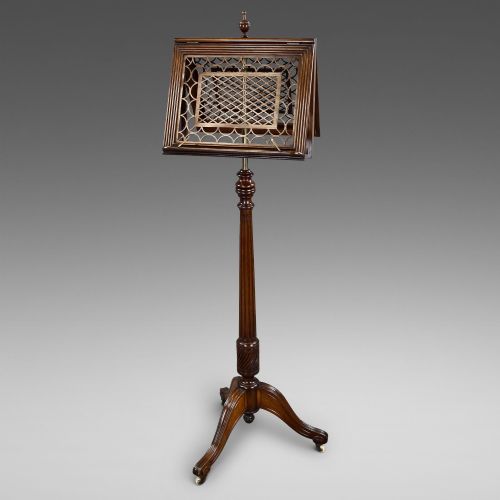
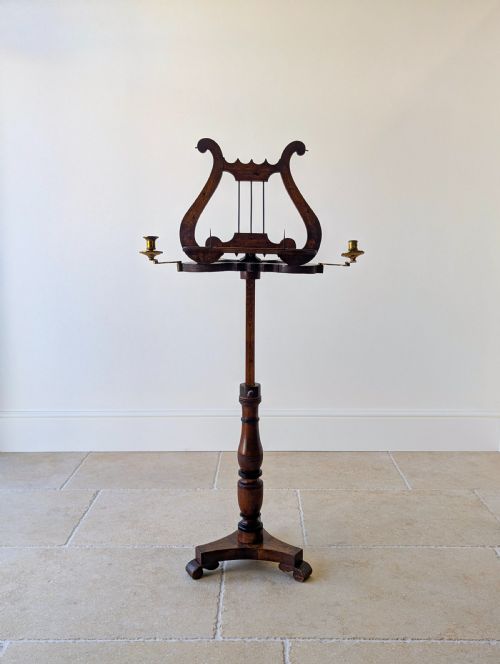
A regency mahogany music stand brings functional elegance into a room, designed to hold scores or books with refined simplicity.
How they were made
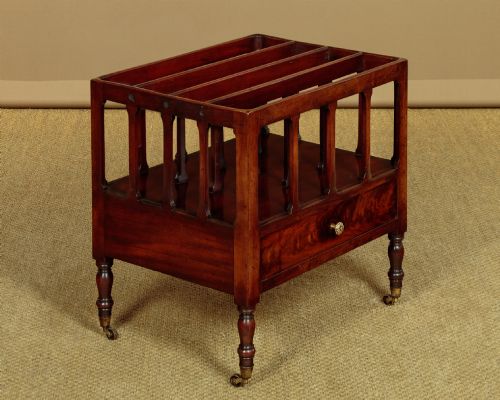
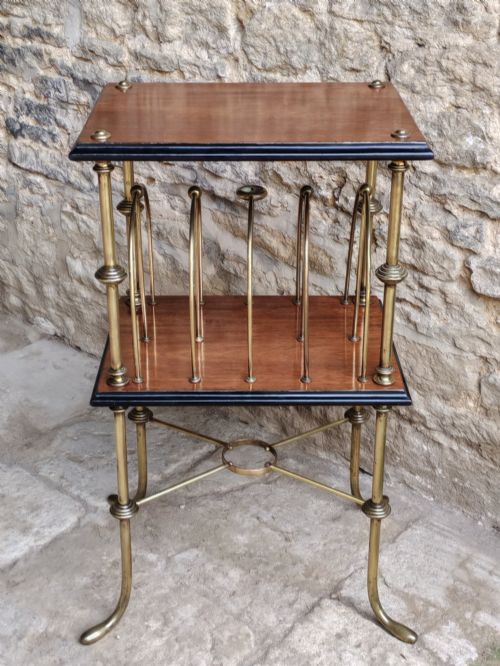
Cabinet makers utilised dense timbers such as mahogany and Cuban mahogany, occasionally incorporating rosewood for distinct contrast. Brass fittings, castors and subtle inlay work in satinwood or ebony provide structural mobility and visual definition.
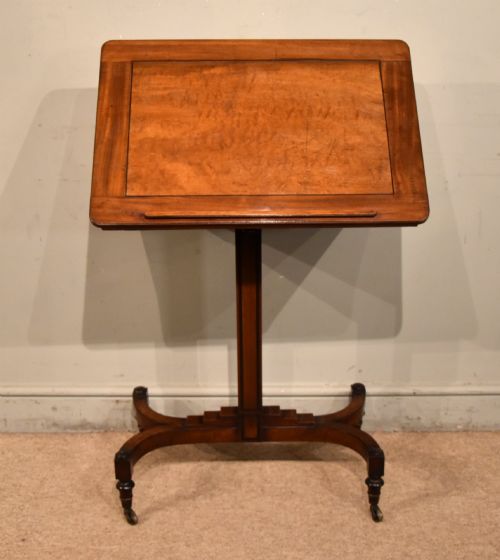
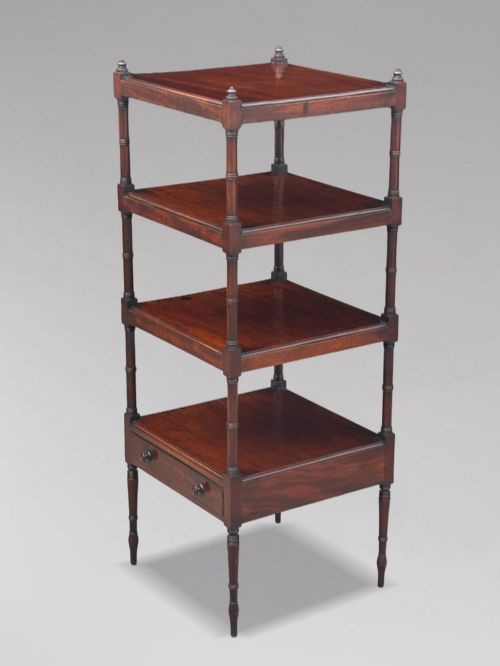
Joinery techniques balance the weight of pivoting reading desks and partitioned storage sections. Turned legs and fretted fretwork panels demonstrate the careful carpentry applied to these domestic furnishings.
What varies in quality
The refinement of the carving and the choice of timber grain dictate the distinction between standard examples and exceptional pieces. Dense Cuban mahogany and crisp lyre fretwork indicate superior workshop execution.
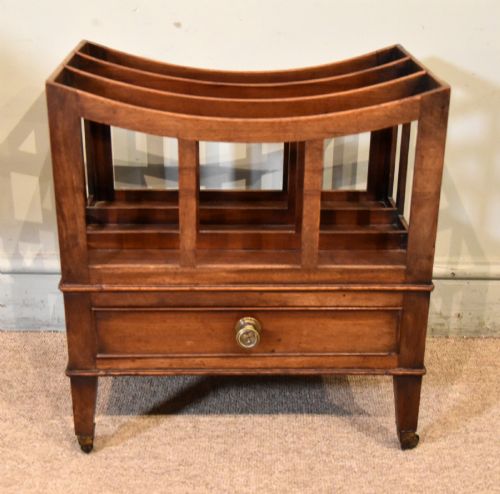
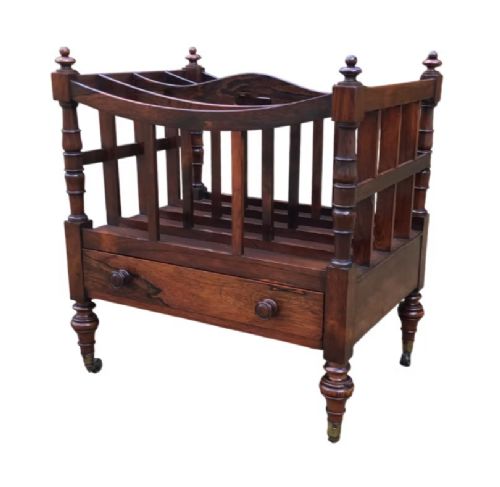
Integration of mechanical adjustments for reading heights and the clever inclusion of drawers or four-division partitions show greater ambition in design and construction.
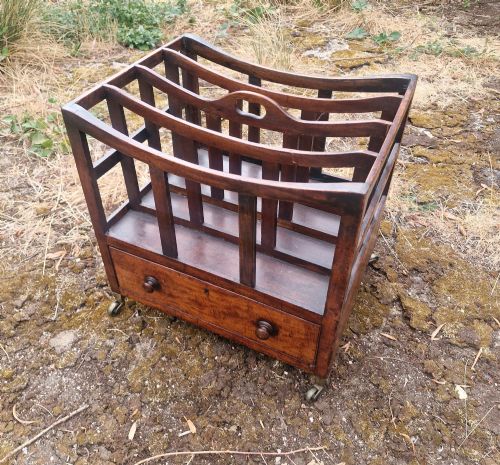
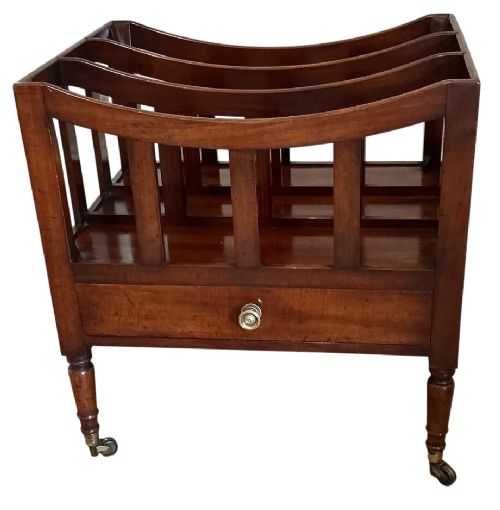
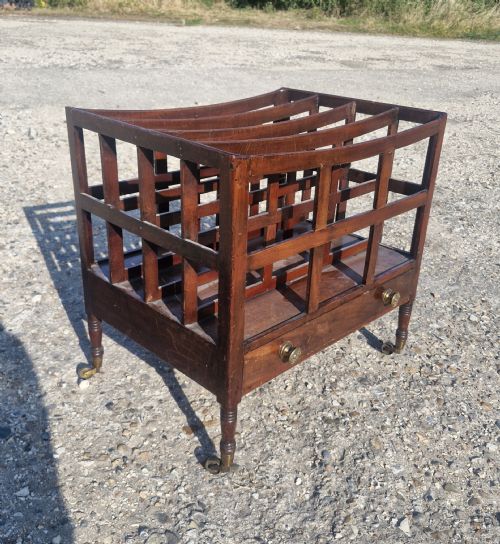
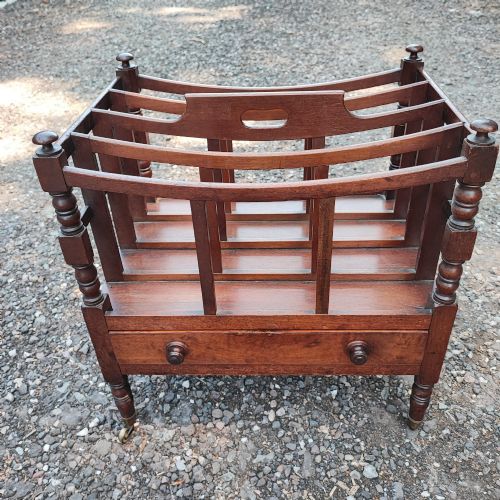
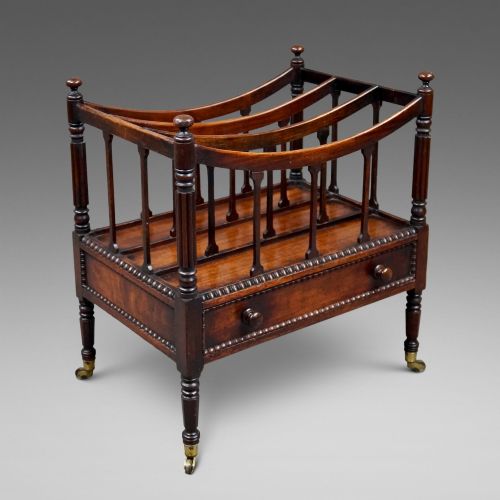
Many canterburys rest upon tiny brass castors, built so musicians could easily wheel their sheet music closer to the piano.
Gillows
The Regency Mahogany Music Stand Glossary
- Canterbury
- A low standalone rack with partitioned sections designed to hold sheet music, magazines or newspapers. It frequently sits on castors for easy movement across wooden floors.
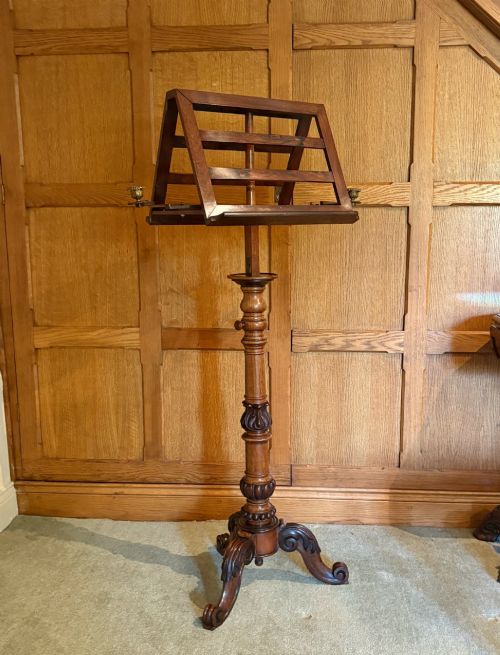
- Duet stand
- A music stand configured to hold two open scores side by side, often featuring adjustable heights and folding desks.
- Lyre-form
- A decorative motif shaped like an ancient musical lyre, commonly utilised within the central support column or music rest of stands and tables.
- Whatnot
- A piece of open shelving furniture utilised for display or storage, sometimes combined with music stands or lower compartments in nineteenth-century designs.
- Satinwood inlay
- A contrasting light-coloured wood inserted into the darker mahogany surface to create geometric or floral borders.
Regency Mahogany Music Stand: Frequently Asked Questions
What is a regency mahogany music stand used for?
These stands were originally designed to hold heavy bound music scores or reading material at a comfortable angle for musicians and readers in period drawing rooms.
Today, they function practically to hold books or sheet music while adding distinct period character to a study or living space.
How do I identify a regency piece?
Regency pieces often display classical proportions, subtle brass details, and specific timber choices like rich mahogany with turned legs.
Comparing structural elements against known Georgian and William IV characteristics helps confirm the broader period of manufacture.
Are these stands adjustable?
Many examples include mechanical brackets or sliding stems that allow the reader to alter the height and angle of the desk.
Fixed-height music stands and duet tables also appear frequently across the available selections.