

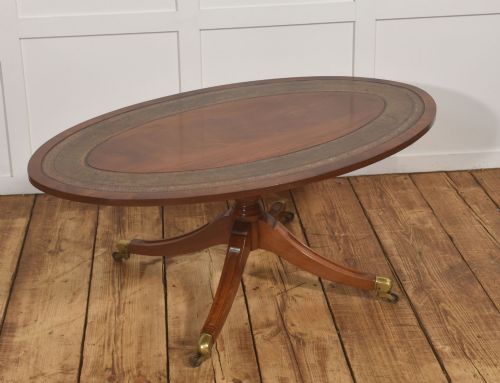
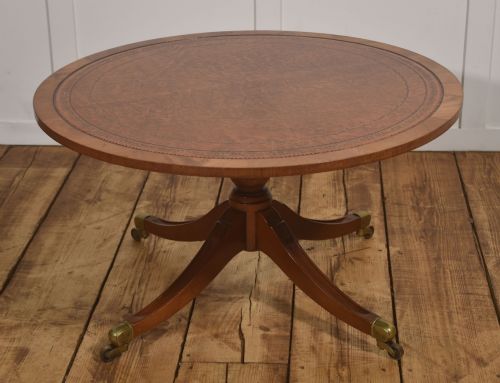
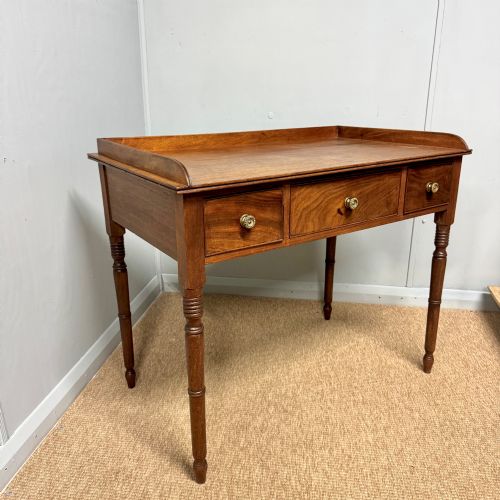
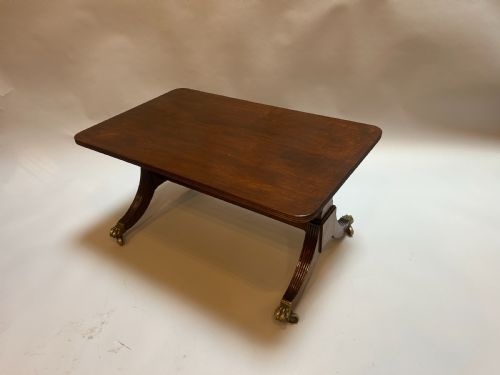


Regency Mahogany Low Table
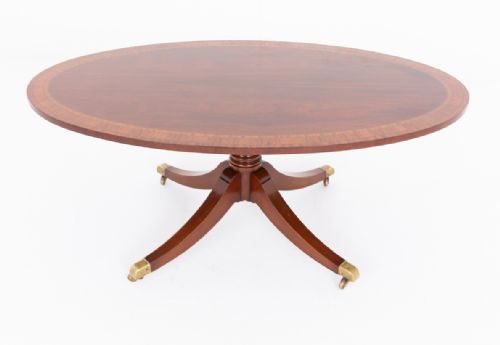
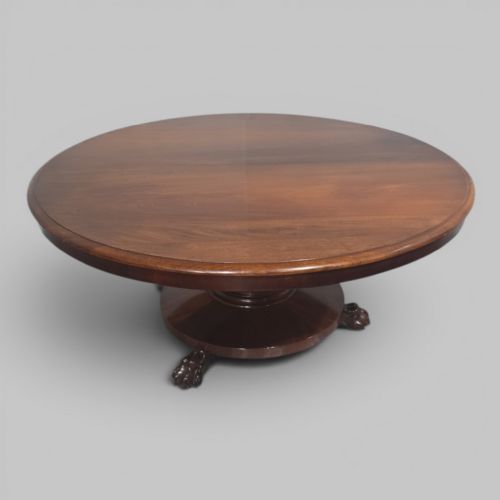
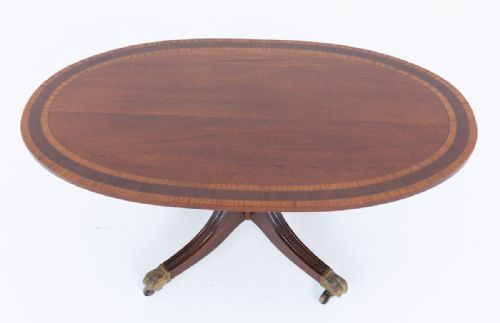
A regency mahogany low table brings substantial timber and clean architectural lines to a room, functioning well as a coffee or occasional surface.
Regency Mahogany Low Table
A regency mahogany low table sits low to the floor, often adapted from earlier forms such as side tables, drum tables, or dressing tables. The pieces found here span the nineteenth century, including later revivals from the early twentieth century.
The primary forms on this page include oval, circular, and square coffee tables, alongside occasional tables, open bookcases, and low tables with caned tops. Makers and makers in the manner of Gillows of Lancaster and London heavily influence the stylistic vocabulary of these designs.
Period examples sit alongside revival pieces built in the regency style, george iv, and sheraton revival idioms. Buyers meet genuine nineteenth-century pieces alongside twentieth-century interpretations utilising traditional timber.
Materials and construction
Surface details include leather inserts for writing surfaces and cane panels for open seating or shelving elements. Joinery relies on traditional techniques suited to the dense grain of mahogany.
Regency Mahogany Low Table Retail Price Guide 2026
Typical asking prices for regency mahogany low table among the pieces listed under this phrase on Sellingantiques today, from the lower quarter to the upper quarter. They describe what is for sale here now, not the wider market.
Periods represented span from Georgian and Regency eras through Victorian times to twentieth-century revival pieces.
Judging quality in construction and timber
Quality rests upon the selection of timber, particularly the depth of figure in flame mahogany veneers and the crispness of inlaid satinwood stringing. Superior examples display thoughtful proportions and careful matching of grain across top surfaces.
The integrity of secondary woods and the presence of original brass hardware distinguish finer workshops. Period execution shows a clarity in turned legs, pedestal bases, and edge mouldings that revival pieces sometimes interpret more heavily.
Gillows·Waring and Gillow
The Regency Mahogany Low Table Glossary
- Mahogany
- A durable tropical hardwood prized for its rich reddish-brown colour and stable grain. It forms the primary structural material for these tables.
- Flame mahogany
- A veneer cut from the fork of the mahogany tree where the branch meets the trunk. It creates a distinctive, fiery feather pattern across tabletops.
- Satinwood
- A pale, hard wood utilised for contrasting inlay and banding on dark mahogany surfaces. It provides a bright visual border to geometric panels.
- Drum table
- A circular library or centre table with a deep frieze containing drawers, mounted on a central pillar and tripod base. Many low examples originate from these forms.
- Caning
- A woven material made from split rattan used for seats and lower shelves. It adds a lighter textural contrast to heavy timber frames.
Regency Mahogany Low Table: Frequently Asked Questions
What is a regency mahogany low table?
A regency mahogany low table is typically a coffee or occasional table adapted from nineteenth-century forms such as side tables, drum tables, or work tables. They combine deep mahogany timber with classical proportions suited to modern seating heights.
These pieces range from authentic nineteenth-century items to early twentieth-century revival tables built in the same idiom. They offer sturdy construction and distinct period character.
How do I spot a genuine period piece?
Examine the timber closely for natural ageing, hand-cut joinery, and the weight of the secondary woods used underneath. Period pieces often exhibit subtle tool marks and wear patterns consistent with decades of domestic use.
Stylistic markers like proportions, brass castors, and veneer thickness help differentiate nineteenth-century originals from later revival interpretations.
How do I clean mahogany?
Dust regularly with a soft, dry cloth to prevent grit accumulation on the surface. Avoid using silicone-based sprays or modern household detergents that can damage traditional polish.
Apply a microcrystalline wax periodically to nourish the timber and protect the finish from moisture. Keep the table away from direct heat sources and strong sunlight to prevent fading.
Where does the style originate?
The aesthetic derives from the British Regency period spanning the early nineteenth century, drawing heavily on classical Greek, Roman, and Egyptian motifs. Cabinetmakers such as Gillows of Lancaster shaped this vocabulary through refined side tables, dining tables, and writing desks.
Later eras, including the Edwardian period and the early twentieth century, frequently revived these balanced architectural lines.