


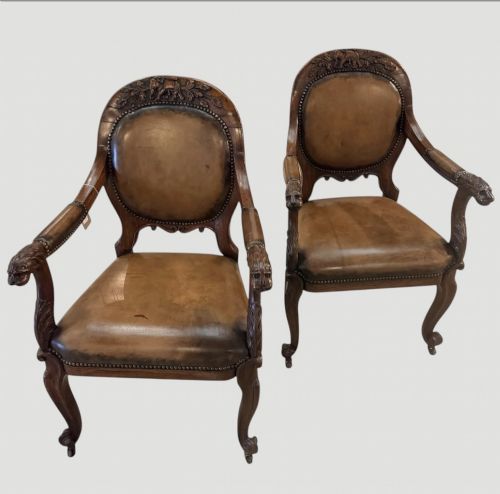
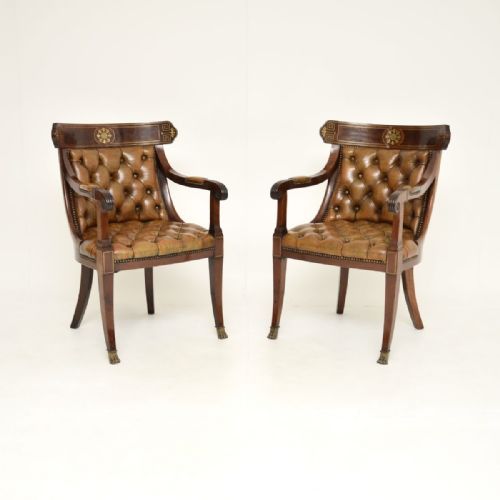
Regency Library Seat
A regency library seat is a heavy reading chair designed for quiet studies, combining deep proportions with substantial mahogany, rosewood or cane frames.
Regency Library Seat
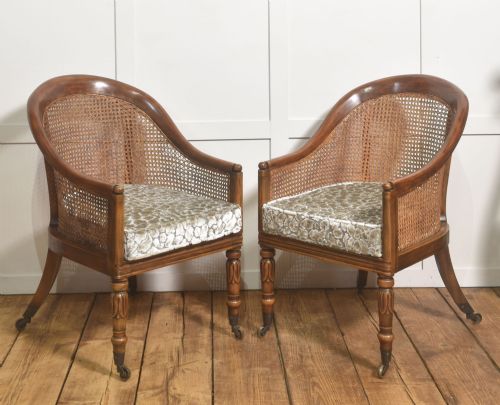
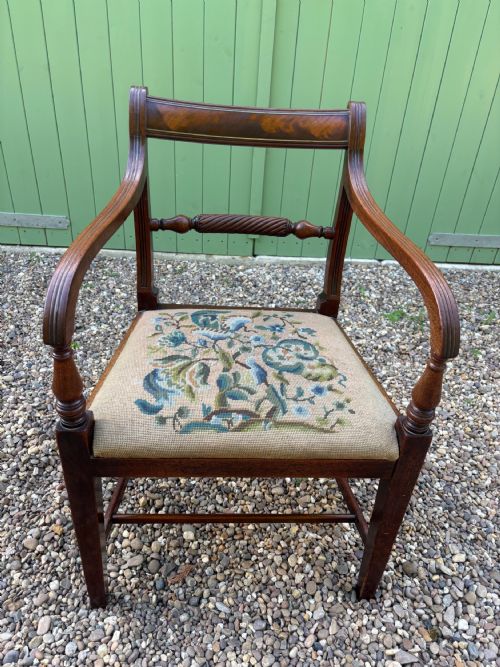
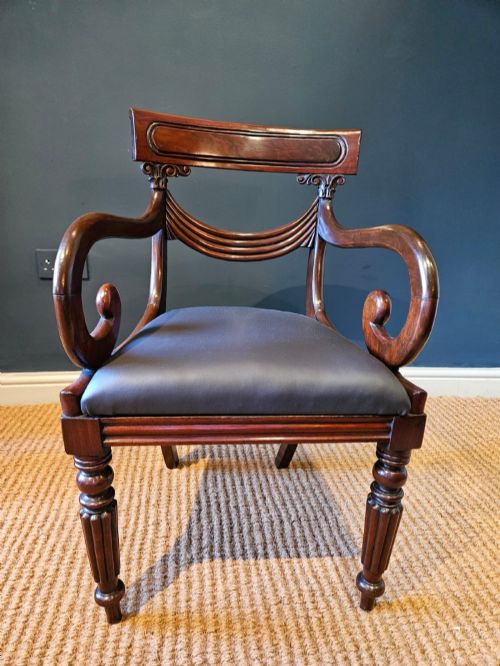
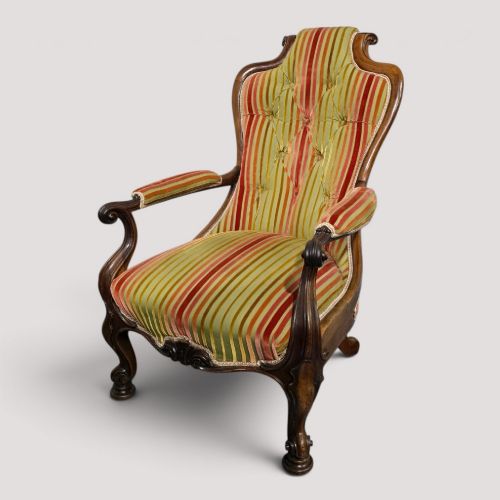
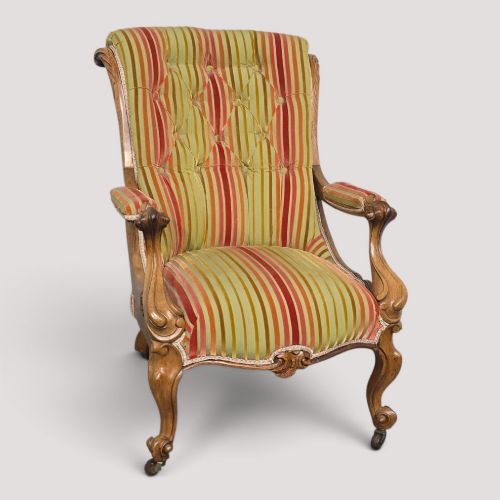
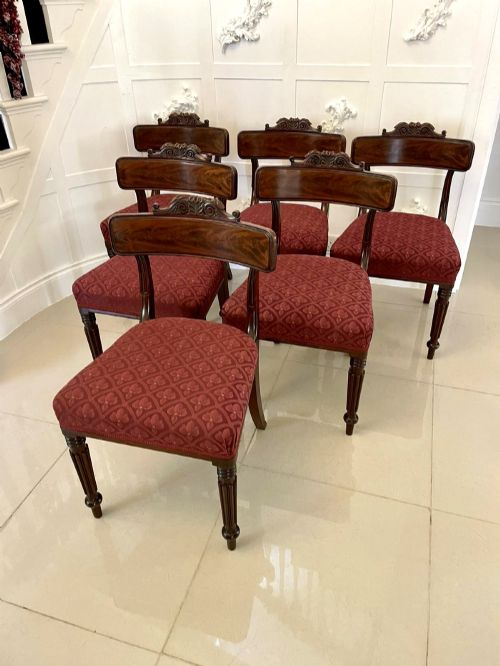
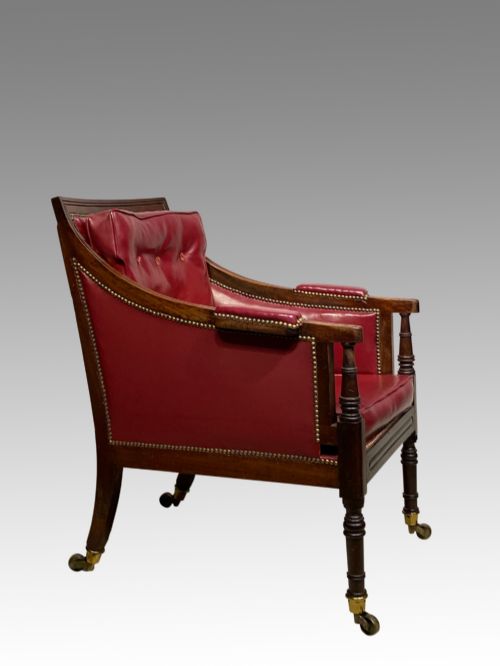
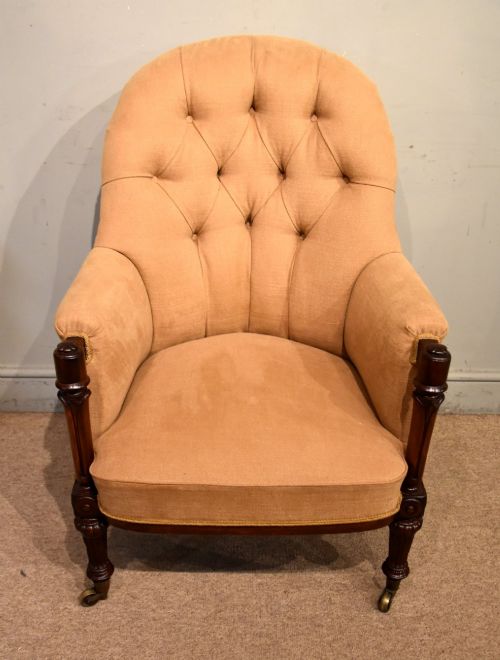
A regency library seat serves as a substantial armchair or bergère built for prolonged reading and study in private rooms. The pieces seen here span the Georgian, Regency, William IV, and later revival periods, bringing distinct proportions and timber choices to each piece.
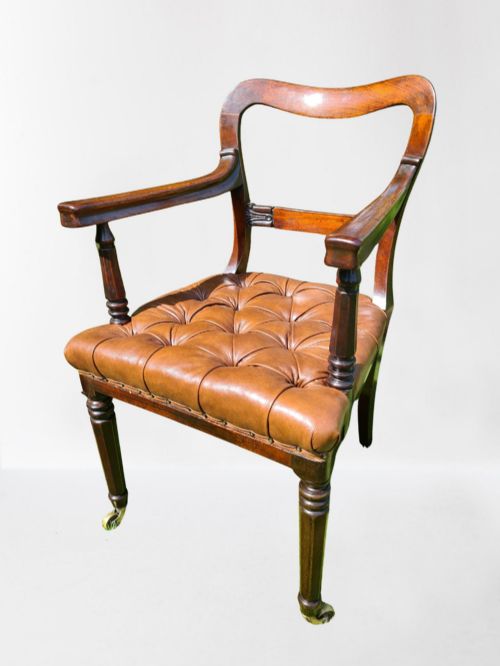
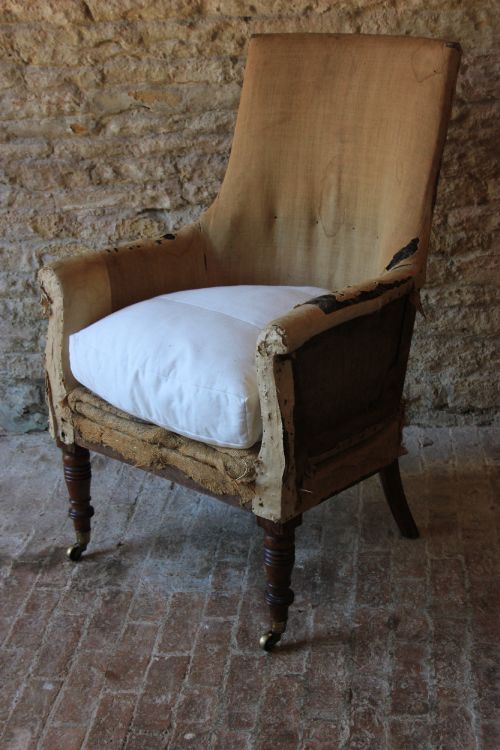
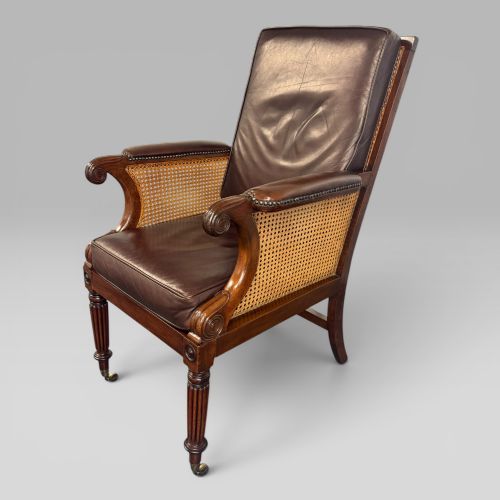
Mahogany and rosewood dominate the surviving examples, often formed with enclosed cane panels or deep upholstered cushions covered in leather, velvet, or hessian. Many incorporate practical reading adjustments, such as reclining mechanisms or folding steps contained within the wooden frame.
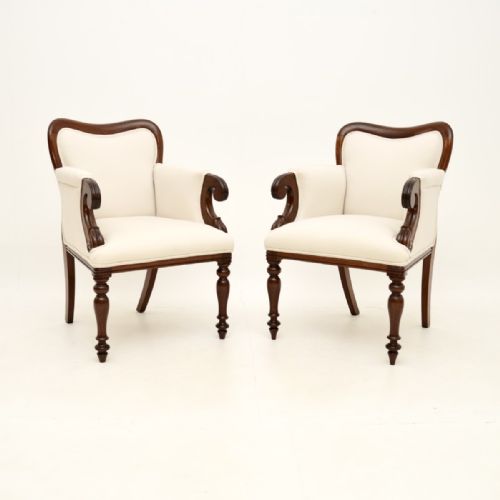
Buyers will encounter single armchairs, matched pairs, and occasional desk or dining variants intended for domestic libraries and studies. The design vocabulary draws heavily on classical lines, featuring reeded supports, brass inlay, parcel gilt accents, and lyre-shaped arm terminals.
Materials and Construction Techniques
Cabinetmakers utilised dense tropical hardwoods, chiefly solid mahogany and rosewood alongside faux rosewood finishes, to build frames capable of withstanding heavy daily use. Brass inlay and subtle parcel gilding frequently highlight the primary structural lines of the chair.
Caning provides a resilient and breathable back or seat panel on bergère models, complemented by drop-in seats or loose cushions upholstered in leather or woven fabric. Joinery relies on traditional pegged mortise and tenon construction, ensuring structural integrity across large armchairs and reclining reading chairs.
Current listings feature pieces constructed from solid mahogany, rosewood, and ebony, utilising leather, cane, and velvet for seating surfaces.
Distinctions in Execution and Age
The degree of carving refinement on the arm terminals and reeded legs separates standard workshop production from exceptional cabinet work. Crisp detailing in brass inlay or parcel gilding indicates superior craftsmanship during the initial construction.
The survival of original secondary timbers and honest surface patination distinguishes untouched period pieces from later nineteenth-century revivals. Structural alterations or replaced cane panels alter the integrity of the piece, shifting its standing among collectors.
Gillows·Minter·George Bullock
The Regency Library Seat Glossary
- Bergère
- An enclosed armchair with cane panels lining the back and sides. These seats typically require loose squab cushions for comfort.
- Reeded
- A decorative moulding formed of parallel convex strips carved directly into the timber. This detail appears frequently on the legs and arm supports of Regency seating.
- Parcel Gilt
- A surface decoration where only specific carved portions of the wood receive a thin layer of gold leaf. This technique highlights particular architectural motifs against a dark timber background.
- Drop-in Seat
- A removable upholstered wooden frame that fits snugly into the seat rails of a chair. It allows for straightforward reupholstery without disturbing the main frame.
- Lyre Arm
- An open arm support shaped to resemble an ancient stringed musical instrument. This profile is a common stylistic marker of the Regency period.
Regency Library Seat: Frequently Asked Questions
How do I identify a Regency library seat?
Look for dense mahogany or rosewood timbers, classical reeded legs, and architectural arm supports influenced by classical antiquity.
Many examples include cane work, brass inlay, or leather upholstery characteristic of the early nineteenth century.
Were these chairs used at desks?
Certain library seats double as desk chairs, offering sturdy wooden frames and lower profiles suited for writing surfaces.
Other variants incorporate swivel actions or adjustable reclining mechanisms for specialised study tasks.
How should I care for cane panels?
Cane requires moderate humidity to prevent drying out and snapping under tension.
Dust the woven surfaces regularly with a soft brush and avoid placing the chair near direct heat sources.
Can I reupholster a drop-in seat?
Drop-in seats lift entirely out of the wooden frame, making fabric replacement straightforward without risking the structure.
Original leather or antique textiles should be preserved where possible to maintain the historical integrity of the piece.